1. Dal Lake, Shikara Rides and Houseboats: Kashmir’s Most Iconic Image
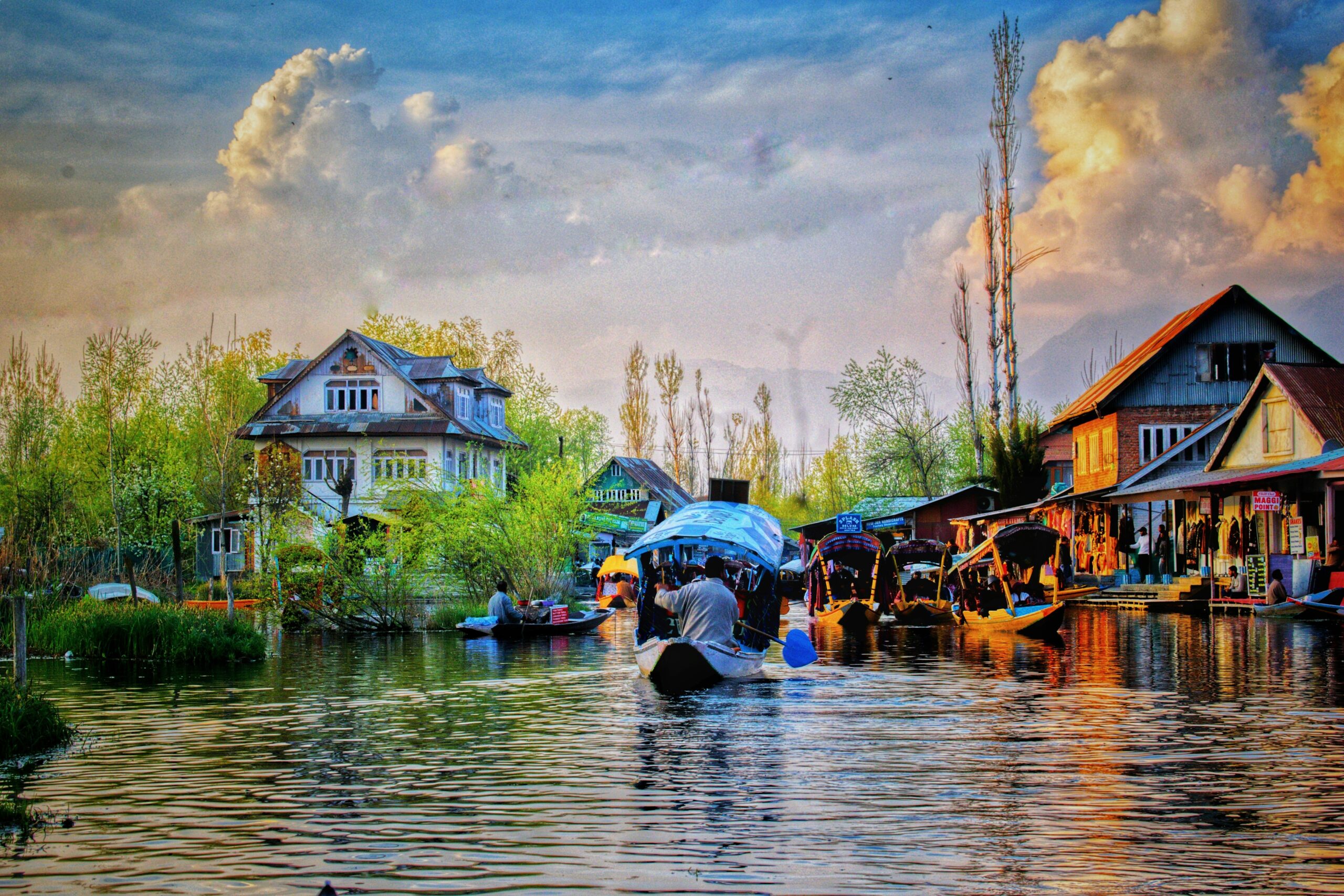
The shikara ride tourists arrive expecting is not the best one on Dal Lake. The boats are real, the lake is genuinely good. The views hold up, but the ride worth remembering is the dawn vegetable market. Local boats trade produce before 7am, well before the tourist shikara operators are awake. Most visitors miss it completely. No one tells them to set an alarm.
Dal Lake is what Kashmir famous for looks like from the outside. It is the image people carry before they arrive. Wooden houseboats floating on still water, the Zabarwan hills behind them, a boatman pushing slowly through lotus beds. That image is accurate and it is also only part of what the lake offers.
The houseboats are worth doing once. Heritage-category boats with carved walnut interiors run from INR 5,000 to 12,000 per night, rates as of 2025; verify before booking. Memorable as a visit. Not always as easy as sleep. The wood creaks, the heating is uneven, water level shifts by season. Book one night, treat it as an event, then move to a hotel. That is the honest version.
Practical notes before you book:
- Shikara rides: INR 150-500 per person depending on duration and operator
- Dawn market: arrive at the lake ghat by 6:30am for the real thing
- Houseboat booking: use a registered operator via J&K Tourism portal, not touts at the lake
- Skip the tourist “floating market” shikara. Head to the northern end of the lake instead
2. Gulmarg: Snow, Skiing and the Gondola Ride You Keep Seeing Online
Gulmarg is not only a winter destination. People who go in December and January see it at its most dramatic. Also it’s the most crowded in winter. In summer, Gulmarg is a meadow town at 2,650m. Clean air, green slopes, a cable car that goes above 4,000m. Both versions are worth knowing before you book.
The Gulmarg Gondola runs in two phases. Phase 1 goes to Kongdori at about 3,050m. Phase 2 continues to Apharwat Peak at roughly 4,200m. Phase 2 is the one worth the ride. The views at the top, on a clear day, are the reason people book return trips. Phase 2 is steeper and runs only in good weather. If the cloud cover is heavy, it stays closed. Check conditions the night before.
In Kashmir in winter, Gulmarg is India’s best skiing setup. The snow is reliable, the runs are long, Gulmarg Ski Resort has equipment for people not bringing their own gear. Beginner lessons run daily. Snowfall averages between 10 and 14 feet each season. The gondola also runs through winter for visitors who want the view without the skis.
3. The Valleys of Kashmir: Pahalgam, Sonamarg and Betaab
Not all Kashmiri valleys are the same kind of place. That distinction matters when you are planning where to spend nights outside Srinagar.
Pahalgam is for people who want nature without working too hard for it. The town is well set up for visitors. Day trips to Aru Valley and Betaab Valley are straightforward. Roads are decent, hotels are good. Betaab Valley carries a real pull for Indian travellers. The 1983 Bollywood film Betaab was shot here. That connection is strong among visitors who grew up with that era of Hindi cinema. It is a green, river-cut valley 15km from Pahalgam.
Sonamarg is rawer. The road to Thajiwas Glacier starts from here. The town draws people who want altitude and trekking access. It sits at about 2,740m. Sounds like your kind of trip? Sonamarg is the right call. For families with young children or people wanting a relaxed base, Pahalgam is easier to manage.
4. The Kashmir Tulip Festival: Asia’s Largest and Why Timing Is Everything
The Indira Gandhi Memorial Tulip Garden opens for three to four weeks each year, not a long window. The 2026 Tulip Festival is expected to open in late March and close by mid-April. Exact dates shift with the bloom cycle. Check the official J&K Tourism site before booking flights. Miss the window by ten days and you are walking through a garden of green stalks.
The tulip garden in Kashmir spans 30 hectares between Dal Lake and the Zabarwan hills. It holds over 1.5 million tulips across 68 varieties. Wide rows of colour run the length of the terraced hillside. Snow is still visible on the peaks above. For photographers and families with children, it is the most visually direct experience Kashmir offers.
Spring in Kashmir also brings cherry blossoms to Srinagar’s old neighbourhoods and the Mughal gardens. If your timing lands in late March, the tulips and apple orchards in bloom make for the best photos of the year.
Practical notes:
- Check J&K Tourism’s official site for confirmed 2026 opening dates before booking
- Entry fee: approximately INR 50-100 per person (verify current rates)
- Best time: weekday mornings before 10am to beat the crowds.
5. Kashmiri Food: What to Eat, What to Skip and What You Will Not Find Elsewhere
Rogan Josh is not the full picture. It is good everywhere in Kashmir and you should order it. But building a food plan around Rogan Josh alone misses what Kashmiri cuisine actually is. Wazwan is where the food culture lives. It is a ceremonial multi-course meal. Traditionally 36 dishes, served at weddings, funerals, and celebrations on large shared platters. You cannot order it off a standard restaurant menu. To eat it as a visitor, find a Srinagar restaurant that offers a curated version. Mughal Darbar on Residency Road and Adhoos Restaurant near Lal Chowk have offered sit-down Wazwan-style meals for years. Expect to pay INR 600-1,200 per person for a proper spread (verify current pricing).
For Indian vegetarian travellers, Kashmiri food is more generous than its reputation suggests. Dum Aloo is potatoes cooked slowly in yoghurt and spice. Done better here than anywhere else. Haak is a local green dish cooked simply with mustard oil. A staple in Kashmiri homes that rarely appears on tourist menus. Ask for it; if it is on the menu, order it.
Five dishes worth planning your meals around:
- Rogan Josh: slow-cooked lamb with Kashmiri spices, red from Ratanjot not chilli
- Wazwan: the full ceremonial spread, available at select Srinagar restaurants
- Dum Aloo: the vegetarian essential, done better here than anywhere
- Haak: local greens, simple and earthy, hard to find outside Kashmir
- Kahwa: green tea with saffron, cardamom, and almonds, served hot everywhere
Pashmina Shawls, Saffron and Kashmiri Crafts: What to Buy and How Not to Get Fooled
Walk into any market in Srinagar and someone will sell you a Pashmina shawl. Most of them are not pure Pashmina. Knowing the difference before you go saves you from paying INR 3,000 for something worth INR 300. Pure Pashmina comes from the fine undercoat of the Changthangi goat, native to Ladakh’s high altitudes. A real shawl is lighter than it looks. Noticeably lighter than wool or a synthetic blend. It is soft without being slippery, prices for authentic pieces start at INR 10,000 and climb steeply based on weave and embroidery. Anything well under that is a blend. Not automatically bad. But know what you are buying. The government-run J&K Handicrafts Emporium in Srinagar sells authenticated pieces. Prices are fixed and on the higher side.
For carpets, Kashmiri hand-knotted silk carpets are among the finest made in India. The knot count per square inch determines quality. Ask before buying. Reputable showrooms in Srinagar’s old city will explain this to you. The same approach applies to paper mache, walnut wood carving, and embroidered Sozni shawls. Centuries of craft tradition behind all of them.
What to buy and where — for a full breakdown, the things to buy in Kashmir guide covers authentication, pricing, and where to shop without getting misled:
- Pashmina shawls: J&K Handicrafts Emporium for guaranteed authentic; Lal Chowk for wider selection at negotiable prices
- Kashmiri saffron: buy directly from Pampore farms or trusted spice shops in Srinagar; loose threads only, not powder
- Carpets: old city showrooms; ask for the knot count and get a certificate of authenticity
- Paper mache: widely available; look for hand-painted pieces, not printed ones
7. Trekking in Kashmir: The Great Lakes Trek and What First-Timers Should Know
The Great Lakes Trek is not for everyone and that is not a discouragement. The trek covers 70km over 7-8 days. It crosses multiple high-altitude passes and reaches above 4,000m at points. Remote camping is part of it. You need a reasonable fitness base, a registered guide, and a permit. The trek window runs from July through September. Outside that window, it does not operate. Snow blocks the passes before and after. Show up in June expecting to start and you will not.
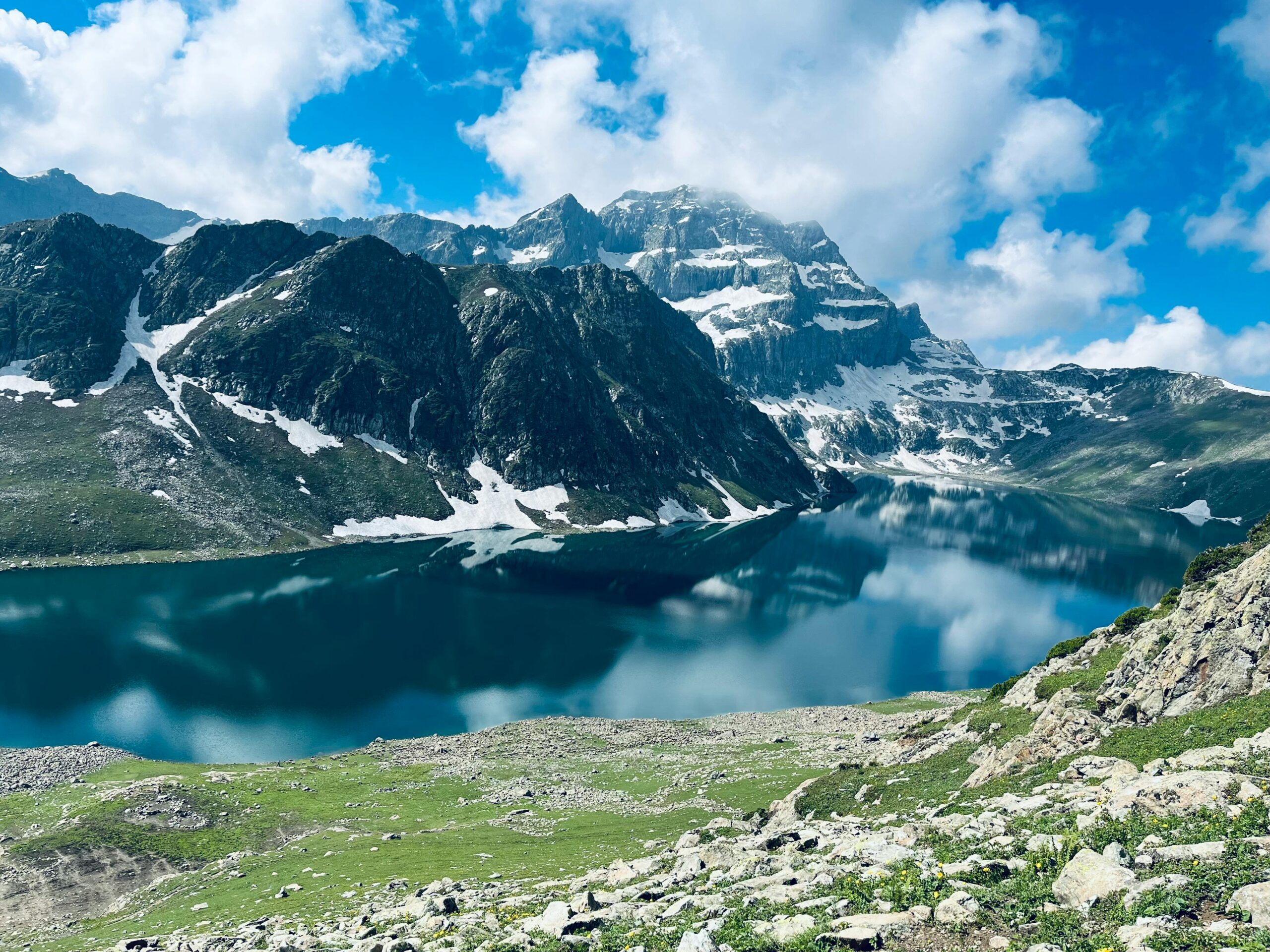
For first-time trekkers, shorter options exist. The Tarsar Marsar Lake Trek runs 4-5 days. The Kolahoi Glacier Trek is 3-4 days out of Pahalgam. Both are achievable for people with basic hiking experience. The alpine lake scenery on these routes is the draw, not the difficulty. High-altitude meadows, clear glacial lakes, genuine quiet once you are past the first day. That is the point.
Planning a multi-day route? A structured Kashmir itinerary helps you sequence treks with valley stays and city time without overloading the trip.
8. Kashmiri Saffron: Why Pampore Is Worth a Half-Day Stop
We recommend building a half-day into your Srinagar itinerary for Pampore, about 15km south of the city. Most guides mention Kashmiri saffron as a thing to buy. Very few tell you that you can see where it comes from.
The saffron fields bloom for roughly two weeks in late October. The flowers are purple crocus. Not the red threads you see in the market. During the harvest window, the fields run low and purple to the horizon. Farmers hand-pick stigmas in the early morning. It is a specific and unusual visual. If your trip falls in late October, go and do not miss it. If your dates land elsewhere, Pampore is still a good stop. Family farms sell loose threads for significantly less than the same quality costs in Srinagar markets.
9. Apple Orchards: Why Shopian Is Worth a Half-Day Stop
Kashmir’s apple orchards are a defining part of its landscape and livelihood. Spread across regions like Shopian and Sopore, these orchards produce some of the finest apples in India. Walking through them, especially during harvest season (September to October), you’ll see trees heavy with bright red and golden fruit, a simple but striking sight. Apples from Kashmir are known for their crisp texture, natural sweetness, and long shelf life, making them popular across the country. Beyond farming, these orchards support thousands of local families and play a key role in the region’s economy.
For travellers, visiting an orchard offers a quiet, authentic experience, far from crowded tourist spots. You can watch the picking process, interact with farmers, and even taste freshly plucked apples. It’s a small moment, but one that captures the everyday charm of Kashmir. It pairs well with a visit to Pampore if you are already heading south of Srinagar in Kashmir in September or October.
10. Mughal Gardens and Srinagar: History Worth More Than the Entry Fee
These are not just nice gardens, and that is the easy answer and the wrong one. Nishat Bagh was built in 1633 by Asaf Khan, Mumtaz Mahal’s brother. It has 12 terraces fed by a single mountain spring from the Zabarwan hills. No pumps, no modern engineering. The water has moved through the same channels for nearly 400 years. That is what you are looking at when you walk through it.
Shalimar Garden was built earlier by Emperor Jahangir as a gift for his wife Nur Jahan. The architecture is Persian-influenced, using the Charbagh layout. Four quadrants representing the four rivers of paradise.
Knowing the context changes what you see. Without it, you walk through a well-maintained garden. With it, you walk through 17th-century engineering built for royalty. Both gardens sit near Dal Lake in Srinagar. Entry is around INR 24 per person. Go to both. Give yourself 45 minutes at each. Early morning before tour groups arrive is the best time.
For the full history and visiting details on both, the Mughal Gardens Kashmir guide covers what to see, when to go, and what most visitors walk past without noticing.
Conclusion
Kashmir rewards the visitor who picks a focus. Try to cover Gulmarg, Pahalgam, the tulip garden, a trek, and three Wazwan meals in five days. You will see everything and retain almost none of it. Pick two or three things. People who do that come back saying it was the best trip they have taken.
That is why Kashmir is famous for so many different things. Not because it tries to be everything, but because each of these things stands on its own. Pick the ones that match your time and style. Not sure where to start? The best time to visit Kashmir depends entirely on what you are coming for and getting that decision right changes the whole trip.