Kashmir food is not what most Indian travellers expect. You arrive thinking it will be North Indian food in a cold place but it is not. The famous food of Kashmir has its own grammar. The spices are used differently. The techniques come from Persia and the Mughal court.
There is a clear split between Pandit and Muslim kitchens. That split changes what lands on your plate. This guide covers 15 dishes worth tracking down. Eight are meat-heavy. Five work for vegetarians. Two are drinks. You do not need to eat all 15. But you need to understand what you are looking at before you order.
What Makes Kashmiri Food Different From the Rest of North India
Most people assume Kashmiri food is a spicier version of Punjabi cooking. That assumption is wrong. The base is different, the method is different. And once you know what to look for, you will taste the gap immediately. Three things separate Kashmiri cooking from generic North Indian. First: mustard oil cooked to smoking point before anything goes in. This changes the base flavour at a level that ghee or refined oil never does. The oil turns sharp and slightly bitter at smoke point. It settles into something deep and nutty once it cools.
Second: dum cooking. The pot is sealed with dough. The fire is low. Nothing is rushed. The Mughal courts made this method popular in the 16th century — the same courts that built the Mughal Gardens of Kashmir as summer retreats. Kashmir kept the cooking method. Everyone else moved on to gas burners and shortcuts.
Third: no tomatoes in the authentic versions. The red in a real rogan josh does not come from tomatoes. It comes from Kashmiri red chilli and a flower called mawal, dried cockscomb, used as a food colouring. Restaurants outside Kashmir substitute tomatoes. It is not the same dish. Know this and you will know whether a restaurant is serving real Kashmir food or a copy.
The 15 Famous Foods of Kashmir You Must Try
1. Rogan Josh
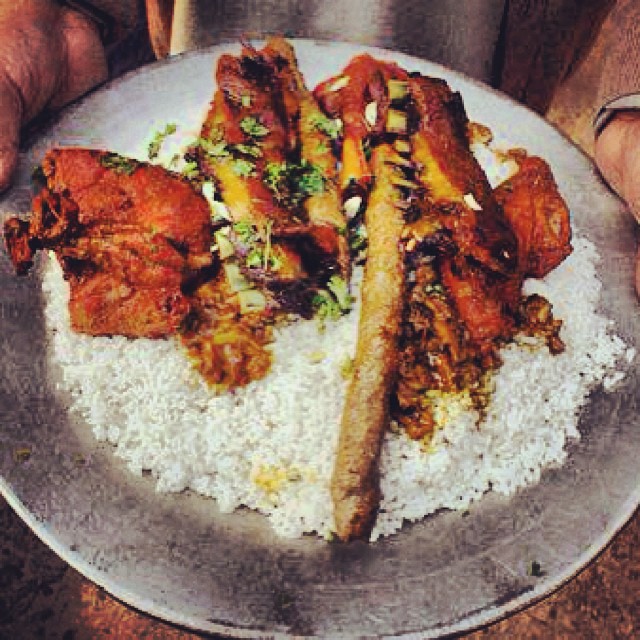
The gateway dish is not what you have already eaten. Most Indian travellers think they know rogan josh. They know a version of it. The real thing is different enough that it will surprise you. Two authentic versions exist side by side. The Kashmiri Pandit version uses no onions, no garlic. The Muslim version uses both. Neither version has tomatoes. The red colour comes from Kashmiri red chilli and rattanjot bark. Rattanjot is a dried root that bleeds deep crimson into the oil. The meat is lamb, slow-cooked until the fat separates into the gravy. What you get is a thick, almost lacquered sauce that stains the rice.Order it at a Wazwan restaurant in Srinagar’s old city.
2. Wazwan: The Feast Behind Half This List
Wazwan is not a dish. It is the context for half of what you will eat in Kashmir. Skip this section and the rest of the list makes less sense. A Wazwan is a multi-course meal cooked by a waza, a specialist Kashmiri chef. A full one has anywhere from 7 to 36 courses. Most of those courses are meat. Rogan josh, rista, goshtaba, tabak maaz, and yakhni are all Wazwan dishes. They are designed to appear in sequence, not as solo orders on a tourist menu. The Wazwan has an internal logic. Spiced and heavy dishes come first. Goshtaba closes it. The white yoghurt-based gravy cools the palate at the end. Eating goshtaba as a starter order at a restaurant misses the point entirely.
3. Rista
Rista and goshtaba are both meatball dishes. People confuse them. The answer is simple: rista has a red spiced gravy, goshtaba has a white yoghurt one. Rista comes early in the Wazwan and Goshtaba closes it. The meatballs in rista are mutton, pounded and kneaded until the texture goes almost paste-like. Then rolled, dropped into a red gravy of Kashmiri chilli, fennel, and mustard oil. The result is denser than any meatball you have had before. Not heavy but dense. Each one holds the spiced stock tight inside it. Sound like a lot of work? It is. That’s why rista is rarely good outside of a proper Wazwan kitchen.
4. Goshtaba
Goshtaba ends the Wazwan and that placement is deliberate. After several courses of red gravies and fried meat, goshtaba arrives in a pale, mild yoghurt-based sauce. The meatballs are mutton, pounded like rista but finer. The gravy is white and creamy, fragrant with cardamom and fennel but not hot. It is the palate cleanser at the end of a long, heavy meal. Eating it as a standalone order at a tourist restaurant loses that function entirely. Still worth it. But order it last.
5. Tabak Maaz
Frying is not the whole story here. Tabak maaz looks like fried lamb ribs. It is not just that. The ribs are slow-boiled first in a spiced stock: cardamom, turmeric, cloves, milk. This step is long. The inside of each rib goes completely soft during the braise. Then the ribs go into a pan with ghee and are fried until the outside crisps. What you get is a contrast of textures. Brittle, bronzed outside. Meat that falls from the bone inside. Do not eat it cold. Order it fresh and eat it fast.
6. Yakhni
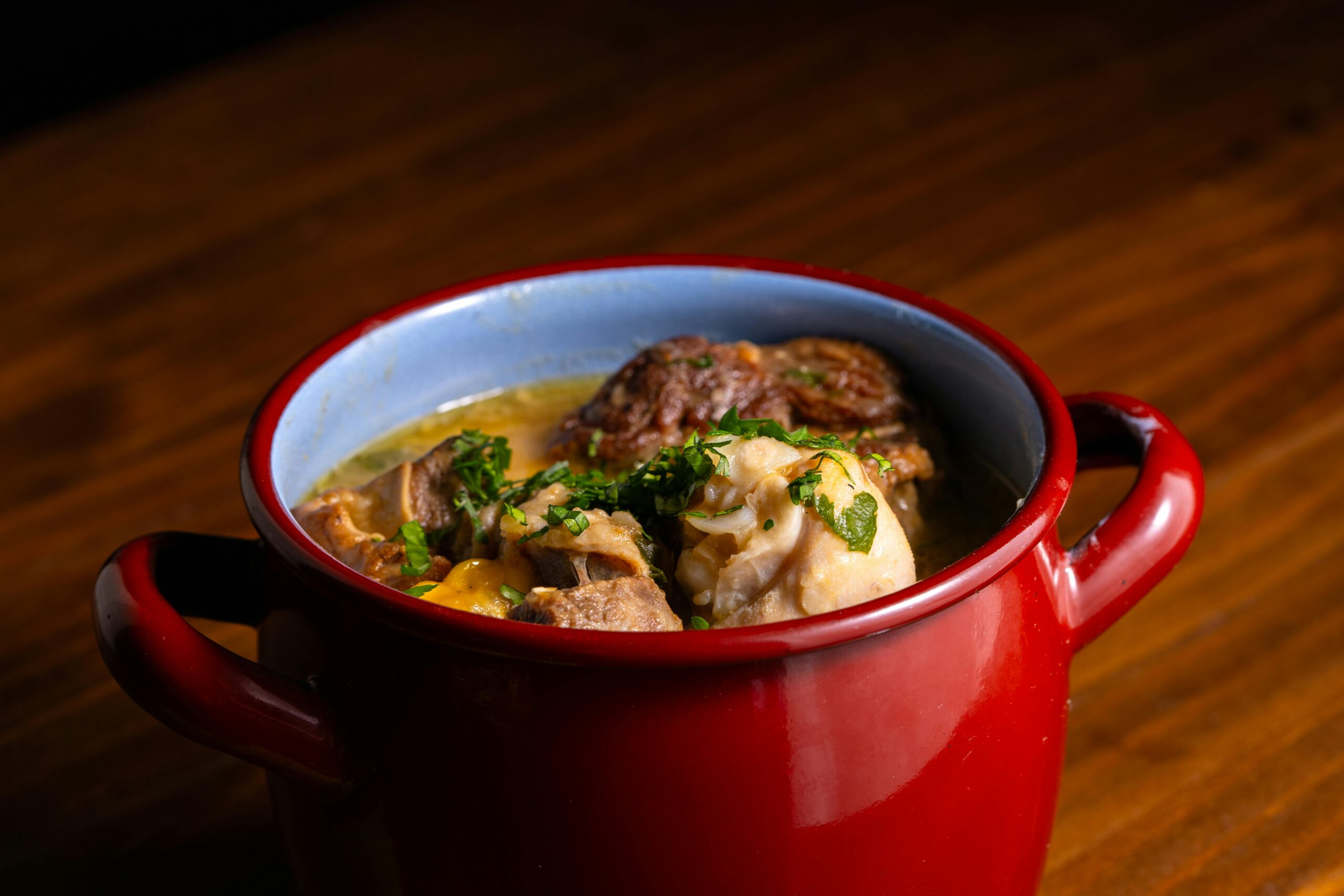
Yakhni is not rogan josh. The gravy is pale and almost broth-like, made from whisked yoghurt cooked precisely. The technique requires that the yoghurt never boils after it is added. If it does, it splits. The result, done correctly, is a sauce that is smooth and fragrant with fennel and cardamom. No chilli. No red. Just clean, mild lamb in a light cream-coloured stock. People who order yakhni expecting a typical Kashmir curry are genuinely surprised. That reaction is useful. It means the food is doing something they did not anticipate. At a good Wazwan kitchen, yakhni is the test of the cook’s skill. Anyone can make a red curry. Not everyone can hold a yoghurt-based sauce at exactly the right heat for forty minutes.
7. Dum Aloo (Kashmiri Style)
You have eaten dum aloo before. Not this one. The Kashmiri Pandit version uses no onions, no garlic, no tomatoes. The small potatoes are fried first, then cooked in yoghurt with fennel, ginger powder, and Kashmiri chilli. No dark base. No tomato tang. The flavour is cleaner and sharper than the Punjabi version most Indian travellers know. The potatoes absorb the spiced yoghurt completely. Each one holds the heat inside it. Look for it at restaurants that specifically serve Pandit-style food. It is on most tourist menus too. But the version without the Pandit preparation is a different dish with the same name.
8. Haak
Haak is not impressive on a menu. Order it anyway. It is collard greens, cooked in mustard oil with garlic and dried red chillies. That is the whole dish. No spice paste, no gravy, no slow cook. It is what Kashmiri households eat every day alongside rice and meat. The point of haak is not the dish itself. It is what it does to the rest of the meal. After three courses of Wazwan food, a bowl of haak cuts through the fat and the richness. It is the palate reset. Do not eat it at a tourist restaurant that charges 200 rupees for it. Find a local dhaba or a homestay kitchen. That is where haak is done right.
9. Nadru Monji
Most visitors to Kashmir walk past nadru monji without knowing what it is. That is a mistake. Nadru is lotus stem. Kashmir grows it widely and cooks it in ways no other Indian cuisine does. Nadru monji is the snack form: lotus stem sliced into rings, battered lightly, and fried until golden. Served with mint chutney. The texture is unlike any Indian fried snack you have had before. Crunchy outside, with a hollow crunch when you bite through. Inside it is starchy and slightly nutty. Look for it at tea stalls and street snack shops in Srinagar’s old quarter, not at tourist restaurants. Vendors who sell it fresh from a hot pan near the Jamia Masjid lanes are your best option. If you see it being fried to order, stop. That is the version to eat.
10. Kashmiri Pulao
Kashmiri pulao is not a biryani. That distinction matters when you eat it. It is deliberately sweet. Pomegranate seeds, raisins, fried cashews, almonds, a thread of saffron through the rice. The sweetness is not a mistake or a sugar overload and that is the point. The correct way to eat kashmiri pulao is alongside something heavy and spiced. Rogan Josh works. Yakhni works. The sweet rice cuts the heat and the fat of the meat. Eaten alone, kashmiri pulao is odd. Eaten alongside a proper curry, it makes sense immediately. Most tourist restaurants serve it as a standalone rice dish. Ask for the curry alongside it. That is how to eat it.
11. Sheermal
Bake it in a tandoor, lace it with saffron, pull it out warm. That is sheermal. It is a flatbread, but calling it a flatbread undersells it. Sheermal is soft, slightly sweet, fragrant from the saffron, and nothing like naan. Kashmiris eat it at breakfast alongside kahwa, or alongside meat curries as a replacement for rice. It goes stale fast. The cold is a different and worse time. Eat it warm, in the first 20 minutes after it leaves the tandoor. In Srinagar’s old city, bakeries near the Jama Masjid have been making sheermal the same way for generations. Buy it there. Do not buy it vacuum-packed from a tourist shop.
12. Kahwa
Two teas define Kashmir. Kahwa is the one to start with. Kahwa is green tea brewed with saffron, cardamom, and almonds. It is served from a samovar, a brass urn that keeps the tea hot for hours. The flavour is light, floral, and warming. Not sweet unless honey is added. Not milky. Nothing like chai. People who expect chai are surprised in a good way. Why does this matter when you order? Every menu in Kashmir lists both kahwa and noon chai. First-timers often pick the wrong one. They do not know the difference yet. Kahwa is the gentler start. Noon chai is saltier and stranger. Try kahwa first.
13. Noon Chai (Sheer Chai)
Noon chai is pink. It is also salty. Both facts surprise people. It is made with a special Kashmiri tea called sheer chai leaves, water, salt, baking soda, and milk. The baking soda turns the tea pink during the process of churning it. The result is a pale rose colour in the cup. The texture is creamy. The flavour is warm, slightly smoky, and unmistakably salty. Not sweet. Not even slightly. Kashmiris drink it at breakfast with sheermal or khambir bread. It is a meal, not a beverage. Most Indian travellers order noon chai because it looks striking. They take one sip and pause. That is the correct reaction. Give it two more sips before you decide.
14. Phirni
Phirni is not kheer. The comparison does a disservice to both. Phirni is made from coarsely ground rice cooked in milk, set cold in small earthen pots. The earthen pot matters. It pulls moisture from the phirni as it sets. The texture firms slightly. The surface gets a barely-there earthy note. A glass or ceramic bowl will not do the same thing. If phirni is served in ceramic, it is not the local version. In Kashmir, phirni is the dessert that closes a serious meal. Topped with saffron and a thin sheet of silver leaf, chilled, eaten with a small spoon. It is lighter than it looks and the flavour is clean and fragrant.
15. Kalari Cheese
Kalari is not mozzarella. But the stretchy texture comparison is fair. It is a local cheese from the Udhampur area, sold in small discs across Kashmir. Street vendors fry it in a dry pan until the outside browns and crisps. The inside goes stretchy and slightly squeaky when you bite into it. A squeeze of lemon and a pinch of chilli go on top. That is the full dish.
Most visitors walk past kalari stalls without recognising them. The vendor usually has a small gas burner, a flat pan, and a stack of pale cheese discs. Hot, fresh, with lemon. Do not pass it up. Kalari fried cold is a different and worse product.
Where to Actually Eat These Dishes in Kashmir
Most travellers eat Kashmiri food without eating Kashmiri food. The distinction matters. There are three levels of eating in Kashmir. Tourist restaurants near Dal Lake serve almost everything on this list. They are clean, English-menu friendly, and priced for outside visitors. They also use tomatoes in rogan josh. Kahwa comes from powder packets. The food is good enough. It is not the real thing.
The second level: local restaurants in the old quarter. The Jamia Masjid lanes and Nowhatta area. These places have no English boards, smaller menus, and food built for the people who live near them. The famous food of Kashmir at this level is different in a way that is immediately obvious. The oil is right. The spice balance is different. Eat lunch here on at least one day.
The third level: proper Wazwan specialists. These are harder to access. Many cook mainly for weddings and private events. Some open to the public for lunch, but call ahead. In 2026, a few well-regarded Wazwan kitchens in Srinagar do take outside bookings. Your hotel front desk will know which ones are currently open. This is the best food in Kashmir in terms of what it was designed to be.
Where to start in Srinagar:
- Nowhatta lanes: best for noon chai, sheermal, and haak at local prices
- Maisuma area: known for Wazwan-style restaurants accessible without advance booking
- Old city near Jamia Masjid: nadru monji vendors, kalari stalls, and kahwa from proper samovar setups
- Hotel-arranged Wazwan lunch: ask your hotel to book one at a local Wazwan kitchen, not at a hotel restaurant
While you are in the old quarter, it is worth knowing what else is worth buying in Srinagar’s markets. This guide on things to buy in Kashmir covers Pashmina, saffron, walnut wood, and carpets — with advice on where not to get overcharged.
Conclusion
Eat one proper Wazwan lunch in Srinagar. That single meal covers rogan josh, rista, goshtaba, tabak maaz, and yakhni in the right order. It is the fastest way to understand how Kashmiri cooking is built. And why the famous food of Kashmir has no equivalent elsewhere in India. The rest of this list lives at street level and in local tea stalls. Walk the old quarter in the morning. No booking needed. No tourist restaurant required. One Wazwan lunch. One morning in the old city. That is the full brief.
Planning the rest of your Kashmir trip around the food? The Kashmir itinerary guide maps out how to structure your days so the old city food walk, the Wazwan lunch, and the rest of Srinagar fit without rushing. You can also browse the full list of places to visit in Kashmir to see what pairs well with a Srinagar food day