1. Take a Shikara Ride on Dal Lake
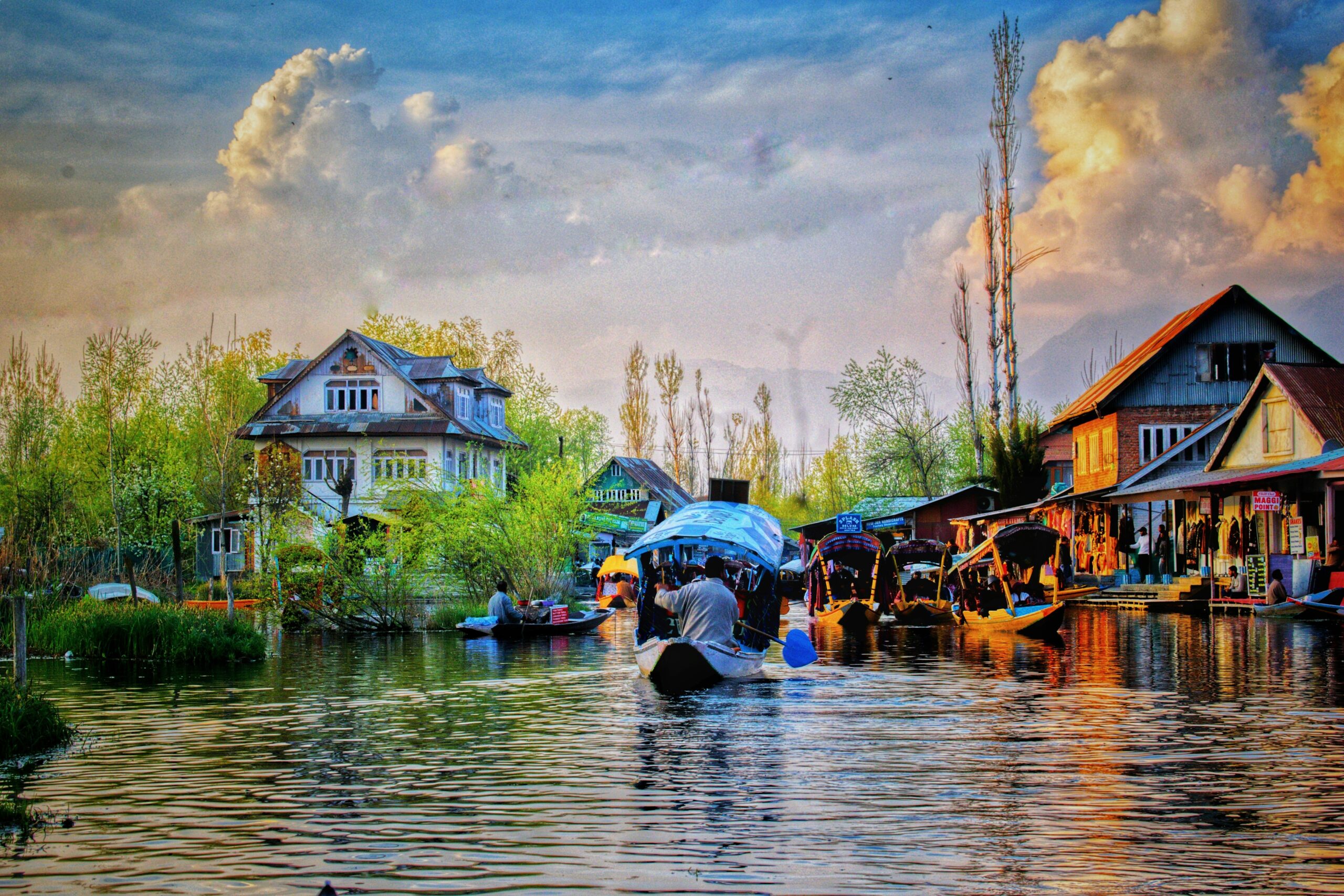
The Shikara ride is counted among the top things to do in Kashmir, the most recognised Kashmir activity, but most people only know one version of it. There are two and they are very different. The 5:30am ride puts you in the middle of the floating vegetable market. Radishes, lotus stems, squash, and leafy greens move from boat to boat. The lake is still grey and quiet. Vendors shout prices across the water. The whole market is done by 7am. You are not watching it from a distance. You are in it. The sunset Shikara package runs from 4pm to 6pm. Slower, easier, better suited for couples or families. Both are good but they are not the same ride.
- Time: Sunrise ride 5:30am. Sunset package from 4pm.
- Cost: About ₹600 for a standard hour. Negotiate directly at the ghat, not through a hotel tout.
- Tip: Agree on the rate and route before you board. Confusion at the end is common.
2. Stay on a Houseboat in Srinagar
Most people think a houseboat is just a novelty. It isn’t. It’s the single best way to wake up in Srinagar. Here’s the part most guides skip. Dal Lake houseboats are more central, more photogenic, and noisier. Vendors pull up to the side by 8am. Tour boats pass close. The morning is loud in a lively way. Nagin Lake runs quieter. Fewer shikaras pull up. No floating markets nearby. If you want the postcard image with the mountains, Dal is your pick. If you want to actually hear birdsong at dawn, Nagin is better.
Budget rooms on both lakes start around ₹2,500 per night. Mid-range deluxe boats with carved wood interiors and meals run ₹5,000 to ₹8,000. Check that the boat has functioning heating before confirming in winter.
- Budget: ₹2,500 to ₹4,000 (basic, shared facilities)
- Mid-range: ₹5,000 to ₹8,000 (deluxe, meals included)
- Premium: ₹10,000 and up (heritage boats, full service)
3. Walk the Mughal Gardens
Don’t try to see all three Mughal Gardens in one day. That’s how you end up rushing through something worth slowing down for. If you only go to one, Nishat Bagh is the right call. The upper terraces give a clear view of Dal Lake framed by chinar trees. The layout is open. You can move freely without a tour group blocking the path. Chashme Shahi is small. Thirty minutes and you’re done. It’s worth visiting if you’re already on Boulevard Road, but it’s not a standalone destination. Shalimar Bagh is the largest and most formal. Good for photography, but the central fountain area fills up fast on weekends. Entry is about ₹50 per person at most gardens (verify at the gate). Opening hours are often 9:30am to 5:30pm.
- Nishat Bagh: Best views, open layout. Go here first.
- Shalimar Bagh: Largest, best for formal photography. Go on a weekday.
- Chashme Shahi: Smallest, natural spring. Thirty minutes, done.
4. Ride the Gulmarg Gondola
Book the gondola before you book anything else. It is one of the best things to do in Kashmir. The Gulmarg Gondola runs in two phases from Gulmarg town up to Apharwat Peak. In 2026, Phase 1 tickets are ₹800 per person and Phase 2 tickets are ₹1,000 per person. Both phases must be booked online via the official JKCCC portal at etickets.jammukashmircablecar.com. There is no walk-up counter. Tatkal tickets for the next day go live at 5pm daily. They sell out in minutes during peak season (December to February, May to June). Book 15 to 20 days in advance if your dates fall in those windows.
Phase 1 takes you to Kongdori Meadow at 2,650m. Green meadow, food stalls, views of pine-covered slopes. It’s a full trip on its own. Phase 2 continues to Apharwat Peak at 4,390m. Snow is present for most of the year up here. The air is noticeably thinner. The Himalayan bowl spreads out in three directions. People who arrive at Kongdori and find Phase 2 already sold out are uniformly frustrated. Don’t be one of those people.
Phase | Altitude | Price (2026) | Time one-way |
Phase 1 | 2,650m (Kongdori) | ₹800 per person | 15 min |
Phase 2 | 4,390m (Apharwat) | ₹1,000 per person | 20 min |
To book Phase 2, you need your Phase 1 transaction ID. Book them together in one session on the JKCCC portal.
5. Ski or Snow-Play in Gulmarg (Winter)
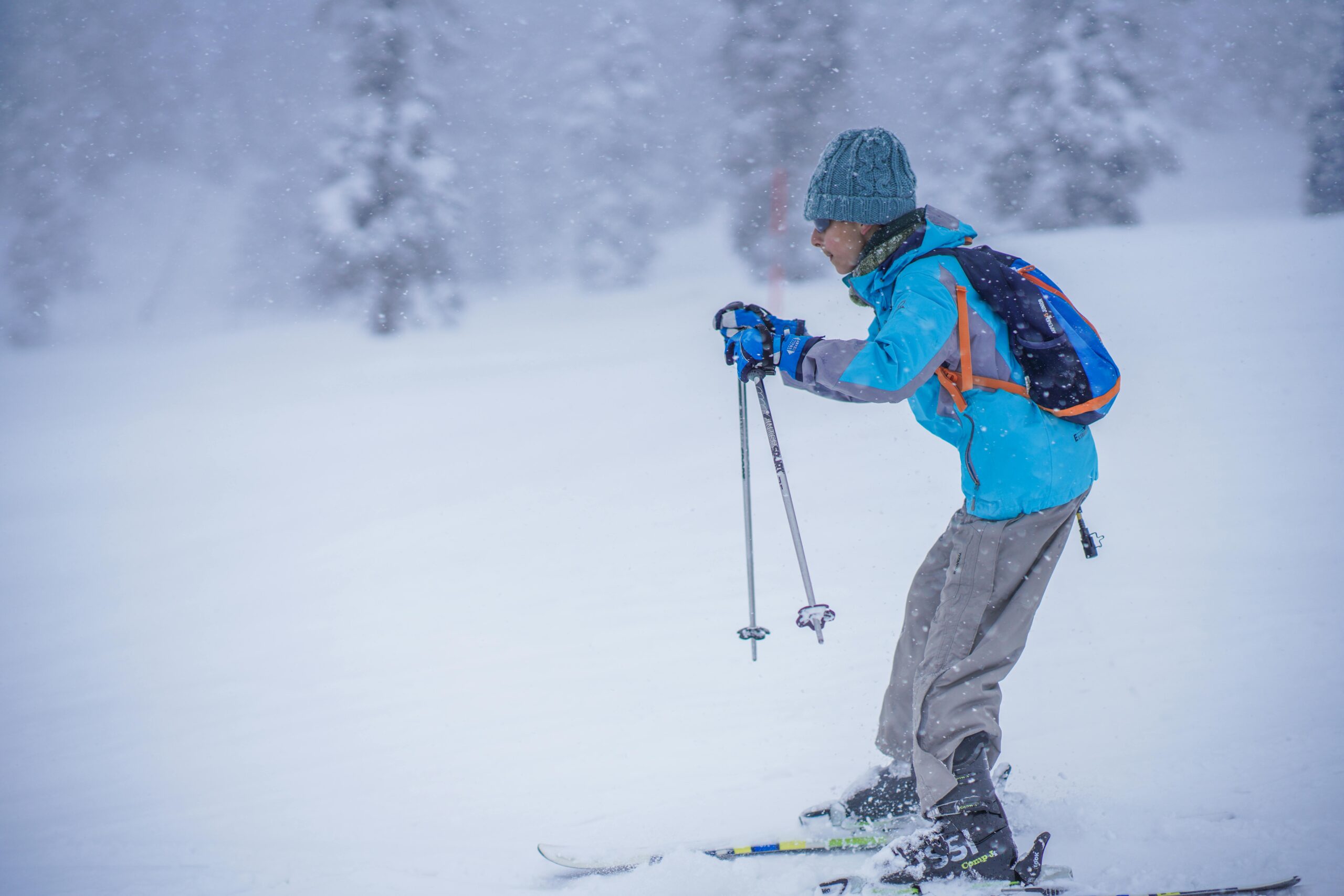
Most Indian families visiting Gulmarg in January or February are not there to ski. That’s the first thing to say. They’re there for the snow and that’s fine. The Kongdori Meadow in peak winter sits under waist-deep powder. You can walk on it, fall into it, watch your children lose their minds in it for two hours. No ski gear needed. Just warm, waterproof clothing and solid boots. For those who do ski: the beginner slope at Kongdori has instructors and rental gear. A 3-hour beginner lesson with equipment runs about ₹2,000 to ₹3,000. The serious skiing happens on the Apharwat bowls above Phase 2. That terrain is for people who already know how to ski. The snow quality from December through February is some of the best in India. Sound like an overstatement? Ask anyone who has been.
Equipment rental (skis, boots, poles) costs about ₹500 to ₹800 per hour at Kongdori. Book through operators near the gondola station rather than through hotel desks.
6. Trek to Thajiwas Glacier from Sonamarg
Sonamarg is worth the drive. The glacier is why. Thajiwas Glacier sits 3km from Sonamarg town. You can reach it on foot or by pony. Pony hire runs about ₹500 to ₹700 return per person. The walk takes 45 minutes each way on a clear rocky trail. The glacier is a wide blue-white wall of ice with meltwater cutting through the base. Stay on the marked path. The best window is from May to July. By August, the glacier had retreated visibly up the valley. The ice walls shrink. By September, the glacier is a reduced version of itself. If your dates fall in August, go anyway. The meadow and valley are still good. But manage the glacier expectations before you go.
- Distance from Sonamarg: 3km
- Pony hire: ₹500 to ₹700 return
- Best months: May to July
- Trek time on foot: 45 minutes each way
7. Try the Adventure Activities in Kashmir
Gulmarg gets all the adventure press. Pahalgam is where most of the actual adventure activities in Kashmir happen on the ground. River rafting on the Lidder River runs Grade 1 to Grade 3. It’s suitable for first-timers. A standard 8km run costs about ₹400 to ₹700 per person. You don’t need prior knowledge. The operator provides life jackets and paddles. The white water is real without being reckless. This is a solid option for families with older children or groups looking for something active.
Aru Valley, 11km from Pahalgam, is another option worth knowing. The trail from Aru toward the Lidder headwaters is a 4 to 5 hour proper hike. It climbs through pine and birch forest before opening into alpine meadow. No ponies needed, no guides required if you stay on the main trail. But go early. Afternoon clouds build fast in summer.
Hot air ballooning over Dal Lake runs from a site near Nishat Bagh. The morning flight is about 45 minutes and costs ₹3,500 to ₹4,500 per person. You won’t get an adrenaline rush. What you will get is an aerial view of the lake and the ring of hills behind Srinagar. That view is hard to get any other way. Worth it for that shot alone.
8. Trek the Kashmir Great Lakes (For Serious Walkers)
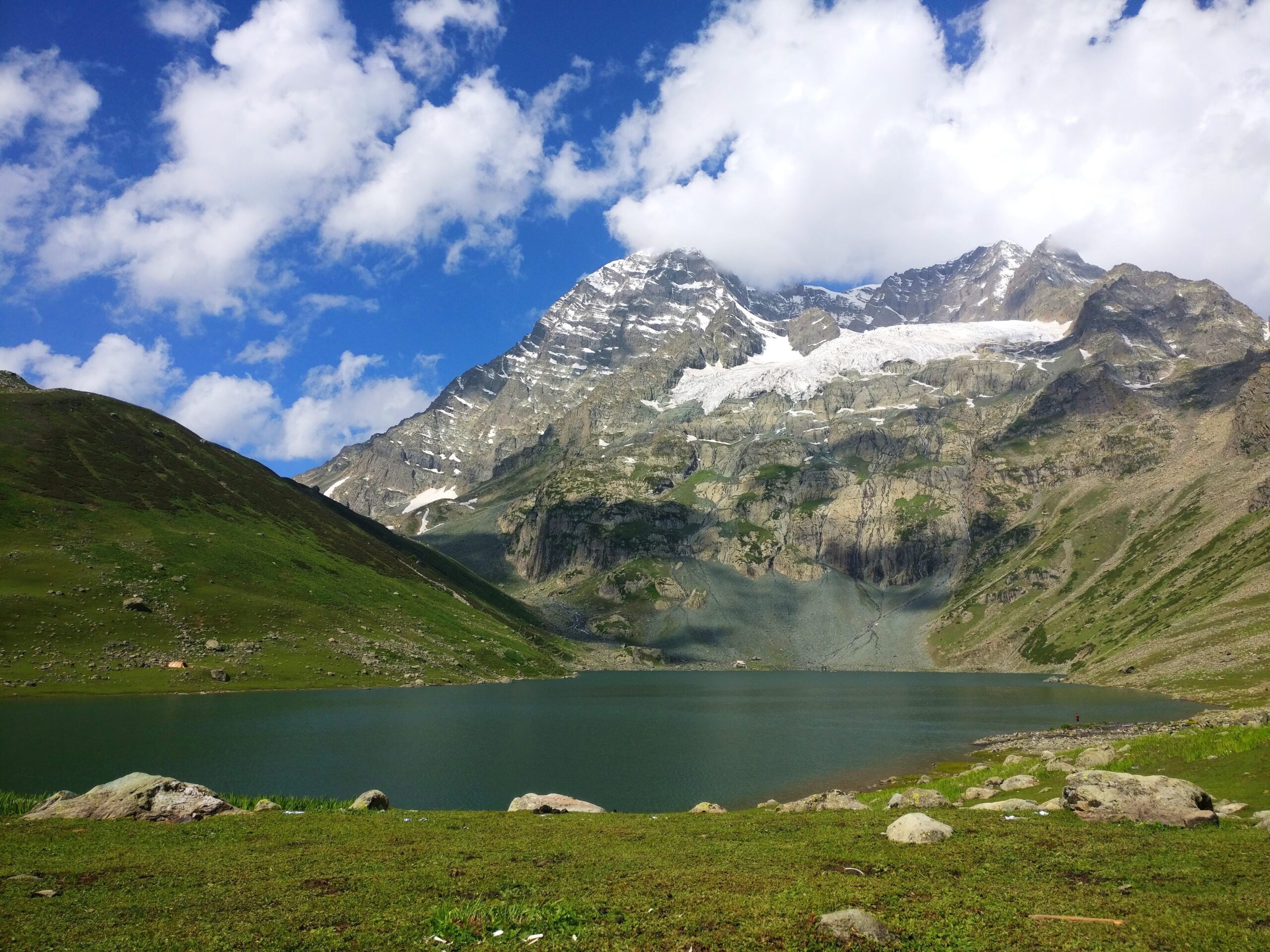
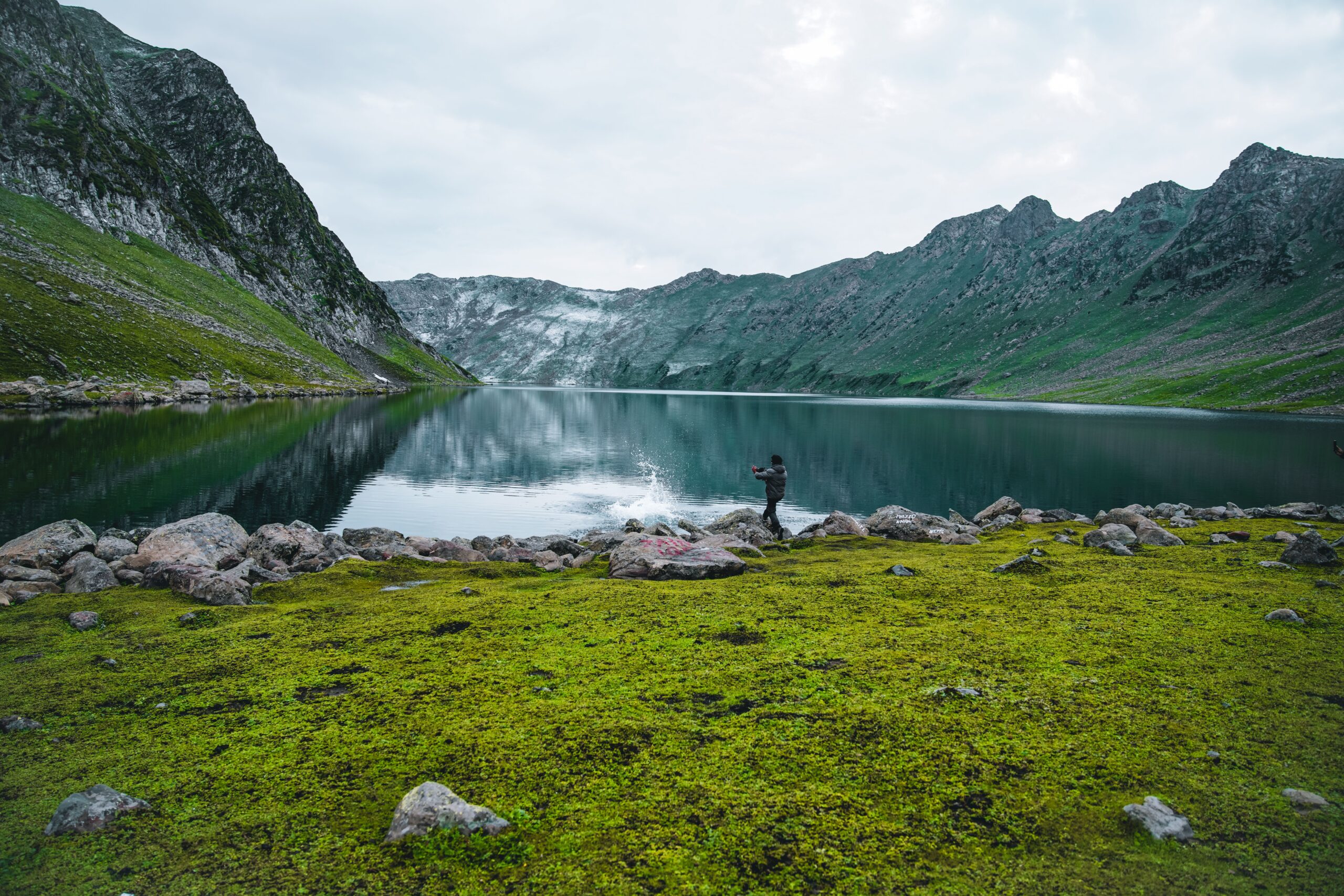
Honestly, this is the best multi-day trek in India. That’s a strong statement and it holds. The Kashmir Great Lakes Trek is 7 days, about 70km, crossing four high-altitude passes above 4,000m. You camp the whole way. No hotels, no resorts, no backup plan if the weather turns. The lakes sit in glacier-carved bowls at altitude. Vishansar, Krishansar, Gadsar, Satsar. The water is a blue that doesn’t look real in photos and looks even less real in person.
The best window is from July to mid-September. Before July, passes hold deep snow. After mid-September, temperatures drop fast overnight. This is not a beginner trek. If you haven’t done a multi-day Himalayan trail before, try Tarsar Marsar first. It’s 4 days, same general region, lower passes, similar landscapes. Much less commitment. Why rush into 70km when 40km teaches you whether you actually want this?
9. Eat a Wazwan Feast
What is a proper Wazwan? Thirty-six dishes cooked overnight by a waza in copper vessels over a wood fire. The full version exists at Kashmiri weddings. You will not get it in a restaurant. What you will get at a good Srinagar restaurant is a trami. A large copper plate shared between four people, loaded with the key dishes. Rogan Josh is slow-cooked lamb in a bright red gravy with no heat, just depth. Gushtaba is meatballs in a creamy yogurt sauce with cardamom. Tabak Maaz is fried lamb ribs, crisper than they look. Yakhni is mutton in a fennel-forward yogurt broth. This is a real and good meal. It’s not a simplified version. It’s just a shorter one. Ask your hotel to arrange a home-style Wazwan if you’re staying 3 or more nights. Some families in Srinagar offer this for groups of 6 to 8 people. It costs more per head than a restaurant. Worth every rupee.
- Rogan Josh: Lamb, Kashmiri chilli, no heat. All colour and slow spice.
- Gushtaba: Meatballs in yogurt, cardamom forward. Richest dish on the trami.
- Tabak Maaz: Fried lamb ribs. Order these if you see them on a separate menu.
- Kahwa: Green tea with saffron and almonds. End every meal with this.
10. Visit the Tulip Garden in Spring
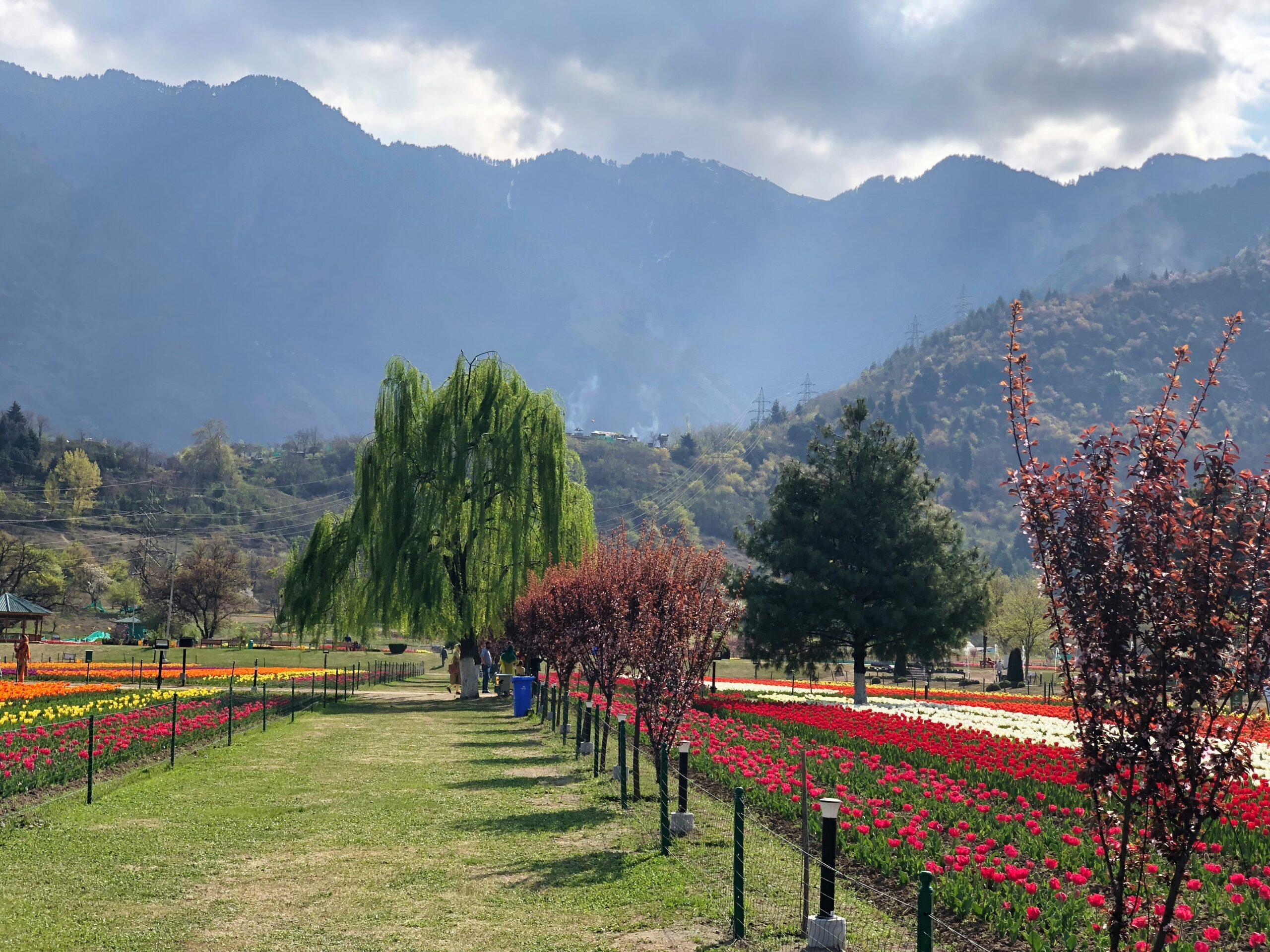
Go in early to mid-April, not on opening day. The Indira Gandhi Memorial Tulip Garden opens when the first varieties begin to flower. That’s often late March. But the full carpet takes another 10 to 14 days to reach its peak. The garden holds 15 lakh tulips across 68 varieties. On opening day, a portion is ready. Two weeks in, everything is open at once. That second week is the right time. The 2026 Tulip Festival runs from late March to mid-April. Exact dates shift by a week or two each year. Check the J&K Tourism site before your trip to confirm. The garden sits between Dal Lake and the Zabarwan Hills. The backdrop photographs well from the upper sections. Go early in the morning before the tour buses arrive.
Tulip season overlaps with the best of spring in Kashmir. If you’re planning around the blooms, that guide covers what else opens up across the valley in March and April.
11. Shopping in Srinagar’s Old City
Most Pashmina shawls sold on the street in Srinagar are not Pashmina. That’s not a warning designed to scare you. It’s just accurate. The shawls labelled “Pashmina” at most market stalls are wool-acrylic blends. They’re warm and cheap and look fine. There’s nothing wrong with buying one if you know what it is. The problem is when someone pays ₹8,000 thinking it’s genuine. Authentic GI-tagged Pashmina from a certified weaver starts at ₹3,000 to ₹4,000 for a simple piece. Embroidered Kani weave goes well above ₹10,000. The Craft Development Institute in Srinagar stocks verified goods. It’s a useful reference before you negotiate in the bazaars. For carpets, Kashmir Loom on Boulevard Road is a reliable place to understand pricing before heading to the old city. Papier mache boxes, walnut wood carvings, and saffron are all worth buying. Go directly to known shops rather than vendors near the Dal Lake ghat.
- Genuine Pashmina (GI-tagged): ₹3,000 and up. Buy from Craft Development Institute or certified shops.
- Kashmiri carpets: ₹5,000 and up. Use Kashmir Loom as a price reference first.
- Saffron (Mogra grade): ₹300 to ₹500 per gram from spice shops near Lal Chowk.
Before you shop, this guide on things to buy in Kashmir breaks down what’s worth your money, what isn’t, and where to buy it without getting overcharged.
12. Walk Through the Old City of Srinagar
The old city of Srinagar is a half-day most people skip entirely. They take another Shikara ride instead. That’s a mistake.The anchor is Jama Masjid, a 14th-century mosque with 378 wooden deodar pillars holding up a broad courtyard. It’s active and open to visitors. The lanes around it have copper craftsmen, local bakeries, and old wooden homes with carved Kashmiri lattice windows. The smell of fresh Sheermal from the street ovens hits you before you see the bakery. Sheermal is a saffron-laced flatbread. You’ll want to buy some.
Go on a weekday morning before 11am. The Friday midday prayer draws a large congregation and the entire quarter around Jama Masjid fills up. That’s worth seeing too if you want that, but it is not the same as a quiet morning walk.
Conclusion
Kashmir doesn’t need to be rushed. A 7-day structure covers the best kashmir things to do without cramming in place after place. Two nights in Srinagar, two in Gulmarg, two in Pahalgam. One day unplanned. Plan the gondola first. Book the houseboat early. Leave the last afternoon open. That’s usually when Kashmir gives you the best part.
Need a day-by-day breakdown? The full Kashmir itinerary guide maps out exactly how to split your time across Srinagar, Gulmarg, and Pahalgam without doubling back or wasting a morning.