Best Time to See Cherry Blossom in Kashmir
Plan loose dates and you may land in a city that looks green, not pink. Kashmir blooms in a three-stage sequence. Know that sequence and the planning becomes simple. Almond trees go first. Badamwari Garden, Srinagar’s most visited spring spot, typically opens in early to mid-March. The Almond Blossom Festival was inaugurated on March 14, 2026. Use that date as your planning anchor. Cherry trees follow two to three weeks later. They peak in late March to early April. The Tulip Garden opens next, roughly the third week of April. It overlaps with the last days of cherry bloom. Want all three in one trip? The last week of March is your window.
Why does this sequence matter? Many people search “cherry blossom Kashmir” and book the first week of March. They arrive to find almond trees just opening and cherry trees still bare. Not a disaster, but not the trip they planned. Climate also shifts dates year to year. In 2024, almond trees bloomed unusually early because of warm January weather. Before travel, check the Rising Kashmir newspaper for bloom updates. Local floriculture posts on social media are reliable too. No booking site tracks this in real time.
Where to See Cherry Blossom in Kashmir — Best Spots in Srinagar
Not every bloom in Srinagar is what it seems. This matters for planning. Badamwari Garden is primarily an almond orchard. “Badam” means almond in Hindi. The pink and white flowers there are almond blooms, not cherry. Both are stunning, but almond peaks in mid-March while cherry trees hit their best from late March onward.
True cherry blossom in Srinagar concentrates inside and around the Indira Gandhi Memorial Tulip Garden. Wild cherry trees line the terraced beds above Dal Lake. The garden sits at the foothills of the Zabarwan Range. The blooms sit against Himalayan peaks. For most visitors, that is the picture they came for.
Here are four spots worth your time, in visit order for a one-day Srinagar blossom trip:
- Badamwari Garden (early to mid-March peak): Over 1,000 almond trees on the foothills of Hari Parbat. The fort is visible behind the orchard. Festival stalls with Kashmiri handicrafts run during peak season. Best for: orchard-scale bloom and old-city feel. About 5 km from the main bus stand.
Mughal Gardens, Nishat Bagh and Shalimar Bagh (late March to April): Both have mature trees and terraced layouts. Fewer trees than the Tulip Garden. Better for a slower pace.
Pari Mahal (late March to early April): A terraced Mughal garden above Srinagar. Panoramic valley views. Trees frame old stone walls. Best for: photos without a crowd.
What the Blossom Season Actually Looks Like
The photos look peaceful. The reality at peak hours is different. Badamwari draws heavy foot traffic by 10 AM on weekdays. Weekends are shoulder-to-shoulder. The garden is not large. On a busy Saturday, moving between trees with a camera means navigating groups on every path. Go early between 7 and 9 AM, the light is soft and the garden is quiet. Petals catch the morning sun differently. You can hear birds. By noon, the crowd changes everything. If photography matters, that two-hour window is the shot. Miss it and you have a lovely walk, not the picture.
Sound overly specific? It is. The blossom window lasts 10 to 14 days before petals start dropping. A late cold snap stretches it. A warm week shortens it fast. One trip, one season. The right hour matters as much as the right date and the Floriculture Department added 300 new almond trees and 40,000 lavender plants for 2026. The garden is bigger now and busier one.
How to Plan Your Kashmir Blossom Trip — Practical Guide for Indian Travellers
Start with flights, not hotels. Delhi to Kashmir is the main corridor, about 1.5 hours in the air. IndiGo, Air India, and SpiceJet all run this route. Fares climb from late February as demand picks up. Lock in flights first and then book the hotel.
Stay in Srinagar for a blossom-focused trip. Not Gulmarg, not Pahalgam. All key gardens are within the city or a short drive. A houseboat on Dal Lake puts you near the Mughal Gardens and within 20 minutes of Badamwari. Good houseboats fill through online platforms by February for March and April dates. Mid-range rooms run roughly Rs 3,000 to Rs 7,000 per night during blossom season. Before you arrive, do three things:
- Book garden entry online through the J&K Tourism e-ticketing portal. Badamwari and the Tulip Garden both use online tickets now. Walk-in queues at peak times move slowly.
- Download an offline map for Srinagar’s old city. GPS routing near Badamwari and Hari Parbat can drop on mobile data.
- Check bloom status in the week before travel. Rising Kashmir’s website publishes seasonal updates. Your houseboat host will know daily garden conditions. Ask them.
Cherry Blossom vs Almond Blossom in Kashmir — What Is the Difference?
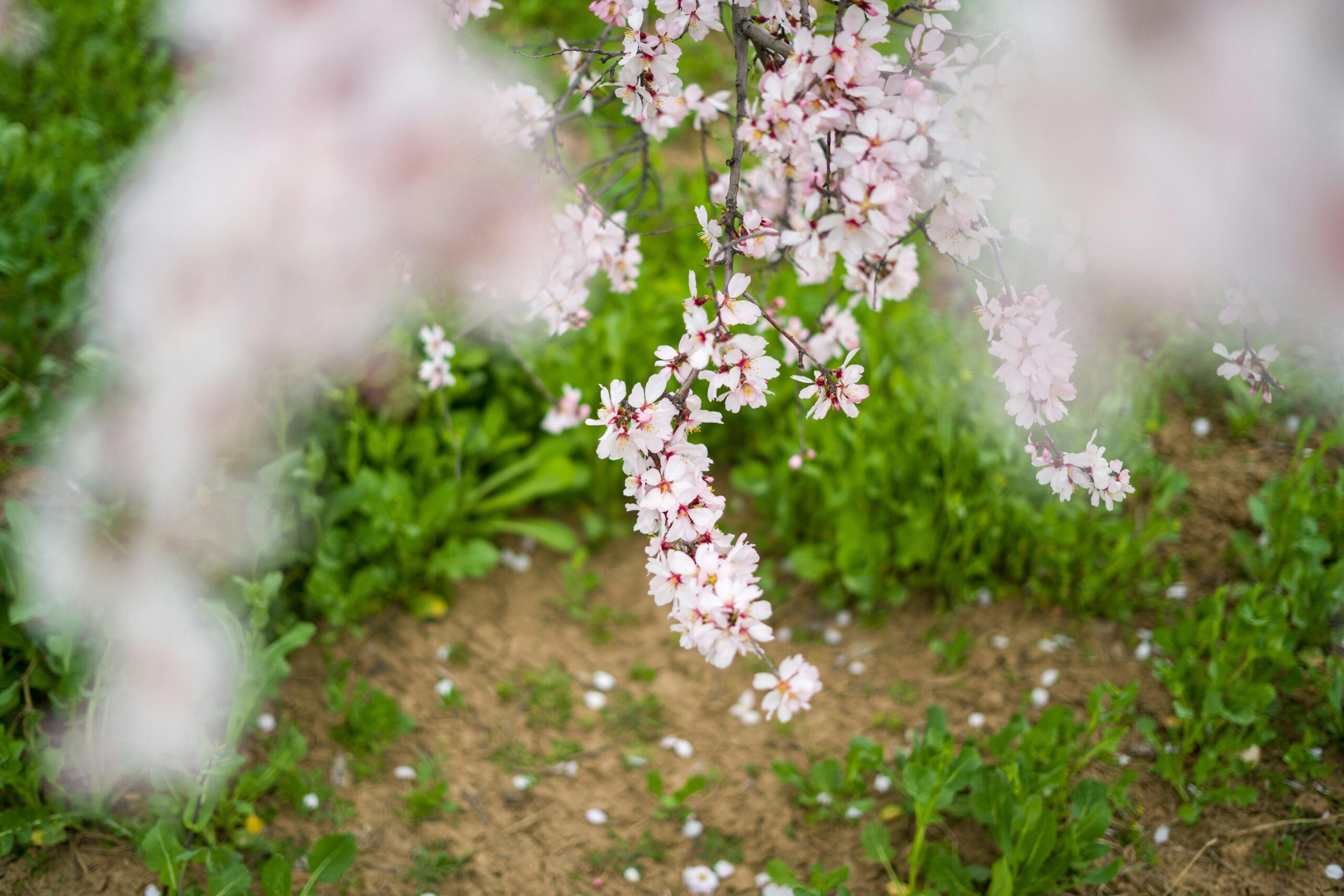
Most visitors never think to ask this. They book a trip, land in Srinagar, and head to Badamwari. They spend a morning under pink and white trees. They don’t know those trees are almonds. For the trip itself, it barely matters. Both blooms are pink. Both are gone in two weeks. Both draw the same crowds. But for timing, the gap is real.
Almond trees bloom two to three weeks before cherry blossoms. Arrive in the first week of March looking for cherries and you get almonds. Arrive in late April looking for either and you get green leaves. The overlap sits in the last week of March, hit that and you see both.
The visual difference matters for photography. The almond trees at Badamwari are old and wide. Orchard-scale and you stand under a canopy, not beside a single tree. Cherry trees at the Tulip Garden are younger and more delicate. Smaller blossoms, softer clusters. A different look entirely. Know which image you want before picking your garden.
Weather in Kashmir During Blossom Season — What to Pack
March is cold and April is kinder. Both need layers. In March, Srinagar temperatures range from about 4°C to 14°C. By April, that shifts to 10°C to 20°C. Mornings are always cooler than afternoons. Early garden visits in March mean cold hands fast. A thin thermal under a fleece handles most of the day. By noon it warms enough to drop the outer layer. Evenings dip back down, mostly near Dal Lake where cold air sits over the water. Pack light. Layer well.
Four things that matter for a blossom trip:
- A packable down jacket: light enough for a day bag, needed before 9 AM and after 6 PM
- Walking shoes with grip: Badamwari paths can be uneven and damp from morning dew
- A small day bag: hands-free for garden visits and photography
- A power bank: cold weather drains phone batteries fast
Not sure what else to pack for spring in Kashmir? The full what-to-wear guide covers layers, footwear, and gear for the season.
Conclusion
The trip is about timing. Get the week right and the valley gives you pink and white trees against Himalayan ridges. Cold morning air. A quiet that most Indian hill stations cannot offer. Get it wrong by ten days and you get spring without the blooms. Last week of March is the safest single window. Cherry trees peak, and almond bloom is in its final days. The Tulip Festival opens just after. The city is still in full season, book flights first. Book gardens online before arriving. Get to Badamwari before 9 AM. That is the plan.