
Bhrigu Lake Trek
A Scenic Himalayan Adventure Through Alpine Meadows
Bhrigu Lake Trek: Complete Overview
The Bhrigu Lake Trek is a moderate, four-day trek from Manali to a high-altitude lake above 14,000 feet. Fit beginners can do it. The route starts at Gulaba and climbs through forest into open meadows on day one itself. It ends at a glacial lake tucked between two ridges of the Pir Panjal range. Ask five different operators for the exact altitude or duration and you get five different answers. This guide explains why, and gives you the numbers that actually matter for planning.
5 Reasons Bhrigu Lake Trek Stands Apart
Click each reason to read the full story.
Open grassland begins right after the Gulaba forest climb, not after days of walking.
The base camp sits in a natural bowl with clear sightlines to Hanuman Tibba and the Seven Sisters peaks.
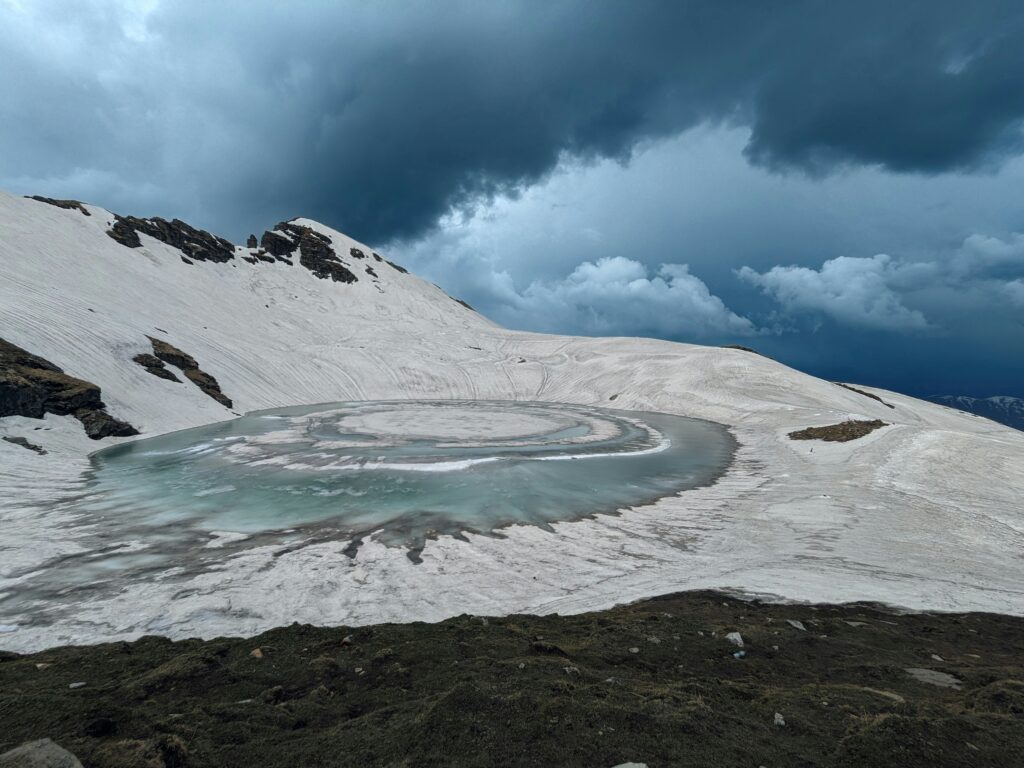
A glacial lake above 14,000 feet that shifts color through the day, from pale green at dawn to deep blue by afternoon.
July and August bring blooms across the meadows that rival better-known flower treks in the region.
local belief holds that the lake never fully freezes, tied to the sage Bhrigu, who is said to have meditated at its edgE.
Bhrigu Lake Trek: Detailed Day-by-Day Guide
| Day | Route | Distance | Altitude | Elevation Gain | Elevation Loss | Trek Time |
|---|---|---|---|---|---|---|
| Day 1 | Manali → Gulaba → Rola Kholi | ~7 km | ~10,000 ft | ~3,500 ft | — | 4–5 hrs |
| Day 2 | Rola Kholi → Bhrigu Lake → Rola Kholi | ~10 km | ~14,000 ft | ~4,000 ft | ~4,000 ft | 7–8 hrs |
| Day 3 | Rola Kholi → Gulaba → Manali | ~7 km | ~8,500 ft | — | ~3,500 ft | 3–4 hrs |
| Day 4* | Buffer / Split Descent → Manali | Varies | Varies | Varies | Varies | Varies |
Quick stats: Distance: 7 km | Time: 4-5 hrs | Altitude: 10,000 ft
A short drive covers the 22 to 24 km from Manali to Gulaba. From there, the trail climbs almost immediately through dense forest, gaining close to 3,500 feet before the trees thin out. You reach open grassland inside the first two hours, then walk the rest of the way to Rola Kholi through rolling meadow. Camp is set up on the grazing ground itself, with views straight down into the Solang Valley if the evening stays clear.
Quick stats: Distance: 10 km | Altitude: +14,000 ft| Time: 7-8 hrs
This is the long day, and it surprises first-timers who expect to move camp each night. You don’t. The trail climbs a rocky ridge for close to two hours, levels briefly, then climbs again to the lake. Snow lingers near the top well into July some years. Once at the lake, most trekkers spend 30 to 45 minutes by the water before retracing the exact same route back to Rola Kholi.
Quick stats: Distance: 7 km | Altitude: 8,000 ft | Time: 3-4 hrs
The descent runs mostly downhill and moves faster than the climb up. It works your knees harder than the ascent did, though. You pass back through the same meadows and forest, seeing them from the other direction this time. A short drive returns you to Manali by late afternoon.
Quick stats: Altitude: 12,467 ft | Distance: 6 km | Time: 6-7 hrs
Operators running the four-day version add this either before the trek starts, in Manali, or by splitting the descent across two gentler days. Neither changes what you see. It only changes how tired your legs feel by the end.
How Difficult Is the Bhrigu Lake Trek: Honest Assessment
Moderate undersells the first day. It doesn’t undersell the rest. The steepest stretch of the whole trek happens in the first two hours out of Gulaba. You gain roughly 3,500 feet through forest before the trail eases into meadow walking. That single stretch, not the lake-summit day, is what actually tests your fitness. The climb to the lake covers more distance. It sits on a far gentler gradient, broken up by a level walk partway through.
The Bhrigu Lake Trek has a moderate terrain difficulty. The trail starts through dense forest before opening into wide alpine meadows. The climb to Bhrigu Lake is steeper, with rocky sections and uneven ground. The descent can feel tough on the knees. Snow may make the upper trail slippery during early-season treks, requiring careful footing.
| Month | Day Temperature | Night Temperature | Weather Conditions | Trail Conditions |
|---|---|---|---|---|
| May | 8°C to 15°C | −2°C to 4°C | Cool with lingering snow | Snow patches on upper trail |
| June | 15°C to 20°C | 1°C to 5°C | Cool, clear mornings and occasional clouds | Snow near the lake; meadows begin turning green |
| July | 15°C to 20°C | 1°C to 5°C | Cool with rain and cloud cover | Green meadows; slippery sections possible |
| August | 12°C to 18°C | 0°C to 4°C | Cool and wet with frequent showers | Lush meadows and occasional muddy sections |
| September | 12°C to 15°C | 0°C to 3°C | Cool, clearer skies after monsoon | Mostly dry trail with little or no snow |
| October | 10°C to 16°C | −1°C to 5°C | Crisp, cold and increasingly dry | Dry trail; early winter conditions possible |
The weather changes quickly with altitude. June to September generally brings cool days, cold nights, and occasional rain, while snow can remain around the lake early in the season. Indiahikes records around 15–20°C during the day and 1–5°C at night in mid-June to mid-July, with temperatures dropping further later in the season.
Bhrigu Lake Trek starts from Gulaba at around 10,000 ft and climbs to nearly 14,000 ft at the lake. The rapid altitude gain makes acclimatization important, especially for first-time trekkers. Walk slowly, drink water regularly, eat properly, and avoid pushing through severe headache, dizziness, nausea, or breathlessness. Give your body time to adjust, and descend if serious altitude-related symptoms worsen.
Bhrigu Lake Trek reaches high altitude, so weather and trail conditions can change quickly. Follow your trek leader’s instructions and avoid trekking alone.
- Check weather conditions before starting each day.
- Carry a rain jacket, warm layers, gloves, and a headlamp.
- Walk carefully on snow, rocks, and muddy sections.
- Stay hydrated and maintain a steady pace.
- Inform your trek leader immediately about severe headache, vomiting, dizziness, confusion, or breathing difficulty.
- Do not continue towards the lake if weather conditions become unsafe.
- Emergency exit: From Rola Kholi, descend towards Gulaba using the same trail. From Gulaba, road access allows evacuation towards Manali.
- During a medical emergency, the trek team should coordinate evacuation based on weather, trail conditions, and vehicle access.
Best Time to Do the Bhrigu Lake Trek: Season by Season
June through September covers the safest window for the Bhrigu Lake Trek. Each month inside it looks different, though. Early June still carries real snow. The final climb to the lake can be slow going. You will need four warm layers for nights that drop close to freezing at Rola Kholi. The reward is a lake still half-frozen, with chunks of ice drifting on deep blue water. That sight disappears completely by late July.
May and June are good months for the Bhrigu Lake Trek if you want to experience a mix of snow and green mountain landscapes. May usually has more snow on the higher sections, while June brings greener meadows and relatively warmer daytime weather. The upper trail can still be cold and slippery, so proper trekking shoes, warm layers, and rain protection remain important.
October brings crisp weather, clearer skies, and better visibility around the Bhrigu Lake trail. The monsoon has usually passed, leaving the meadows and mountain views looking fresh. Daytime temperatures are comfortable for trekking, while nights become noticeably cold. Snow can begin appearing on higher sections towards the end of the month, so carry warm layers and prepare for changing conditions.
How to Reach Bhrigu Lake Trek: Complete Travel Guide
Getting to Manali is the real journey. Gulaba, the actual trek start, is a short hop from there. Overnight buses from Delhi’s ISBT Kashmere Gate take 12 to 14 hours. They remain the most common route in. Flying into Bhuntar Airport near Kullu cuts travel time sharply. Flights get cancelled often enough in bad weather, though. Landing the same day your trek starts is a real risk. Build in a buffer day if you fly. From Manali, a taxi to Gulaba takes 45 minutes to an hour. Most operators bundle this transfer into the package fee.
From Delhi, the easiest route is to travel to Manali, the starting point for the Bhrigu Lake Trek. Volvo and overnight buses run from Delhi to Manali and usually take around 12–14 hours. You can also take a flight from Delhi to Bhuntar Airport, around 50 km from Manali, and continue by taxi or bus. From Manali, drive towards Gulaba, where the trek begins.
From Mumbai, the most convenient option is to fly to Delhi or Chandigarh and continue towards Manali by road. Another option is to fly from Mumbai to Bhuntar Airport, subject to flight availability, and take a taxi to Manali. Once in Manali, Gulaba is around 20–25 km away by road. Your trek operator can arrange the transfer to the trailhead.
From Bangalore, fly to Delhi or Chandigarh and continue to Manali by overnight bus or taxi. Flying to Bhuntar is another option when suitable connections are available. From Bhuntar, Manali is around 50 km by road. After reaching Manali, travel approximately 20–25 km to Gulaba, the roadhead for the Bhrigu Lake Trek. Allow extra travel time for mountain-road conditions.
- Keep your return travel at least 3–4 hours after reaching Manali to allow for delays.
- Avoid booking tight flight or bus connections on the same day as the trek.
- If flying, keep Bhuntar Airport as an option, but check flight schedules before booking.
- For Delhi, overnight buses from Manali are a practical return option.
- Carry some cash for local taxis, food, and small expenses.
- Keep one warm layer handy even after leaving the trail.
- Mountain roads can face traffic, rain, or temporary delays, so keep your return schedule flexible.
Before the trek: Stay in Manali, preferably around Old Manali, Mall Road, or nearby areas. This keeps you close to transport, restaurants, pharmacies, and trekking shops. Staying in Manali the night before also gives you time to rest and prepare for the trek.
After the trek: Return to Manali and stay another night if your travel schedule allows. This is useful after the long descent and gives you a comfortable buffer before travelling back home. You can also use the evening to rest, eat, and explore Manali.
What the Bhrigu Lake Trek Experience Is Like: Camps, Food, Stay
The Bhrigu Lake Trek feels like a quick journey through changing Himalayan landscapes. You start in forest, walk across open alpine meadows, and climb towards the high-altitude lake. The trail is physically demanding but rewarding, with changing views of snow-covered peaks, valleys, and wide mountain slopes throughout the trek.
Accommodation is usually in tents at designated campsites, rather than hotels or permanent shelters. On the standard itinerary, you camp around Rola Kholi and return to the same campsite after visiting Bhrigu Lake. Tents provide basic shelter from cold and changing mountain weather. In Manali, you can choose a hotel, hostel, or guesthouse before and after the trek.
Meals on the Bhrigu Lake Trek are usually simple, warm, and filling. Trek camps generally serve breakfast, lunch, evening snacks, and dinner, depending on the itinerary. Common meals include rice, dal, roti, vegetables, noodles, khichdi, and tea. Carry personal snacks such as dry fruits, energy bars, and chocolates for quick energy during long climbs.
Toilet facilities on the Bhrigu Lake Trek are basic compared with those in hotels. Camps usually have temporary toilet tents or designated toilet areas at the campsite. Carry toilet paper, hand sanitiser, biodegradable waste bags, and personal hygiene essentials. Use only designated toilet areas, keep water sources clean, and pack out sanitary waste according to your trek operator’s instructions.
- 6:00–7:00 AM: Wake up and freshen up.
- 7:00–8:00 AM: Have breakfast and prepare your daypack.
- 8:00 AM onwards: Start trekking at a steady pace.
- During the trek: Take short breaks for water, snacks, and rest.
- Afternoon: Have lunch along the trail or at the campsite.
- Late afternoon: Reach camp and settle into your tent.
- Evening: Enjoy tea, relax, and spend time around the campsite.
- 7:00–8:00 PM: Have dinner and prepare for the next day.
- By 9:00–10:00 PM: Sleep early for proper rest.
Bhrigu Lake Trek Packing List: What to Carry
Layering matters more than any single item on this list. Temperatures swing from 15°C in daytime sun to well below freezing at night. Sometimes that swing happens within the same 12 hours. A trekking pole is not optional gear here, whatever some packing lists suggest. It cuts the knee strain on the Day 3 descent, where the trail loses altitude fast and steadily. Pack a headlamp too. Early starts on the lake-summit day often begin before sunrise.
Clothing: The Layering System
Layering on the Bhrigu Lake route works because it traps warm air in thin pockets between fabrics. One thick jacket cannot do what three thin layers can. You add layers when cold, strip layers when warm. That flexibility is the point.
Layering
- Base layer: Wicks sweat and keeps you dry.
- Mid layer: Provides warmth during cold weather.
- Outer layer: Protects against wind, rain, and snow.
- Trekking pants: Keep legs comfortable and flexible.
- Gloves: Protect hands from cold temperatures.
- Cap: Keeps your head warm and protected.
- Trekking socks: Keep feet warm and dry.
- Rain jacket: Adds protection during sudden showers.
Footwear
- Trekking shoes: Choose sturdy shoes with good grip and ankle support.
- Waterproofing: Prefer waterproof or water-resistant shoes for rain and wet sections.
- Sole: Look for deep lugs that grip rocks, mud, and loose terrain.
- Socks: Carry 2–3 pairs of moisture-wicking trekking socks.
- Fit: Keep enough space for comfortable movement without your heel slipping.
- Avoid: Do not use sports shoes, sneakers, sandals, or brand-new shoes
Gear
- Backpack: Carry a comfortable 40–50L trekking backpack.
- Daypack: Keep a small 20–30L daypack for daily essentials.
- Trekking poles: Help with balance on steep climbs and descents.
- Headlamp: Carry one with spare batteries for early starts or emergencies.
- Water bottles: Carry at least 1.5–2 litres of water.
- Rain cover: Protect your backpack from sudden rain.
- Sunglasses: Use UV-protected sunglasses for bright mountain conditions.
- Sun protection: Carry sunscreen, lip balm, and a sun cap.
- Power bank: Keep your phone charged when electricity is unavailable.
- Personal first-aid kit: Include basic medicines, bandages, and prescribed medication.
Personal Essentials
- Sunscreen SPF 50+. UV at 12,000 feet is 40 percent stronger than at sea level. Reapply every 3 hours on summit day.
- Lip balm with SPF. Cracked lips at altitude are painful and slow to heal.
- Toiletries: Biodegradable soap and shampoo only.
- Personal medication: Carry your own prescriptions plus paracetamol, Imodium, ORS packets, band-aids, and blister pads.
What NOT to Carry
Heavy jeans or cotton clothing. Cotton absorbs sweat and refuses to dry at altitude. This is how hypothermia starts. More than 8 to 9 kg total backpack weight. If your bag is heavier, use our offloading service. Carry a daypack with water, snacks, sunscreen, rain cover, and a warm layer. Leave the rest.
How to Get Fit for the Bhrigu Lake Trek
Can you walk or jog 5 km in under 35 minutes? That is the one test that matters here. This is the benchmark most operators use, and it holds up. Running builds the combination your legs need here. It gives you cardio endurance for the climb. It also builds the foot control that keeps you steady on rocky ground. Swimming and cycling help your lungs but do little for that foot control. Treat them as a supplement, not a replacement.
The Fitness Benchmark
Run this test tomorrow. If you pass all three, you are ready for the Bhrigu Lake trail.
If you cannot clear these right now, you have 6 weeks. That is enough. Follow the plan below.
Days 1–3: Start with a 40–45 minute brisk walk each day to build basic stamina. Add simple exercises such as squats, lunges, and calf raises. Keep the intensity comfortable and focus on maintaining a steady pace rather than walking as fast as possible.
Days 4–7: Increase your walking time to 50–60 minutes and add stairs or uphill walking. Include step-ups and lunges to strengthen your legs for the climbs. On Day 6, try a longer 60-minute walk with a light backpack. Keep Day 7 for rest and gentle stretching.
Days 8–10: Increase the workload gradually with 50–60 minutes of brisk walking, stair climbing, and step-ups. On one day, carry a 4–5 kg backpack to get used to trekking with weight. Keep one session easier so your muscles have enough time to recover.
Days 11–14: Focus on longer walks and trekking-style training. Complete a 60-minute uphill or stair session, followed by a 75–90 minute steady walk with a light backpack. Keep the final day completely for rest and recovery. Avoid exhausting workouts immediately before the trek.
If you are not physically prepared, the climbs can feel much harder than expected, especially on the steep sections towards Bhrigu Lake.
- You may tire quickly and need frequent breaks.
- Steep climbs can cause heavy breathing and slower progress.
- Your legs may develop muscle soreness or cramps.
- Descents can put extra stress on your knees and ankles.
- Carrying a backpack may feel uncomfortable after several hours.
- Poor stamina can make it harder to maintain a steady trekking pace.
- At high altitude, symptoms such as headache, nausea, dizziness, or unusual breathlessness should not be ignored.
- If you cannot continue safely, your trek leader may recommend turning back or descending.
Trekkers aged 55+: The Bhrigu Lake Trek involves steep climbs and high altitude, so older trekkers should prepare well and consider a medical check-up before the trek. Build stamina gradually and discuss any existing health concerns with a doctor.
Children: Children should be able to comfortably handle several hours of walking on uneven mountain terrain. Parents should consider the child’s fitness, previous trekking experience, and ability to follow instructions before planning the trek.
Medical conditions: Anyone with a heart, lung, blood-pressure, joint, or other significant medical condition should consult a qualified doctor before attempting a high-altitude trek. Carry prescribed medicines and inform the trek team about relevant medical needs.
Bhrigu Trek Cost: Complete Pricing Breakdown
No ranges. No “starting from” estimates. Here is the exact cost.
| Cost Head | Amount | Details |
|---|---|---|
| Trek Package | ₹4,500 | Complete trek package |
| Accommodation | Included | Camping during the trek |
| Meals | Included | Meals during the trek |
| Trek Guide & Support | Included | Guide and trek support team |
| Transportation | Extra | Travel to and from Manali |
| Personal Expenses | Extra | Snacks, tips and personal purchases |
What Is Included
- Accommodation in tents on a sharing basis.
- All meals during the trek, including breakfast, lunch and dinner.
- Experienced trek leader and support staff.
- Camping equipment such as tents, sleeping bags and mattresses.
- Manali–Gulaba–Manali transportation as per the itinerary.
- Forest permits and applicable entry fees.
- Basic first-aid and safety equipment.
- Drinking water during the trek.
- Kitchen and camping support staff.
What Is Not Included
- Travel to and from Manali from your home city.
- Hotel or guesthouse stay in Manali before or after the trek.
- Personal trekking gear such as shoes, backpack, jacket, gloves and trekking poles.
- Backpack offloading charges, if you choose a porter or mule.
- Personal expenses such as snacks, beverages, laundry and tips.
- Travel or adventure insurance.
- Medical treatment, emergency evacuation or hospitalisation costs.
- Extra accommodation or meals caused by early return or delays.
- Costs arising from bad weather, landslides, roadblocks or other unforeseen conditions.
- Anything not specifically mentioned under the inclusions.
- GST on the trek price, if ₹4,500 is quoted before tax.
- Travel to Manali and back from your home city.
- Extra hotel night in Manali before or after the trek.
- Backpack offloading if you do not want to carry your full rucksack.
- Trekking gear rental or purchase such as shoes, jackets, poles and backpacks.
- Extra food and snacks outside the included trek meals.
- Bottled drinks or personal beverages during the journey.
- Cloakroom or extra luggage charges for bags left in Manali.
- Personal medicines and basic medical supplies.
- Tips for guides, cooks and support staff, if you choose to give them.
- Emergency transport or extra stay if bad weather or another situation delays your trek.
- Buffer-day expenses if you keep an extra day in Manali.
For a ₹4,500 Bhrigu Lake Trek, it is better to keep some extra cash aside instead of planning your entire budget around the package price. Current 2026 listings also show that taxes and optional services such as offloading can sit outside the headline trek fee.
The ₹4,500 price is based on the actual costs involved in running the trek safely and comfortably, not just the cost of camping.
- Experienced trek team: Your trek is managed by trained leaders and support staff throughout the route.
- Camping setup: Tents, sleeping arrangements, kitchen equipment and other camping gear require transport and maintenance.
- Nutritious meals: Food has to be carried to the campsite and prepared by the kitchen team.
- Manali–Gulaba transport: The trek includes transport required to reach the trailhead and return after the trek.
- Permits and local charges: Applicable forest and local permissions are managed as part of the trek operation.
- Safety equipment: First-aid supplies and essential safety equipment are kept ready for the group.
- Support staff: Cooks, helpers and other ground staff work behind the scenes to keep the trek running smoothly.
- Logistics: Food, fuel, camping equipment and other supplies have to reach remote campsites before the group arrives.
- Trek planning: Route planning, coordination, weather checks and daily trek management are part of the operating cost.
- Emergency support: A portion of the operational cost goes towards maintaining the team’s ability to respond when unexpected situations arise.
| Cancellation Time | Refund |
|---|---|
| 30 days or more before trek | 90% refund |
| 15–29 days before trek | 50% refund |
| 7–14 days before trek | 25% refund |
| Less than 7 days before trek | No refund |
| No-show / Trek already started | No refund |
| Trek cancelled due to unsafe weather or unavoidable conditions | Reschedule or refund as per applicable conditions |
Safety Terms
- Follow all instructions given by the trek leader and support team.
- Stay with the group and do not leave the marked trail alone.
- Trek at a steady pace and avoid rushing on steep sections.
- Carry proper trekking shoes with good grip.
- Keep yourself hydrated and take regular rest breaks.
- Inform the trek leader immediately about headache, dizziness, nausea, unusual breathlessness or extreme weakness.
- The trek leader may ask you to descend if your health or the weather makes continuing unsafe.
- Do not continue towards Bhrigu Lake during unsafe weather or poor visibility.
- Do not consume alcohol, smoke or use recreational drugs during the trek.
- Do not litter. Carry your waste back and use designated disposal areas.
- Keep your emergency contacts and personal medical information accessible.
- In case of a serious emergency, follow the team’s evacuation instructions and descend towards Gulaba/Manali as directed.
- Trek schedules and routes may change because of weather, trail conditions, roadblocks or other unavoidable conditions.
Manli to Manali
(Transportation Included)
Upcoming Batches
“I started Kedarkantha Trek because the mountains changed my life, and I wanted to make that transformation accessible to anyone willing to walk. Every trail we run, I ask: would I send my own family on this batch?”
Ritesh Mishra
Founder, kedarkanthatrek.in • 12 years in Himalayan trekking
Bhrigu Lake a Trek: Frequently Asked Questions
Is the Bhrigu Lake Trek difficult for beginners?
Yes, a fit beginner can complete it. The trek is rated moderate. The hardest single stretch, the climb out of Gulaba on Day 1, is over within two hours. Train beforehand and you will be fine.
What is the best time for the Bhrigu Lake Trek?
June through September is the safest window. Go in June for snow at the lake. Go in September for the clearest skies and easiest footing.
How much does the Bhrigu Lake Trek cost?
Operator packages run roughly ₹4,500 to ₹8,500 for 2026. The exact figure depends on trek length and whether insurance and transport are bundled in.
Is there mobile network on the trek?
Coverage holds in Manali, then fades out almost entirely past Gulaba. Some campsites occasionally catch a weak signal, but don’t count on it.
Can I do the Bhrigu Lake Trek without a guide?
You can, but it isn’t recommended. The meadow trail above Rola Kholi fades out in fog often enough. Solo navigation carries real risk here, especially during monsoon.
Treks Similar to Kedarkantha: What to Do Next
Brahmatal Trek
Brahmatal’s summit sits at 12,250 feet, just 250 feet lower than Kedarkantha. The trekking distance is longer at 22 km across 4 trekking days. The trail passes two frozen lakes instead of one. The mountain views are different: Trishul and Nanda Ghunti dominate the skyline instead of Swargarohini and Bandarpoonch. If you loved the snow and summit experience on the Kedarkantha trail and want a similar challenge with new scenery, Brahmatal is the natural next step. Best done in January or February.
Har Ki Dun
Har Ki Dun runs 7 days and covers 45 km through the same national park. Both treks start from Sankri. The difficulty is comparable, but the longer duration tests endurance more than altitude. The route follows the Supin River through ancient Garhwali villages. Swargarohini appears up close from the valley floor. If you want to go deeper into the same mountain range, this is the trek.
Dayara Bugyal
Dayara Bugyal is a high-altitude meadow trek that peaks at around 11,800 feet. The gradient is gentler than Kedarkantha. The meadows are wider. No steep summit push. If you are trekking with children under 8 or family members who prefer rolling green terrain over snow and summits, Dayara Bugyal is the safer introduction.
Deoriatal Chandrashila
Deoriatal Chandrashila combines a lake, a temple (Tungnath), and a summit (Chandrashila, 13,123 ft). The trek is 6 days and mixes cultural stops with mountain trail. If you want more variety in terrain and experience types than Kedarkantha offers, this trek delivers that range.
Further Reading on the Kedarkantha Trek
How We Started Running the Kedarkantha Trek from Sankri — by our founder. The origin story of our Sankri operations, why we chose this route, and what we learned in the first three seasons.
Kedarkantha Trek in January: A Complete Month Guide — by Sneha, who trekked with us in January 2026. Trail conditions, crowd levels, and what surprised her about deep winter on this route.
What Our Youngest Trekker Taught Us About the Kedarkantha Trail — by trek leader Vikram. The story of Aarav Kapoor, age 10, and how his pace changed how we think about family batches.
Kedarkantha vs Brahmatal: Which Winter Trek Should You Do First? — A head-to-head comparison by a trekker who did both in the same season.
The Season-Wise Kedarkantha Packing Guide — with month-by-month clothing recommendations and a downloadable checklist.
