
Dayara Bugyal Trek
India’s most stunning winter summit, made for first-timers and seasoned trekkers alike
Dayara Bugyal Trek: Complete Overview
The Dayara Bugyal Trek is an easy to moderate Himalayan trek. It runs four trekking days out of Raithal village in Uttarakhand. The trail climbs through oak and rhododendron forest to a meadow set above 11,830 feet. Beginners can do it. So can families with kids past eight years old. Total distance runs somewhere between 18 and 22 km, depending on the operator’s exact route. Only two stretches on the whole trail ever feel genuinely steep. Expect wide grasslands, sharp views of Bandarpoonch and the Gangotri peaks, and campsites tucked into forest clearings. This guide covers cost, the day-by-day route, real difficulty, and the best time to go in 2026.
5 Reasons Dayara Bugyal Trek Stands Apart
Click each reason to read the full story.
Dayara Bugyal is known for its vast green meadows surrounded by Himalayan peaks. The open landscape makes the trek feel different from forest-heavy mountain trails.
The trek offers views of peaks such as Bandarpoonch, Black Peak, and Srikanth. On clear days, the mountain panorama is one of the main highlights of the route.
The trail has a gradual climb through forests, meadows, and mountain paths. With proper fitness and preparation, it can be a suitable choice for people doing their first Himalayan trek.
Dayara Bugyal changes with the seasons. Summer brings green meadows and flowers, autumn offers clearer mountain views, while winter covers the landscape in snow and turns it into a popular winter trekking destination.
The trek offers views of prominent Himalayan peaks and ranges, including Bandarpoonch, especially on clear days.
Dayara Bugyal Trek: Detailed Day-by-Day Guide
| DAY | ROUTE | DISTANCE | DURATION | ALTITUDE GAIN | ALTITUDE LOSS |
|---|---|---|---|---|---|
| 1 | Dehradun → Raithal (Drive) | 175–200 km | 7–9 hrs | — | — |
| 2 | Raithal → Gui | 4–5 km | 4–5 hrs | +2,490–2,740 ft | — |
| 3 | Gui → Chilapada | 2.5–3 km | 2–3 hrs | +885 ft | — |
| 4 | Chilapada → Dayara Top → Nayata | 9–12 km | 6–8 hrs | +665–1,315 ft | — |
| 5 | Nayata → Raithal | 4–5 km | 4–5 hrs | — | -2,490–2,740 ft |
| 6 | Raithal → Dehradun (Drive) | 175–200 km | 7–9 hrs | — | — |
Quick stats: Distance: 200 km | Time: 7-9 hrs | Altitude: 640 m → 1,950 m
Most operators pick you up in Dehradun by 6 to 7 am. The drive covers roughly 175 to 200 km through Mussoorie, Uttarkashi, and Bhatwari. It takes seven to nine hours. Raithal sits at 7,140 feet. The evening is usually free. Most groups use it to walk through the village and meet the rest of the team.
Quick stats: Distance: 4-5 km | Altitude: +2740 m | Time: 4-5 hrs
Day two is the one stretch of the whole trek that actually tests your legs. The trail leaves Raithal through village fields. Within an hour you hit a flat grassy clearing with a hand pump. It’s a good spot for a water break before the real climb starts. Past that point, the forest closes in fast. Oak and rhododendron crowd the trail on both sides. Unlike other Himalayan approach trails, there’s no pine here at all, just green and brown oak canopy overhead. The gradient stays steady rather than brutal, which matters more than people expect on a first Himalayan trek. You gain roughly 2,500 feet over 4.5 km, spread across four to five hours.
The climb never feels rushed. Small clearings open up along the way before the trail delivers you to Gui. The campsite sits inside a forest clearing. A scatter of village huts sits nearby, used by locals in summer. A small forest department hut sits close by too. Sunset over the lake near camp is worth staying up for. Woodpeckers are common in this stretch if you keep your eyes up. Your legs will feel today. Tomorrow won’t.
Quick stats: Distance: 3 km | Altitude: +885 ft | Time: 2-3 hrs
Day three trades distance for atmosphere. It’s a short day, barely 2.5 to 3 km, so there’s no rush leaving Gui. The trail climbs gently toward Gui Thatch, a small meadow tucked inside the forest. A handful of shepherd huts sit here. Next to them is a compact pond, the best photo stop on this stretch. Bandarpoonch and the full Gangotri range line up clearly from here on a clear morning. First-time trekkers usually stop talking for a minute. Past the thatch, a relaxed half-kilometer walk winds through rhododendron forest.
It ends at a rest point near an umbrella-shaped rain shelter. Take the full ten minutes here. Chilapada is close. The last stretch runs along a narrower side trail that’s easy to miss if you’re moving too fast. Chilapada itself sits right at the edge of open meadow. You can already see tomorrow’s route stretching out ahead. Some trekkers use the short day to rest. Others use it to explore Chilapada Top before dark.
Quick stats: Altitude: +665-1,315 ft ft | Distance: 9-12 km | Time: 6-8 hrs
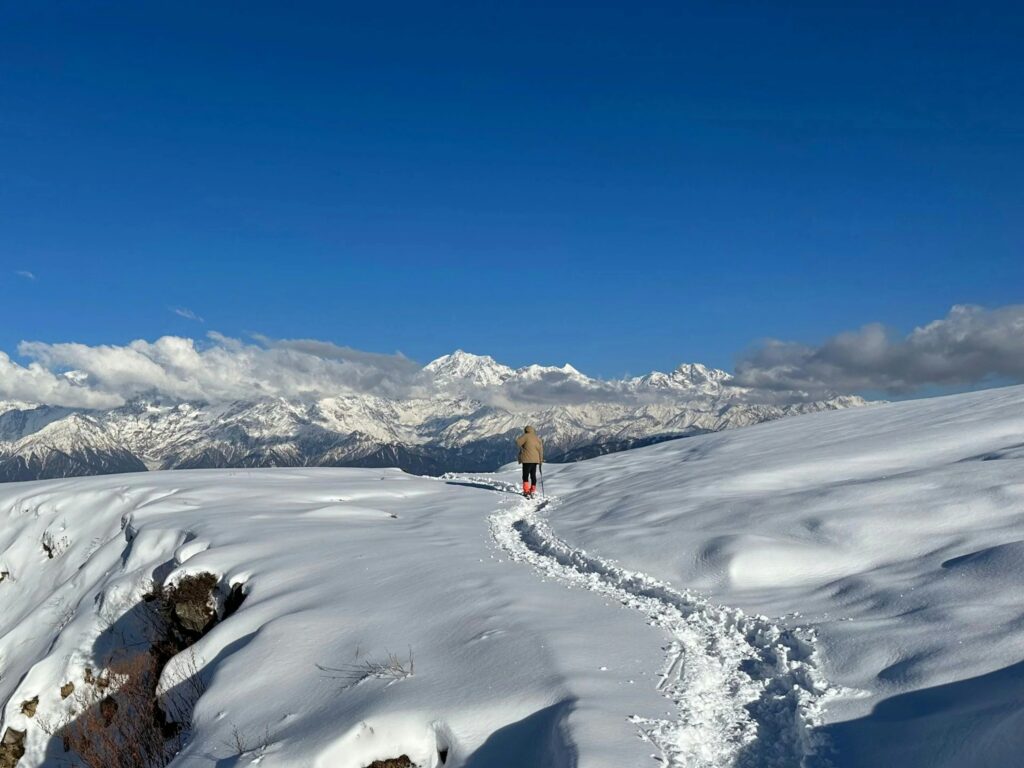
Day four is summit day, and it’s the longest one on the trek by a wide margin. Six to eight hours cover 9 to 12 km. The first half hour climbs straight out of the treeline into open meadow. The full scale of Dayara Bugyal only becomes visible once you clear that last stand of trees. Most trekkers stop right there before pushing on, phones out, for a good five minutes. From May through June, the meadow fills with yellow, violet, and white wildflowers. They grow thick enough in places that you’ll deliberately walk around them. Snow blankets the same ground from December through February instead. The final approach to the top gets genuinely steep in those months. Microspikes stop being optional gear. From the top, somewhere between 11,180 and 11,830 feet, the view opens up completely.
Bandarpoonch and Kala Nag sit close enough to feel touchable. Spend real time here. It’s the actual point of the trek. Bring extra layers regardless of season, since wind on the open meadow cuts through fast. The descent to Nayata drops back through forest, roughly 45 minutes below the meadow’s edge. It ends the hardest day on a quiet note.
Quick stats: Distance: 4-5 km | Altitude: -2490-2740 ft
Day five is the easiest day of the trek, and also the one nobody remembers clearly afterward. Start by 9 am if you want to reach Raithal with daylight to spare. The full descent runs four to five hours. The trail drops steadily under heavy forest cover. It passes the point where an earlier side trail once split off toward Barnala on the way up.
A grassy clearing with a water source marks roughly the halfway point. It’s a good last break before the final push down. Raithal’s arch marks the finish line, half a kilometer from wherever you’re staying that night. Four hours, mostly downhill. Simple, and a little bittersweet after four days on the trail.
Quick stats: Distance: 200 km | Time: 7-9 hrs
The return leg mirrors the way in. Most groups reach Dehradun by early evening on the last day, seven to nine hours after leaving Raithal. Book onward flights or trains only after 8 or 9 pm that same day. Better yet, book for the following morning, to leave a buffer for mountain-road delays.
How Difficult Is the Dayara Bugyal Trek: Honest Assessment
Rates as easy to moderate, and that rating actually holds up on the ground. Two stretches make up nearly all the real difficulty on this trek. The first is the climb straight out of Raithal into the forest. It’s about a kilometer of genuinely steep trail. It settles into a steadier grade after that. The second is the final push to Dayara Top on day four. It turns from a walk into real work once you’re above 10,000 feet. Snow underfoot from December through February makes it worse.
Dayara Bugyal Trek difficulty rests on those two stretches, not the trek as a whole. Everything else is gradual, shaded, and forgiving. Even someone who has never worn a backpack above sea level can manage it. Altitude sickness is still a real risk above 10,000 feet, and it hits fit and unfit trekkers alike. Watch for headaches, nausea, or unusual fatigue rather than assuming fitness protects you.
The Dayara Bugyal Trek has a moderate and mostly manageable terrain, making it suitable for beginners with basic fitness. The trail starts with forest sections around Raithal and gradually climbs towards the higher meadows. You will walk on mud trails, rocky sections, grassy slopes and uneven mountain paths.
The climb from Raithal to Gui and Chilapada is steady, so the main challenge is maintaining a comfortable pace while gaining altitude. The Dayara Top section can feel more demanding because of the longer walking distance, steeper meadow slopes and changing weather. In winter, snow can cover the trail and make the terrain slower and more slippery.
There are no technical rock sections, rope climbs or difficult river crossings on the standard route. However, trekkers should still have good stamina, ankle stability and the ability to walk continuously for several hours. Proper trekking shoes become especially important when the trail is wet, snowy or muddy.
| SEASON | MONTHS | DAY TEMPERATURE | NIGHT TEMPERATURE | WEATHER & TRAIL CONDITIONS |
|---|---|---|---|---|
| Spring | March–April | 13°C–20°C | 0°C–5°C | Cool weather, melting snow and fresh greenery. Higher sections can still have snow. |
| Summer | May–June | 18°C–25°C | 5°C–10°C | Pleasant days, green meadows, blooming flowers and mostly comfortable trekking conditions. |
| Monsoon | July–August | 12°C–18°C | 4°C–9°C | Rain, cloud cover and slippery trails. Heavy showers can affect visibility and road access. |
| Autumn | September–November | 10°C–18°C | 0°C–5°C | Cool, clearer weather with good mountain visibility. Nights become colder towards November. |
| Winter | December–February | 8°C–12°C | -10°C–0°C | Snow-covered meadows, freezing nights and cold early mornings. Higher sections can remain below freezing. |
Dayara Bugyal has a cool mountain climate throughout the trekking season. Temperatures vary with altitude and season, with winter bringing snow and sub-zero nights. The ranges below are approximate and can change with weather conditions.
Dayara Bugyal Trek climbs from around 7,140 ft at Raithal to nearly 11,800 ft at Dayara Top, making gradual acclimatization important. The route gains altitude over several days, giving your body time to adjust to lower oxygen levels. Walk at a comfortable pace and avoid rushing on uphill sections. Drink water regularly, eat proper meals and get enough sleep at each camp. Mild headache or tiredness can occur as you gain altitude, but worsening symptoms should not be ignored. If you experience severe headache, vomiting, confusion or breathlessness at rest, inform your trek leader immediately and descend if advised.
Dayara Bugyal is a moderate Himalayan trek, but changing weather, altitude, slippery trails and cold temperatures can create risks. Stay with your trek group, follow the trek leader’s instructions and avoid walking alone. Carry proper trekking shoes, warm layers, rain protection, a headlamp, personal medicines and a basic first-aid kit. In case of altitude-related symptoms, do not continue climbing without informing the trek leader. The safest response is usually to stop ascending and descend to a lower altitude. For a serious injury or medical emergency, the trek team can arrange evacuation towards the nearest accessible roadhead, usually Raithal or Barsu, depending on the route and location.
Best Time to Do the Dayara Bugyal Trek: Season by Season
Every season here is not equally good for every kind of trekker, whatever the brochures claim. Winter, December through February, belongs to people chasing snow. Knee-deep powder covers the meadow. Temperatures drop well below freezing at night. The final climb to the top demands real gear and real care.
Dayara Bugyal becomes a snow-covered trekking destination. Expect freezing nights and snow on higher sections. This season is suitable for trekkers specifically looking for a winter and snow experience.
This is a good period for trekkers who want a mix of snow and fresh greenery. Higher sections can still have snow, while lower trails start becoming greener.
The weather is pleasant, with green meadows, blooming flowers and comfortable daytime temperatures. It is one of the better periods for clear meadow views and regular trekking conditions.
Clearer skies, crisp weather and better Himalayan visibility make autumn a popular trekking season. The meadows gradually turn golden as temperatures start dropping.
Rain can make the trails muddy and slippery, while clouds can reduce mountain visibility. Road conditions around the approach route can also be affected by heavy rainfall, so this period needs extra caution.
Dayara Bugyal is generally not operated during the peak monsoon period from July to August because heavy rain can make trails slippery and approach roads difficult. Trek operations also depend on local weather, forest permissions and safety conditions. Winter operations can continue during the snow season, but routes may be changed or restricted when snowfall is heavy. Always check the latest operator and local administration updates before planning your trek.
How to Reach Dayara Bugyal Trek: Complete Travel Guide
Most operators pick you up in Dehradun, usually around 6 to 7 am. From there, it’s roughly 175 to 200 km to Raithal, a seven to nine hour drive. Missing that pickup window means a long solo taxi chase to catch up. Plan to reach Dehradun the evening before your trek starts, not the morning of.
From Delhi, take a train or flight to Dehradun, the nearest major transport hub. From Dehradun, travel by road towards Raithal, the main base village for the Dayara Bugyal route. The road journey takes around 7–9 hours and passes through mountain towns and villages. You can book a shared taxi, private cab or use an organised trek operator’s transport. If travelling by train, reach Dehradun early enough to continue the road journey towards Raithal on the same day.
From Mumbai, the quickest option is usually a flight to Dehradun’s Jolly Grant Airport. From the airport, continue by road towards Raithal, which generally takes several hours depending on traffic and mountain-road conditions. Another option is travelling by train from Mumbai to Dehradun, although this takes considerably longer. Once you reach Dehradun, arrange a private taxi, shared vehicle or trek transport to Raithal. Plan your journey so you have enough time for the final mountain drive.
Travellers from Bangalore can take a flight to Dehradun, usually with a connection depending on the available schedule. From Dehradun, the journey continues by road to Raithal, which takes around 7–9 hours. You can choose a private cab, shared taxi or transport arranged by your trek operator. Train travel from Bangalore to Dehradun is another option, but it requires significantly more time. Reaching Dehradun a day before the trek can make the journey more comfortable.
After completing the trek, keep some buffer time for the return journey because mountain roads can be slower than expected. From Raithal to Dehradun, the drive usually takes around 7–9 hours, depending on road and traffic conditions. Avoid booking a flight or train too close to your expected arrival time. If you have an early flight from Dehradun, consider staying overnight in the city. Keep some cash for local transport and food stops, and check your phone network before leaving Raithal. During monsoon or winter, allow extra time for possible weather-related delays.
Before the trek: Staying in Dehradun is the easiest option if you are arriving by train or flight. It gives you access to hotels, restaurants, transport and last-minute shopping. If your trek starts early from Raithal, you can also stay in Uttarkashi or Raithal the night before, depending on your transport plan.
After the trek: If you finish the trek at Raithal during the afternoon, you can continue towards Dehradun and stay there overnight. This is useful if you have an early train or flight the next day. If you reach Dehradun late, avoid rushing for onward travel and book a hotel near your departure point.
Tip: Keep one extra night in your itinerary during winter or monsoon, as mountain-road delays can affect your return schedule.
What the Dayara Bugyal Trek Experience Is Like: Camps, Food, Stay
The Dayara Bugyal Trek is a mix of forest trails, open meadows, gradual climbs and wide Himalayan views. The trek starts from Raithal and takes you through Gui and Chilapada before reaching the expansive Dayara meadows. The trail is mostly moderate, with no technical climbing, but some sections can feel tiring because of the altitude and long walking hours. As you gain height, the landscape changes from dense forests to open alpine grasslands. The experience becomes especially different in winter when snow covers the meadows and higher trails. Overall, expect peaceful mountain surroundings, changing terrain and a steady Himalayan trekking experience.
Accommodation on the Dayara Bugyal Trek is usually a mix of homestays, guesthouses and campsites. Before the trek, trekkers generally stay in Raithal, where basic homestays and guesthouses are available. During the trek, accommodation is mainly in tented camps at designated camping areas such as Gui, Chilapada and the Dayara region. Facilities are simple and focused on comfort rather than luxury, with sleeping mats, warm sleeping bags and basic meals usually provided by trek operators. After completing the trek, you can stay in Raithal or travel back to Dehradun for a wider choice of hotels.
Food on the Dayara Bugyal Trek is generally simple, warm and energy-focused to support long hours of walking. Trek meals commonly include breakfast, lunch, evening snacks and dinner, with options such as poha, upma, paratha, dal, rice, roti, vegetables, khichdi and soup. Tea or coffee is usually available at camps. Since fresh supplies become harder to carry at higher altitudes, meal choices are more basic during the trek. Carry personal snacks such as dry fruits, energy bars, chocolates and glucose for quick energy. If you have dietary restrictions, inform your trek operator before the trek so suitable arrangements can be made.
Hygiene facilities on the Dayara Bugyal Trek are basic and limited, especially after leaving Raithal. Guesthouses and homestays at the base usually have regular toilets, while campsites use temporary or dry toilet arrangements. Hot water may not be available every day, so carrying wet wipes, hand sanitiser, biodegradable soap and toilet paper is useful. Avoid littering and always use the designated toilet area at camps. Keep your personal items and toiletries packed in waterproof bags. During the trek, follow your trek team’s instructions for waste disposal and maintain cleanliness around campsites to protect the fragile alpine environment.
- 6:00–6:30 AM: Wake up, freshen up and pack your day bag.
- 7:00 AM: Have a warm breakfast at the campsite.
- 7:30–8:00 AM: Start trekking after a short briefing from the trek leader.
- 10:00 AM: Take a short break for water and snacks.
- 12:30–1:30 PM: Stop for lunch and rest.
- 2:00–4:00 PM: Continue towards the day’s campsite, depending on the route.
- 4:00–5:00 PM: Reach camp, relax and enjoy the mountain views.
- 5:30 PM: Have tea or snacks and spend some time around camp.
- 7:30–8:30 PM: Have dinner and prepare your belongings for the next day.
- 9:00 PM: Rest early so your body is ready for the next day’s trek.
Dayara Bugyal Trek Packing List: What to Carry
Two items every packing list buries matter more than half the list combined. Bring a headlamp with spare batteries, since campsites have no lighting once the sun drops. Carry more cash than feels necessary too. The last reliable ATM sits in Uttarkashi, well before the basecamp, and Raithal itself has none.
Clothing: The Layering System
Layering on the Dayara Bugyal Trek route works because it traps warm air in thin pockets between fabrics. One thick jacket cannot do what three thin layers can. You add layers when cold, strip layers when warm. That flexibility is the point.
Layering
- 2-3 moisture-wicking base layers (top and bottom)
- 2 fleece or wool mid layers
- 1 down or hollofill outer jacket, rated for at least -10°C
- Water-resistant, windproof trekking pants (skip jeans entirely)
- 3-4 full-sleeve quick-dry t-shirt
Footwear
- Waterproof, high-ankle trekking shoes with good grip
- 3-4 pairs wool socks, 3-4 pairs cotton socks
- Gaiters and microspikes for winter batches
Gear
- 50-60L main backpack with rain cover
- Headlamp with spare batteries
- Power bank, 10,000 mAh or larger
- Trekking poles
- Cash, since cards and UPI stop working past Uttarkashi
Personal Essentials
- Sunscreen SPF 50+. UV at 12,000 feet is 40 percent stronger than at sea level. Reapply every 3 hours on summit day.
- Lip balm with SPF. Cracked lips at altitude are painful and slow to heal.
- Toiletries: Biodegradable soap and shampoo only.
- Personal medication: Carry your own prescriptions plus paracetamol, Imodium, ORS packets, band-aids, and blister pads.
What NOT to Carry
Heavy jeans or cotton clothing. Cotton absorbs sweat and refuses to dry at altitude. This is how hypothermia starts. More than 8 to 9 kg total backpack weight.
How to Get Fit for the Dayara Bugyal trek
Easy to moderate doesn’t mean no training required. Most operators set the same rough bar. Run or jog 5 km in 40 to 45 minutes before you show up. The gap between operators matters here. Train to the stricter 40-minute mark rather than the easier one. It’s a better real-world buffer for four to five hours of daily walking at altitude.
Cardiovascular fitness matters more than raw strength on this trek. Your lungs and legs do the actual work here, not your arms. Running, jogging, or fast walking builds exactly the right base. Add basic strength work too. Squats, lunges, and planks build the stability you need on uneven, rocky sections. That matters most during the descent from Dayara Top.
The Fitness Benchmark
Run this test tomorrow. If you pass all three, you are ready for the Dayara Bugyal trail.
If you cannot clear these right now, you have 6 weeks. That is enough. Follow the plan below.
Weeks 1–2: Start by building a basic fitness routine. Walk or jog for 30–40 minutes, 4–5 days a week, and gradually increase the distance. Add simple exercises such as squats, lunges, step-ups and calf raises to strengthen your legs. Include stretching after every workout and take at least one rest day each week.
Weeks 3–4: Increase your walking or jogging time to 45–60 minutes and include stairs or uphill walking in your routine. Try one longer walk of around 6–8 km each week while carrying a light backpack. Continue strength exercises and focus on your core, thighs and calves. This stage helps your body adjust to longer periods of continuous walking.
Weeks 5–6: Make your training more trek-specific. Aim for 8–10 km walks and include uphill or stair climbing whenever possible. Once a week, practise a longer session with your trekking shoes and a gradually loaded backpack. Keep the final few days lighter, allowing your muscles to recover before the trek. The goal is to reach the starting point feeling fit, rested and comfortable with several hours of walking.
If you start the Dayara Bugyal Trek without enough fitness, the climbs can feel much harder than expected. You may get tired quickly, need frequent breaks and struggle to maintain the group’s pace. Long walking days can also cause muscle soreness, cramps, blisters and knee discomfort. At higher altitudes, poor fitness can make normal exertion feel more difficult, although fitness does not prevent altitude sickness. If you cannot keep up safely or develop concerning symptoms, the trek leader may ask you to rest or descend. Building your stamina, leg strength and walking endurance before the trek makes the experience safer and more comfortable.
Trekkers aged 55+: Older trekkers can do Dayara Bugyal with appropriate fitness and preparation, but the gradual altitude gain and several-hour walking days should be taken seriously. Build endurance before the trek and discuss your plans with a doctor if you have any age-related or existing health concerns.
Children: Dayara Bugyal is not a casual family walk. Children should have enough stamina to handle several hours of mountain walking and changing weather. The decision should depend on the child’s age, fitness, previous trekking experience and the operator’s minimum-age rules.
Medical conditions: Anyone with a heart, lung, blood-pressure or other medical condition should seek medical advice before booking a high-altitude trek. Carry prescribed medicines and inform the trek team about relevant medical concerns. Do not continue ascending if you develop unusual or worsening symptoms; seek help and descend when advised.
Dayara Bugyal Trek Cost: Complete Pricing Breakdown
No ranges. No “starting from” estimates. Here is the exact cost.
| PACKAGE | COST | INCLUDES |
|---|---|---|
| Dayara Bugyal Trek | ₹4,700 per person | Accommodation, meals during the trek, trek leader, support staff, camping equipment and necessary trek arrangements |
| Duration | 6 Days / 5 Nights | Dehradun to Raithal and return, with trekking through Gui, Chilapada, Dayara Top and Nayata |
| Starting Point | Dehradun | Transport to and from the trek base as per the package plan |
Total minimum cost: Rs 7,850 per person (trek fee + insurance). Offloading and cloakroom are optional.
What Is Included
- Camp Stay
- All Meals
- Trek Leader
- Support Staff
- Camping Gear
- Trek Permits
- First Aid
- Kitchen Equipment
- Local Transport
- Emergency Support
What Is Not Included
- Personal Expenses
- Travel Insurance
- Medical Expenses
- Personal Gear
- Bottled Water
- Extra Transport
- Porter Services
- Emergency Evacuation
- Tips & Gratuities
- Unplanned Stays
- Travel to Dehradun
- Return Transport
- Personal Snacks
- Bottled Water
- Trekking Gear
- Rain Protection
- Extra Accommodation
- Medical Expenses
- Travel Insurance
- Emergency Evacuation
- Porter Charges
- Personal Toiletries
- Laundry Charges
- Tips & Gratuities
The ₹4,700 trek cost covers more than just your time on the trail. It helps us arrange the people, equipment, food and logistics needed to run the trek safely and comfortably.
- Experienced Team — Trek leaders and support staff accompany you throughout the route.
- Quality Meals — Fresh, filling meals are prepared for the trekking days.
- Camping Equipment — Tents, sleeping bags and mattresses are arranged for overnight stays.
- Safety Support — First-aid supplies and basic emergency support are included.
- Route Logistics — Staff manage camps, meals, equipment and daily trek arrangements.
- Permits & Charges — Applicable local and forest permissions are handled as part of the package.
- Base Transport — Transport included in the itinerary helps connect the trek base with the planned route.
| CANCELLATION TIME | REFUND |
|---|---|
| 30+ Days Before Trek | 90% Refund |
| 15–29 Days Before Trek | 70% Refund |
| 7–14 Days Before Trek | 50% Refund |
| Less Than 7 Days | No Refund |
| No Show | No Refund |
| Weather / Government Closure | Reschedule or Refund as per Operator Policy |
Safety Terms for Dayara Bugyal Trek
- Follow the trek leader’s instructions at all times.
- Stay with the designated trek group and avoid walking alone.
- Carry proper trekking shoes and warm layers.
- Keep a rain jacket and waterproof cover for sudden weather changes.
- Do not attempt shortcuts or leave the marked trail.
- Inform the trek leader immediately about injury, illness or altitude symptoms.
- Do not continue ascending if you develop severe or worsening symptoms.
- Keep your personal medicines and essential documents easily accessible.
- Avoid alcohol and smoking during the high-altitude trek.
- Follow campsite rules and do not litter.
- Respect local communities, wildlife and forest regulations.
- The itinerary may be changed or cancelled if weather or trail conditions become unsafe.
Natin to Natin
(Transportation Included)
Upcoming Batches
“I started Kedarkantha Trek because the mountains changed my life, and I wanted to make that transformation accessible to anyone willing to walk. Every trail we run, I ask: would I send my own family on this batch?”
Ritesh Mishra
Founder, kedarkanthatrek.in • 12 years in Himalayan trekking
Dayara Bugyal Trek: Frequently Asked Questions
Is Dayara Bugyal Trek suitable for beginners?
Yes. Dayara Bugyal is generally considered a moderate trek and can suit beginners who have basic fitness and can comfortably walk for several hours.
What is the Dayara Bugyal Trek cost in 2026?
The trek package costs ₹4,700 per person. Travel to and from the trek starting point and personal expenses may be extra.
How many days is the Dayara Bugyal Trek?
The standard itinerary is 6 days and 5 nights, including travel from Dehradun to Raithal and the return journey.
What is the highest altitude of Dayara Bugyal Trek?
The route reaches around 11,800 ft at Dayara Top, although the exact altitude can vary slightly between route points and sources.
What is the best time for Dayara Bugyal Trek?
The best season depends on what you want to experience. May–June offers green meadows and pleasant weather, September–November generally brings clearer mountain views, while December–February is suitable for a snow-covered winter experience.
Is Dayara Bugyal open during monsoon?
Trek operations may be restricted during July and August because of heavy rainfall, slippery trails and difficult road conditions. Check current local and operator updates before planning.
How difficult is the Dayara Bugyal Trek?
It is a moderate trek with gradual climbs, forest trails, open meadows and some steeper sections. Good stamina and regular walking practice are recommended.
How much distance do you walk each day?
Trekking distances generally range from around 2.5 km to 12 km per day, depending on the route and day’s itinerary.
Is there snow on the Dayara Bugyal Trek?
Yes. Snow is commonly encountered during the winter season, especially from December to February, although the amount varies with snowfall and weather conditions.
Where does the Dayara Bugyal Trek start?
The trekking route commonly starts from Raithal village in Uttarkashi district, Uttarakhand. Dehradun is generally used as the main transport starting point.
What kind of accommodation is available?
You can expect basic stays or homestays at the base and tented camps during the trek. Facilities are simple and designed for trekking rather than luxury.
What food is provided during the trek?
Trek meals generally include breakfast, lunch, evening snacks and dinner, with simple foods such as dal, rice, roti, vegetables, poha, paratha, khichdi and soup.
What should I carry for the Dayara Bugyal Trek?
Carry good trekking shoes, warm layers, rain protection, a headlamp, water bottle, personal medicines, sunscreen, toiletries and a small backpack. Your operator may provide a detailed packing list before departure.
Is Dayara Bugyal safe for solo trekkers?
The route is manageable for experienced trekkers, but joining an organised group is recommended for beginners. Mountain weather can change quickly, and staying with a group provides additional support during emergencies.
Treks Similar to Kedarkantha: What to Do Next
Brahmatal Trek
Brahmatal’s summit sits at 12,250 feet, just 250 feet lower than Kedarkantha. The trekking distance is longer at 22 km across 4 trekking days. The trail passes two frozen lakes instead of one. The mountain views are different: Trishul and Nanda Ghunti dominate the skyline instead of Swargarohini and Bandarpoonch. If you loved the snow and summit experience on the Kedarkantha trail and want a similar challenge with new scenery, Brahmatal is the natural next step. Best done in January or February.
Har Ki Dun
Har Ki Dun runs 7 days and covers 45 km through the same national park. Both treks start from Sankri. The difficulty is comparable, but the longer duration tests endurance more than altitude. The route follows the Supin River through ancient Garhwali villages. Swargarohini appears up close from the valley floor. If you want to go deeper into the same mountain range, this is the trek.
Dayara Bugyal
Dayara Bugyal is a high-altitude meadow trek that peaks at around 11,800 feet. The gradient is gentler than Kedarkantha. The meadows are wider. No steep summit push. If you are trekking with children under 8 or family members who prefer rolling green terrain over snow and summits, Dayara Bugyal is the safer introduction.
Deoriatal Chandrashila
Deoriatal Chandrashila combines a lake, a temple (Tungnath), and a summit (Chandrashila, 13,123 ft). The trek is 6 days and mixes cultural stops with mountain trail. If you want more variety in terrain and experience types than Kedarkantha offers, this trek delivers that range.
Further Reading on the Kedarkantha Trek
How We Started Running the Kedarkantha Trek from Sankri — by our founder. The origin story of our Sankri operations, why we chose this route, and what we learned in the first three seasons.
Kedarkantha Trek in January: A Complete Month Guide — by Sneha, who trekked with us in January 2026. Trail conditions, crowd levels, and what surprised her about deep winter on this route.
What Our Youngest Trekker Taught Us About the Kedarkantha Trail — by trek leader Vikram. The story of Aarav Kapoor, age 10, and how his pace changed how we think about family batches.
Kedarkantha vs Brahmatal: Which Winter Trek Should You Do First? — A head-to-head comparison by a trekker who did both in the same season.
The Season-Wise Kedarkantha Packing Guide — with month-by-month clothing recommendations and a downloadable checklist.
