
Valley Of Flowers Trek
Explore India’s Most Stunning Himalayan Flower Valley
Valley of Flowers Trek: Complete Overview
The Valley of Flowers trek runs through Uttarakhand’s Chamoli district, covers roughly 37 to 38 km on foot, and costs between ₹7,000 and ₹14,000 before extra fees. July to September is the only window it’s open. Most operators run it as a 6-day package from Rishikesh, though the trekking itself takes just four days. This guide breaks down the real route, the real cost after add-ons, and which month actually fits what you want to see. No filler. Just the numbers and decisions you need before you book.
Ask five trek operators how far the Valley of Flowers trek actually is, and you’ll get five different answers. Indiahikes and Trek The Himalayas both say 9 km from Pulna to Ghangaria. Trekkers of India says 13 km for the same stretch. Thrillophilia quotes a total distance of 47 km against the more common 37 to 38 km figure everyone else uses. None of this is a mistake. It comes down to where each operator starts counting.
Some measure from Govindghat, the roadhead. Others measure from Pulna, a village 4 km further in, reachable by a short cab ride most operators include in the package. A few fold the Hemkund Sahib side trip into the total distance and a few don’t. That’s the whole discrepancy, and no competitor bothers explaining it. You’re left guessing which number to trust.
5 Reasons Valley of Flowers Stands Apart
Click each reason to read the full story.
Many found nowhere else at this altitude, including Blue Poppy, Cobra Lily, and the rare Brahma Kamal.
The valley sits inside Nanda Devi and Valley of Flowers National Parks
A glacial lake beside one of the world’s highest Gurudwaras, sitting above 14,000 ft, turns Day 4 into something closer to a pilgrimage than a hike.
Flows through the entire route and crosses the trail on wooden bridges more than once; sit by it for ten minutes on Day 3, almost nobody does.
The park is open only from June to October, so the bloom you see is genuinely time-limited, not something you can plan for “whenever”.
Valley of Flowers Trek: Detailed Day-by-Day Guide
| Day | Route | Distance / Time | Altitude | Altitude Gain | Altitude Loss | Stay |
|---|---|---|---|---|---|---|
| Day 1 | Rishikesh → Govindghat | 255 km / 9–11 hrs Drive | ~6,000 ft | — | — | Govindghat |
| Day 2 | Govindghat → Pulna → Ghangaria | 9 km / 5–6 hrs Trek | ~6,000 → 9,600 ft | ~3,600 ft | — | Ghangaria |
| Day 3 | Ghangaria → Valley of Flowers → Ghangaria | ~14–16 km / 6–7 hrs Trek | ~9,600 → 11,500 ft → 9,600 ft | ~1,900 ft | ~1,900 ft | Ghangaria |
| Day 4 | Ghangaria → Hemkund Sahib → Ghangaria | ~12 km / 8–10 hrs Trek | ~9,600 → 14,100 ft → 9,600 ft | ~4,500 ft | ~4,500 ft | Ghangaria |
| Day 5 | Ghangaria → Pulna → Govindghat | 9 km / 5–6 hrs Trek | ~9,600 → 6,000 ft | — | ~3,600 ft | Govindghat |
| Day 6 | Govindghat → Rishikesh | ~255 km / 9–10 hrs Drive | ~6,000 → 1,000 ft | — | ~5,000 ft | Departure |
Quick stats: Distance: 255 km | Time: 10-11 hrs | Altitude: 6,000 ft
This is a road day, and there’s no way around that. You’ll cover around 255 km in 9 to 11 hours, following the Alaknanda River most of the way. Pickup is usually before 6 AM, so arrive in Rishikesh the night before, not the morning of.
The road hugs the mountainside past Pipalkoti, and the terrain shifts fast once you cross into the Greater Himalayan range. Watch for Mount Dronagiri once you’re close to basecamp. It’s visible from several points along the last stretch, and it’s near Reini, where India’s Chipko movement began in the 1970s.
Nothing technical happens today. Just sit back and watch the valley change shape outside the window. Most basecamps offer a cloakroom for extra luggage you won’t need on the trail. Use it. You’ll thank yourself on Day 2.
Quick stats: Distance: 9 km | Altitude: +3,600 ft | Time: 5-6 hrs
Drive from your basecamp to Pulna, then trek 9 km to Ghangaria. The trail follows the river the whole way, alternating between shade and open sun. You’ll share the path with Sikh pilgrims heading to Hemkund Sahib, and the trail stays surprisingly clean given how many people walk it daily. Local volunteers sweep it every morning. Small dhabas line the route, selling tea, biscuits, and packaged snacks, so you’re never far from a break point.
At the halfway mark, the trail crosses to the opposite riverbank and you lose sight of the water for the rest of the climb. Expect 5 to 6 hours on foot, more if you stop often for photos. Ghangaria itself sits on flat ground with a helipad, a Gurudwara offering free food and shelter to anyone who needs it, and a short strip of hotels and restaurants. This is your base for the next two nights.
Quick stats: Distance: 14-16 km | Altitude: +1900 ft| Time: 6-7 hrs
This is the payoff day, and it earns it. Leave Ghangaria early to give yourself the full day. The trail splits within the first kilometer, and you’ll pass through a ticketed entry gate before the meadow properly opens up. Walk in and notice how fast the terrain shifts. What starts as a defined path narrows into a footway along the valley wall, with the river running below and small snow patches clinging to the shaded slopes even in August.
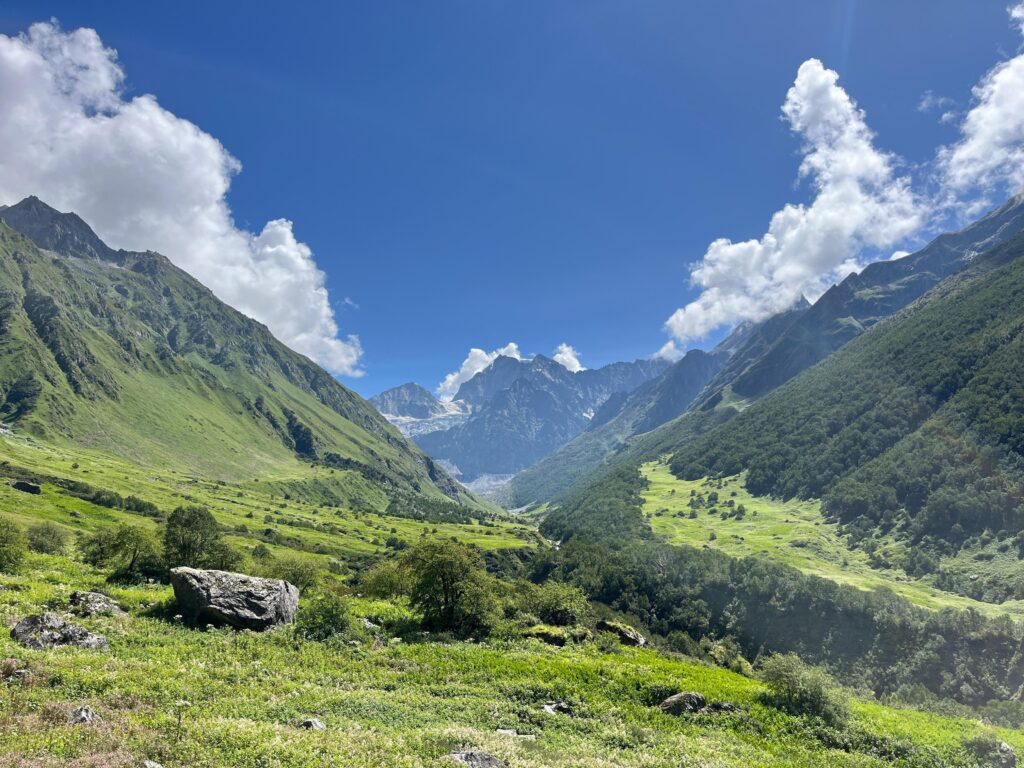
The valley opens into color once you clear the first ridge, roughly a kilometer past the second bridge. Greens, purples, yellows, and reds spread across the meadow floor in patches, framed by grey rock and white snow higher up. On a clear day, the sky adds a fourth color that makes the whole scene look staged. It isn’t.
Species shift by the week. In July and August, expect Meadow Geranium, Blue Poppy, Himalayan Rose, and Snake Foil, among dozens of others. The valley stretches another 5 to 7 km beyond the main meadow, ending at a glacier most trekkers never reach. If you have the legs for it, the extra stretch is quieter than anywhere else on the route.
Carry your own lunch. There’s no food available past the gate, and camping inside the park isn’t allowed under any circumstances. Round trip takes 6 to 7 hours, and the return walk in afternoon light looks different enough from the morning version that it’s worth the second look.
Quick stats: Altitude: 4,500 ft | Distance: 12 km | Time: 8-10 hrs
This is not an easy day. You’ll gain close to 4,000 ft over 6 km, much of it on a steep, switchback climb above 10,000 ft. Start before 5 AM. The Gurudwara’s morning prayers begin around 4 AM, and the sound often helps with the early wake-up more than any alarm does. Carry a poncho and a trekking pole. The air thins fast past the treeline, and altitude sickness risk goes up noticeably on this stretch. Watch for a waterfall on your right roughly two hours in. That marks the point where views open up and the trail starts feeling genuinely alpine.
Take breaks standing, not sitting. Sitting relaxes your legs just enough to make restarting harder, and on a climb this steep, momentum matters. A melting glacier crosses the path higher up. Move carefully there. The reward is a glacial lake beside one of the highest Gurudwaras in the world, ringed by snow-covered peaks and frozen solid for half the year. Rare Brahma Kamal flowers grow near the shrine in July and August, found only above 10,000 ft and nowhere inside the main valley itself.
Descent takes 4 to 5 hours and is harder on the knees than the climb was on the lungs. Leave by early afternoon. Weather here turns fast, and afternoon cloud cover is the rule, not the exception.
Quick stats: Distance: 9 km | Altitude: -3,600 ft
Retrace your steps from Ghangaria to Pulna, 9 km, then drive back to your basecamp. It’s the same trail you walked on Day 2, seen from the other direction, and most trekkers find it easier than expected since the altitude drops with every step. Breakfast at Ghangaria, then a steady 5 to 6 hour descent.
Quick stats: Distance: 255 km | Altitude: -5,000 ft
Another long drive, 9 to 10 hours back the way you came. Landslides are common this time of year, since the trek only runs during monsoon. Build in a buffer day if your onward travel plans are tight after this. Book flights or trains for the evening at the earliest, never the same afternoon you’re due back.
How Difficult Is the Valley of Flowers Trek: Honest Assessment
The Valley of Flowers trek is easy to moderate trek. The climb to Hemkund Sahib gains nearly 4,000 ft over 6 km, much of it above 10,000 ft where the air is noticeably thinner. That’s a genuinely demanding climb by any standard, regardless of how the rest of the trip is graded. Treating the whole trek as uniformly gentle sets people up to underestimate that one day, and it’s the day most trekkers actually struggle on. Why does that gap between reputation and reality matter so much? Because people train for the trek they read about, not the one they’ll actually walk.
The Valley of Flowers Trek has a moderate terrain difficulty with mostly well-defined trails. The route from Pulna to Ghangaria involves a steady uphill climb with stone steps, rocky sections, and occasional muddy patches. Inside the valley, the trail becomes narrower and uneven, with stones, bridges, and slippery sections after rain. The Hemkund Sahib route is considerably steeper and more demanding. Monsoon rain can make the trail slippery, so good trekking shoes and trekking poles are useful. Overall, the terrain is manageable with regular fitness and careful footing.
| Month | Day Temperature | Night Temperature | Weather Conditions | Trail Conditions |
|---|---|---|---|---|
| June | 12°C to 20°C | 4°C to 10°C | Cool with occasional rain and melting snow | Some snow patches; trails gradually open |
| July | 10°C to 18°C | 4°C to 8°C | Monsoon showers, mist and cloudy skies | Wet and slippery in places |
| August | 10°C to 18°C | 3°C to 8°C | Frequent rain with lush green surroundings | Slippery trails and muddy sections |
| September | 8°C to 16°C | 2°C to 7°C | Cooler weather with less rainfall | Generally firmer trails with occasional wet sections |
| October | 5°C to 12°C | Below 2°C | Cold weather with possible early snowfall | Season closing; conditions can become difficult |
The Valley of Flowers Trek starts at Pulna, around 6,400 ft, and climbs to Ghangaria at about 10,000 ft. The Valley of Flowers reaches roughly 11,500 ft, while Hemkund Sahib rises to around 14,100 ft. The gradual climb to Ghangaria gives your body time to adjust. Walk slowly, drink enough water, and avoid rushing on steep sections. Pay attention to headache, nausea, dizziness, or unusual tiredness. If symptoms worsen, stop ascending and inform your trek leader immediately.
- Start early, especially for the Hemkund Sahib section, as weather can change quickly in the afternoon.
- Carry a rain jacket or poncho, as the trek runs during the monsoon.
- Wear shoes with good grip because wet rocks, mud, and stone sections can become slippery.
- Follow marked trails and do not enter restricted areas or walk beyond permitted sections of the Valley.
- Do not pick flowers or disturb wildlife inside the Valley of Flowers National Park.
- Stay with your group and follow instructions from your trek leader.
- At higher altitudes, report headache, nausea, dizziness, or breathing difficulty immediately.
- If conditions become unsafe, the trek leader may turn the group back to Ghangaria.
- For a serious emergency, the main evacuation route is Ghangaria → Pulna → Govindghat, followed by road transfer to a medical facility.
- Keep your emergency contacts, identification, medicines, and basic first-aid supplies accessible.
- Avoid depending on mobile connectivity; network coverage can be limited along sections of the trail.
Best Time to Do the Valley Of Flowers Trek: Season by Season
More flowers is not automatically the better month for you. That depends on what you’re actually optimizing for, and nobody frames it as a genuine trade-off.
July is the quiet option. The first half of the month has snow patches, fewer blooms, and almost no crowds. Monsoon rain hasn’t fully set in yet, so trail conditions stay manageable. By the second half, rain picks up and flowers start appearing in real numbers, but you’ll still have the trail mostly to yourself. If crowd-avoidance matters more to you than peak bloom, go early July.
August is peak bloom, peak crowd, no way around it. This is when the valley hits maximum color and when the rare Brahma Kamal starts showing up near Hemkund Sahib. Rainfall is heaviest this month, and higher up the trail it often turns into a fine drizzle rather than a downpour. It’s also when the trail gets genuinely busy, especially on weekends and around Indian public holidays. Weekday departures thin the crowds noticeably, and if you have any flexibility on dates, use it here.
September trades flowers for clarity. Blooms fade fast after the first week, but skies clear up and mountain views sharpen considerably. Pilgrim traffic to Hemkund Sahib increases as the season winds down, since many time their visit around the shrine’s closing dates rather than the flower season. If you’d rather see the Himalayas than the meadow, this is your month.
The park typically opens by the first week of June and is expected to stay open through late October in 2026, though exact dates come from the Uttarakhand Forest Department each year and are worth checking closer to your travel date. Early June visitors get lush greenery and clear trails, but almost no blooms yet, since the flowering season genuinely doesn’t start until the second half of July in most years.
One honest note nobody puts on their homepage: the entire trek runs during India’s monsoon. That’s not incidental, it’s the reason the flowers bloom at all. Sound risky? It isn’t, if you plan for it. Rain gear, buffer days, and realistic timing expectations solve most of what monsoon throws at you.
How to Reach Valley of Flowers Trek: Complete Travel Guide
Arrive the evening before your trek starts, not the morning of. Our guide will pick up you from Rishikesh or Haridwar at 5 to 6 AM on Day 1, and missing that window means missing the group entirely, with no guarantee of catching up later in the day. Rishikesh has no airport or train station of its own. Fly into Jolly Grant Airport in Dehradun, about an hour away, and take a bus or cab from there. Alternatively, take a train to Haridwar, roughly 30 km from Rishikesh, and continue by road. Buses run direct from Delhi to Rishikesh overnight if you’d rather skip flights altogether, though the journey runs 6 to 7 hours and isn’t for everyone.
- Take a train or flight from Delhi to Dehradun.
- From Dehradun, travel by road towards Govindghat, around 300 km away.
- Buses and shared taxis are available, but private or shared cabs offer more flexibility.
- From Govindghat, drive to Pulna, the trek starting point.
- Trek around 9 km from Pulna to Ghangaria, which is the base for the Valley of Flowers.
- Start early because the mountain journey takes most of the day.
- Fly from Mumbai to Dehradun Airport (Jolly Grant Airport), usually with a connecting flight.
- From Dehradun, continue by road to Govindghat.
- The journey from Dehradun to Govindghat takes roughly 9–11 hours, depending on road and weather conditions.
- From Govindghat, travel to Pulna by local vehicle.
- Trek approximately 9 km uphill from Pulna to Ghangaria.
- Stay overnight at Ghangaria before entering the Valley of Flowers.
- Fly from Bangalore to Dehradun Airport, usually with a connection.
- Travel from the airport or Dehradun to Govindghat by road.
- Keep a full day for this mountain drive because the route covers roughly 300 km.
- Continue from Govindghat to Pulna, where the road journey ends.
- Trek around 9 km from Pulna to Ghangaria.
- Spend the night at Ghangaria before starting the Valley of Flowers trek the next morning.
- Keep the return journey from Govindghat to Rishikesh flexible, as mountain traffic, rain, and landslides can cause delays.
- The drive usually takes around 9–11 hours, so avoid booking a flight or train immediately after reaching Rishikesh.
- If you have an onward flight, keep at least one buffer day between the trek and your flight.
- Start early from Govindghat to make the most of daylight and reduce the risk of getting delayed on the road.
- Keep some snacks and water with you because food stops may be limited during parts of the mountain drive.
- If travelling by public transport, confirm your bus or shared-taxi timing in advance.
- Keep your phone, power bank, ID, cash, and essential medicines easily accessible.
- Check the weather and road conditions before starting the return journey.
- If heavy rain or a road blockage occurs, stay at a safe location rather than rushing to reach Rishikesh.
- For international or long-distance onward travel, plan extra time after reaching Rishikesh.
Before the trek
- Rishikesh: A convenient option if you are arriving by train or flight. Stay near Tapovan or the main town if you want easy access to transport.
- Joshimath: Useful if you prefer to break the long journey from Rishikesh to Govindghat. It also gives you a quieter night before reaching the trek base.
- Govindghat: The most practical choice if your trek starts early the next morning. You can stay near the main market and keep your trekking luggage organised.
During the trek
- Ghangaria: This is the main accommodation base for the Valley of Flowers and Hemkund Sahib. Hotels, guesthouses, lodges, and simple restaurants are available here.
After the trek
- Govindghat: Stay here after descending from Ghangaria if you want to rest before the long drive back.
- Rishikesh: A good option after completing the road journey, especially if you have an onward train or flight the following day.
Tip: For a relaxed itinerary, keep one night in Rishikesh before the trek and one night after returning, particularly if your onward travel schedule is tight.
What the Valley of Flowers Trek Experience Is Like: Camps, Food, Stay
The Valley of Flowers Trek feels more like a gradual journey through changing Himalayan landscapes than a single climb. You begin with a long mountain drive to Govindghat, followed by a steady trek through forests and along the Pushpawati River to Ghangaria. From there, the trail enters the flower-filled valley, where colourful alpine flowers, waterfalls, rocky slopes, and snow-covered peaks create a dramatic setting. The Hemkund Sahib day adds a tougher high-altitude climb. Monsoon rain, slippery trails, steep sections, and changing weather make the experience physically demanding, but the scenery changes with every section.
Accommodation on the Valley of Flowers Trek is simple and functional rather than luxurious. Govindghat has hotels and guesthouses where trekkers can stay before or after the trek. Ghangaria is the main base for the trek, with hotels, lodges, guesthouses, and basic rooms available. Most trekkers stay here for two or three nights while visiting the Valley of Flowers and Hemkund Sahib. Rooms can be basic, especially during the busy monsoon season, so advance booking is useful. Camping inside the Valley of Flowers National Park is not permitted.
Food on the Valley of Flowers Trek is mostly simple, filling, and suited to long trekking days. Govindghat and Ghangaria have restaurants and small eateries serving dal, rice, roti, vegetables, noodles, parathas, tea, and packaged snacks. You can also find basic vegetarian meals at the Gurudwara in Ghangaria. Food options become limited once you enter the Valley of Flowers, so carry your own packed lunch, snacks, and water. Avoid carrying heavy or highly perishable food. Keep energy bars, dry fruits, chocolates, and glucose-based snacks handy for longer trekking sections.
Toilet facilities are available at Govindghat, Pulna, and Ghangaria, mainly through hotels, guesthouses, restaurants, and designated public facilities. Once you enter the Valley of Flowers, facilities become very limited, so use the toilet before starting the trail. Carry toilet paper, hand sanitiser, and biodegradable wet wipes for personal hygiene. Avoid littering or using the open valley as a toilet. During the monsoon, keep your footwear and clothing dry whenever possible, as wet conditions can make maintaining hygiene more difficult.
- 5:00–6:00 AM: Wake up and get ready for the trek.
- 6:00–7:00 AM: Have breakfast and pack water, snacks, and rain gear.
- 7:00 AM onwards: Start trekking while the weather is cooler.
- Morning: Walk at a steady pace with short breaks for water and photographs.
- Midday: Have a packed lunch or return to Ghangaria for lunch, depending on the day’s route.
- Afternoon: Complete the remaining trail and start descending before weather conditions change.
- 4:00–6:00 PM: Return to Ghangaria, clean up, and rest.
- 7:00–8:00 PM: Have dinner and prepare your backpack for the next day.
- By 9:00–10:00 PM: Go to bed early for proper recovery.
Valley Of Flowers Trek Packing List: What to Carry
The Valley of Flowers Trek packing list should include suitable clothes, trekking gear, personal essentials, medicines, toiletries, rain protection, and basic snacks. Pack according to the monsoon weather and changing temperatures at higher altitudes. Keep your backpack light and carry only items you genuinely need for the trek, while protecting important belongings from rain and moisture.
Clothing: The Layering System
Layering on the Valley of Flowers route works because it traps warm air in thin pockets between fabrics. One thick jacket cannot do what three thin layers can. You add layers when cold, strip layers when warm. That flexibility is the point.
Layering
- Base Layer: Quick-dry
- Mid Layer: Fleece jacket
- Warm Layer: Down jacket
- Outer Layer: Rain shell
- Bottom Layer: Trek pants
- Rain Protection: Waterproof poncho
- Head Protection: Woollen cap
- Hand Protection: Warm gloves
Footwear
- Trekking Shoes: Good grip
- Socks: Quick-dry
- Gaiters: Waterproof protection
- Camp Shoes: Lightweight sandals
- Spare Socks: Extra pair
Gear
- Backpack: Rain cover
- Daypack: Small size
- Trekking Poles: Adjustable pair
- Headlamp: Spare batteries
- Water Bottle: Reusable bottle
- Power Bank: Fast charging
- Sunglasses: UV protection
- Trek Towel: Quick-dry
- Rain Cover: Waterproof protection
- Poncho: Full coverage
Personal Essentials
- Sunscreen SPF 50+. UV at 12,000 feet is 40 percent stronger than at sea level. Reapply every 3 hours on summit day.
- Lip balm with SPF. Cracked lips at altitude are painful and slow to heal.
- Toiletries: Biodegradable soap and shampoo only.
- Personal medication: Carry your own prescriptions plus paracetamol, Imodium, ORS packets, band-aids, and blister pads.
What NOT to Carry
Heavy jeans or cotton clothing. Cotton absorbs sweat and refuses to dry at altitude. This is how hypothermia starts. More than 8 to 9 kg total backpack weight. If your bag is heavier, use our offloading service. Carry a daypack with water, snacks, sunscreen, rain cover, and a warm layer. Leave the rest.
How to Get Fit for the Valley Of Flowers Trek
Start preparing 4–6 weeks before the trek with regular walking, stairs, and simple strength exercises. Aim for 30–60 minutes of walking most days and gradually increase your distance. Add squats, lunges, step-ups, and calf raises to strengthen your legs. Include one longer walk or hike each week and practise with a light backpack. Focus on steady progress rather than intense workouts. Take proper rest, sleep well, stay hydrated, and reduce training during the final few days before the trek.
The Fitness Benchmark
Run this test tomorrow. If you pass all three, you are ready for the Valley of flowers trail.
If you cannot clear these right now, you have 6 weeks. That is enough. Follow the plan below.
Week 1–2: Start with 30–40 minutes of brisk walking, 5 days a week. Add basic exercises such as squats, lunges, step-ups, and calf raises 2–3 times a week. Focus on building consistency and getting your legs used to regular activity.
Week 3–4: Increase walking to 45–60 minutes and include stairs or uphill walking twice a week. Add one longer weekend walk of around 6–8 km. Continue strength exercises and start carrying a light backpack during some sessions.
Week 5–6: Build towards 60–90 minutes of walking and include longer uphill sessions. Aim for a 10–12 km weekend walk with your trekking shoes and backpack. Practise steady pacing and controlled descents. During the final few days, reduce training, rest well, and allow your body to recover before the trek.
If you are not physically prepared, the Valley of Flowers Trek can feel much harder than expected. Long uphill sections may cause early fatigue, muscle soreness, breathlessness, and slower walking. Descending can also put extra strain on your knees and legs. You may need more frequent breaks and could struggle to maintain the group’s pace. Poor fitness can also make it harder to handle the steep climb to Hemkund Sahib. Build your stamina gradually before the trek rather than relying on last-minute preparation.
- Age 55+: Older trekkers should build fitness gradually and consider a medical check-up before planning the trek. The steep Hemkund Sahib section requires extra stamina and careful pacing.
- Children: Children who are comfortable with long walks can undertake the trek, but age, fitness, and previous trekking experience should be considered. They should always remain with a responsible adult.
- Medical Conditions: People with heart, lung, blood-pressure, joint, or other medical conditions should speak with their doctor before travelling to high altitude. Carry prescribed medicines and inform the trek leader about any relevant condition.
- Altitude Symptoms: Headache, dizziness, nausea, unusual tiredness, or breathlessness should not be ignored. Stop, rest, and inform your trek leader if symptoms develop or worsen.
Valley of Flowers Trek Cost: Complete Pricing Breakdown
| Cost Head | Amount | Details |
|---|---|---|
| Trek Fee | ₹8,500 | Trek package cost |
| Transportation | Extra | Travel to and from the trek base |
| Personal Expenses | Extra | Snacks, toiletries, tips and other personal needs |
| Porter / Mule | Extra | Optional personal luggage support |
| Insurance | Extra | Personal travel or trekking insurance |
| GST | As applicable | Applicable taxes, if not included in the package |
| Total Trek Cost | ₹8,500 + applicable extras | Basic trek fee |
What Is Included
- Accommodation at the basecamp and in Ghangaria lodges
- All meals from Day 1 dinner through Day 6 breakfast
- A trek leader and local guides, forest permits, and basic medical gear including a first aid kit and oxygen cylinders.
What Is Not Included
- Transport if you’re not booking it through the operator
- Personal rental gear like jackets and backpacks, mule or porter charges for offloading
- Any medical costs incurred during the trek, and trek insurance in a handful of budget packages, though most now include it as standard.
What Is Included
- Accommodation at the basecamp and in Ghangaria lodges
- All meals from Day 1 dinner through Day 6 breakfast
- A trek leader and local guides, forest permits, and basAc medical gear including a first aid kit and oxygen cylinders.
What Is Not Included
- Transport if you’re not booking it through the operator
- Personal rental gear like jackets and backpacks, mule or porter charges for offloading
- Any medical costs incurred during the trek, and trek insurance in a handful of budget packages, though most now include it as standard.
- Travel to and from Govindghat
- Food and snacks outside the trek package
- Raincoat or poncho if not already packed
- Extra warm clothes and trekking gear
- Porter or mule charges for extra luggage
- Personal medicines and first-aid items
- Toiletries and hygiene products
- Charging and power-bank expenses
- Emergency transport or evacuation, if required
- Tips for trek staff
- Personal shopping and souvenirs
- Travel or trekking insurance
- Extra hotel stay due to bad weather or road delays
- GST or other applicable taxes, if not included in the ₹8,500 trek fee
The ₹8,500 trek fee covers the basic services needed to complete the Valley of Flowers Trek safely and comfortably. The cost goes towards trek staff, planning and coordination, accommodation during the trek, meals as per the package, required support, and other operational expenses. Trek costs also include logistics in a remote Himalayan region, where transport, food supplies, staff movement, and emergency support can cost more than in cities. We keep the pricing clear so you know what is included and what you may need to pay separately.
| Cancellation Time | Refund |
|---|---|
| 30 days or more before trek | 75% refund |
| 15–29 days before trek | 50% refund |
| 7–14 days before trek | 25% refund |
| Less than 7 days before trek | No refund |
| No-show or leaving the trek midway | No refund |
- Safety Terms
Follow all instructions given by the trek leader and support staff. - Carry a valid government-issued ID and required personal medicines.
- Wear proper trekking shoes with good grip.
- Carry rain protection because weather can change quickly.
- Do not leave the marked trail or trek alone.
- Inform the trek leader immediately about dizziness, headache, nausea, breathlessness, or unusual tiredness.
- The trek leader can stop or change the trek plan if weather or trail conditions become unsafe.
- Do not enter restricted areas or pick flowers inside the Valley of Flowers.
- Keep the trail and campsites clean.
- Do not litter.
Keep emergency contact details and essential belongings safely with you. - Any emergency evacuation or additional medical/transport expense may be charged separately.
- Participants must follow the final safety decision of the trek leader.
Joshimath to Joshimath
(Transportation Included)
Upcoming Batches
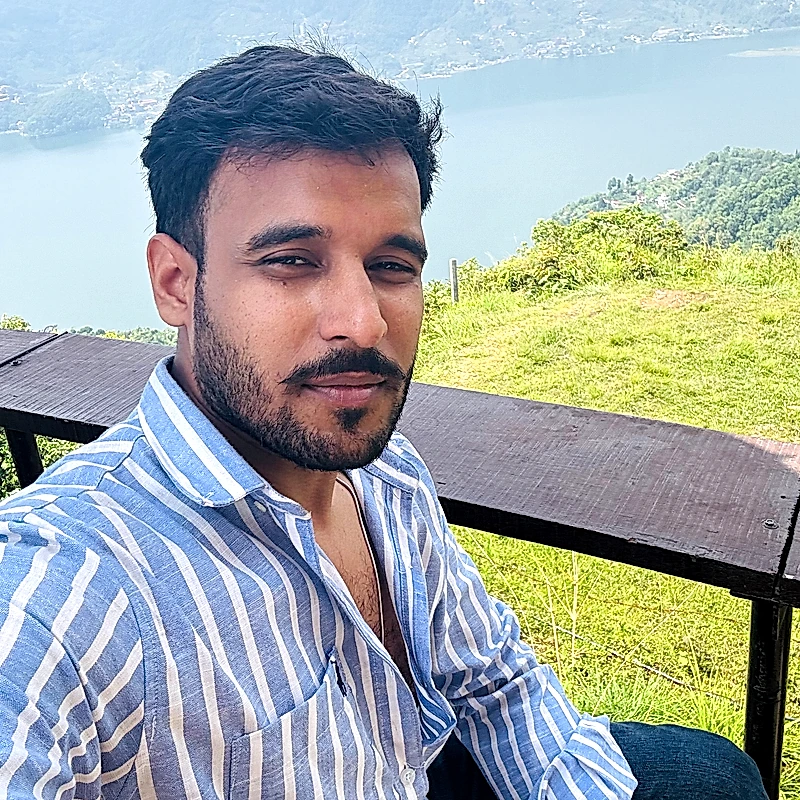
“I started Kedarkantha Trek because the mountains changed my life, and I wanted to make that transformation accessible to anyone willing to walk. Every trail we run, I ask: would I send my own family on this batch?”
Ritesh Mishra
Founder, kedarkanthatrek.in • 12 years in Himalayan trekking
Kedarkantha Trek: Frequently Asked Questions
Is the Valley of Flowers trek good for first-timers?
Yes. It’s one of the more beginner-friendly Himalayan treks on offer, provided you take Day 4 seriously and train for it specifically rather than assuming the whole trek matches its easy-moderate label.
How long is the Valley of Flowers trek?
Most packages run 6 days including travel from Rishikesh, with 4 of those days spent actually trekking. The walking distance across those 4 days lands close to 38 km.
Is trekking during monsoon actually safe?
Yes, when operators plan around it properly. Landslides and roadblocks happen more often this time of year, which is why buffer days matter. The trail itself, once you’re walking it, is generally well-maintained and regularly monitored during the open season.
Can I do the Valley of Flowers trek solo, without an operator?
Yes, though most trekkers still book with a group for the permits, transport, and safety support. If you go independently, you’ll need to arrange your own permits at Ghangaria and handle transport, accommodation, and food yourself.
What's the highest point on the trek?
Hemkund Sahib, at 14,107 ft. The Valley of Flowers itself tops out closer to 11,500 ft.
Do I need prior trekking experience?
No. Basic fitness matters more than prior experience. Someone with no trekking background but solid cardiovascular fitness will handle this better than an experienced trekker who skipped training.
Is mobile network available on the trek?
Barely. Jio and Airtel work intermittently up to Govindghat and occasionally in Ghangaria, but there’s no reliable signal inside the Valley of Flowers National Park itself. Tell family your plans before you lose signal, not after.
Can children do this trek?
Yes, depending on the operator’s minimum age, usually somewhere between 9 and 14. Kids need to walk the distance themselves in most cases, since pony and porter options for children are limited on the steeper Hemkund stretch.
What happens if it rains heavily during the trek?
Trek leaders monitor conditions daily and can reroute, delay, or in rare cases cancel a day’s plan if rain makes a section unsafe. Bridges over the Lakshman Ganga are the usual concern, since heavy rain increases the flow fast. Most operators recommend visiting the valley in the morning and returning by early afternoon for exactly this reason.
Is the Valley of Flowers trek suitable for senior citizens?
Often yes, with some caveats. Fit seniors regularly complete this trek, but most operators require a recent cardiac test for anyone above 58, given the strain Day 4 puts on the heart at altitude.
Treks Similar to Kedarkantha: What to Do Next
Brahmatal Trek
Brahmatal’s summit sits at 12,250 feet, just 250 feet lower than Kedarkantha. The trekking distance is longer at 22 km across 4 trekking days. The trail passes two frozen lakes instead of one. The mountain views are different: Trishul and Nanda Ghunti dominate the skyline instead of Swargarohini and Bandarpoonch. If you loved the snow and summit experience on the Kedarkantha trail and want a similar challenge with new scenery, Brahmatal is the natural next step. Best done in January or February.
Har Ki Dun
Har Ki Dun runs 7 days and covers 45 km through the same national park. Both treks start from Sankri. The difficulty is comparable, but the longer duration tests endurance more than altitude. The route follows the Supin River through ancient Garhwali villages. Swargarohini appears up close from the valley floor. If you want to go deeper into the same mountain range, this is the trek.
Dayara Bugyal
Dayara Bugyal is a high-altitude meadow trek that peaks at around 11,800 feet. The gradient is gentler than Kedarkantha. The meadows are wider. No steep summit push. If you are trekking with children under 8 or family members who prefer rolling green terrain over snow and summits, Dayara Bugyal is the safer introduction.
Deoriatal Chandrashila
Deoriatal Chandrashila combines a lake, a temple (Tungnath), and a summit (Chandrashila, 13,123 ft). The trek is 6 days and mixes cultural stops with mountain trail. If you want more variety in terrain and experience types than Kedarkantha offers, this trek delivers that range.
Further Reading on the Kedarkantha Trek
How We Started Running the Kedarkantha Trek from Sankri — by our founder. The origin story of our Sankri operations, why we chose this route, and what we learned in the first three seasons.
Kedarkantha Trek in January: A Complete Month Guide — by Sneha, who trekked with us in January 2026. Trail conditions, crowd levels, and what surprised her about deep winter on this route.
What Our Youngest Trekker Taught Us About the Kedarkantha Trail — by trek leader Vikram. The story of Aarav Kapoor, age 10, and how his pace changed how we think about family batches.
Kedarkantha vs Brahmatal: Which Winter Trek Should You Do First? — A head-to-head comparison by a trekker who did both in the same season.
The Season-Wise Kedarkantha Packing Guide — with month-by-month clothing recommendations and a downloadable checklist.
