1. Dal Lake: Srinagar’s Crown and Kashmir’s Most Famous Water
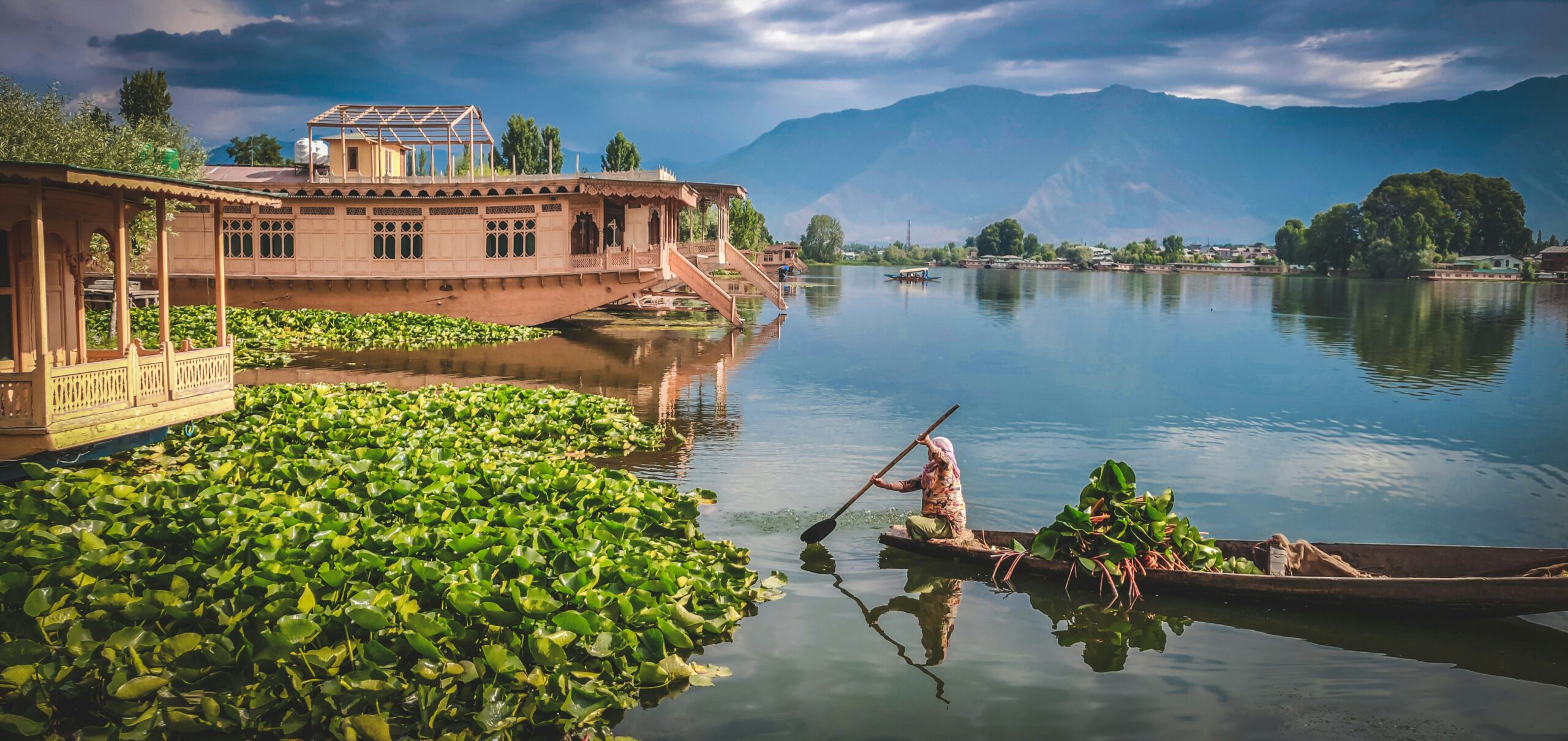
Dal Lake is not a place you visit, it is a place you stay inside. The shikara boats, the floating gardens, the carved wooden houseboats. This is the main event. Everything else is background. Most people book a houseboat and call that the plan. The smarter move is simpler. Wake at 5:30. Get on a shikara before the vendors start. The vegetable market floats at dawn, boat to boat. Sellers paddle loaded craft toward the houseboats before the day heats up. That early hour is a different lake. By 9am, tourist boats crowd the main channels and the magic goes flat. The 6am version is worth it. Full stop.
Dal is the second-largest lake in the Kashmir Valley, it sits in central Srinagar. Mughal gardens line the eastern shore. The old market lanes are to the west. Shankaracharya temple watches from the hill above. This is the lake in Jammu and Kashmir that anchors most trips.
Location: Boulevard Road, Srinagar | Best months: April to October for houseboats; November to February for winter views | How to reach: 11 km from Srinagar Airport by taxi
2. Wular Lake: Asia’s Freshwater Giant
The gap between Wular and Dal is not about beauty. It is about what kind of trip you want. Dal is a curated setup built for tourists. Wular is a working lake that does not know you are there. Wular is one of Asia’s largest freshwater lakes. It spreads across about 130 square kilometres at its peak. Fed by the Jhelum River, it sits in Bandipora district about 60 km from Srinagar. Fishing boats work its surface most mornings. Reed beds crowd the shallower edges. Migratory birds use it as a stop in winter. No houseboat here, no shikara operator negotiating rates. You watch the lake on its own terms. Or you take a local boat out onto the open water and sit in it. The drive from Srinagar is good. The Jhelum valley road has solid mountain views most of the way. If you have a free half-day between the Valley’s main stops, Wular is the right detour. No crowds, no vendor boats, no sales pitch. Just a very large, very calm lake that most tourists skip entirely.
Location: Bandipora District | Best months: May to October | How to reach: 60 km from Srinagar by car or hired cab
3. Nigeen Lake: Dal’s Quieter Neighbour
Every operator in Srinagar will push a Dal houseboat first. Ask specifically for Nigeen. A different kind of stay opens up. Nigeen connects to Dal by a narrow causeway. Geographically it is the same water system. In practice, it feels nothing like it. Willow and poplar trees line the banks right to the water’s edge. Fewer boats work the surface. Mornings are still and quiet in a way Dal almost never is after April. You want the houseboat trip without vendor boats circling every 15 minutes? Nigeen is the clear pick, not a consolation prize. A better version for people who want actual peace.
The lake sits east of Srinagar in the foothills of the Zabarwan range. Shankaracharya Hill closes it on one side. Hari Parbat fort is visible from some houseboats on the opposite bank. Two nights here is the best Srinagar base most people never take.
Location: Srinagar | Best months: April to October | How to reach: Accessible via causeway from Dal Lake; 12 km from Srinagar Airport
4. Manasbal Lake: Deepest and Most Overlooked
Most lists skip Manasbal. Manasbal is the deepest lake in Kashmir. The water clarity shows it. No houseboats crowd the bank, no shikara fleet circles for business. The lake sits about 30 km north of Srinagar. Small enough to walk around. Clean enough that the bottom is visible in the shallows. June and July bring lotus bloom at a density Dal never shows. That one month makes it worth a dedicated half-day. The shores are quiet year-round. A rest house sits on the edge. Local fishermen work the deeper water for trout. Not on every itinerary yet? Manasbal is the answer. Get there before the crowds catch up.
Location: Ganderbal district, 30 km from Srinagar | Best months: June to July for lotus; April to October overall | How to reach: Shared taxis from Srinagar to Safapora, 4 km short of the lake
5. Mansar Lake: Jammu’s Sacred Water
Mansar Lake is not in the Kashmir Valley. Know this before you plan. It sits about 62 km from Jammu city, in the Samba district. The crowd it draws is different from Valley lakes. Hindu pilgrims come for the Sheeshnag temple on the bank. Local families come for Baisakhi, when a crafts fair fills the shore every spring. The forests are dense and cool. Birdwatching is good here. Boating runs in the calmer months. For travellers driving up from Jammu toward the Valley, Mansar makes a natural morning stop on Day 1. The road passes within easy reach of it. The lake is not dramatic in the high-altitude way that Valley lakes are. It is a forest lake with temple steps leading into the water. Stillness suits an early visit here. If your route starts at Jammu, stop here first.
Location: Samba district, 62 km from Jammu | Best months: October to March; Baisakhi (April) for the fair | How to reach: Direct road from Jammu; shared taxis available
5. Sheshnag Lake: The Trek Lake That Earns Its View
Visit Sheshnag in September. That is the specific advice, and the reason matters.In J uly and August, Sheshnag sits on the Amarnath Yatra route. Thousands of devotees walk to the Amarnath shrine and camp at this lake overnight. The ground fills with tents, noise, and foot traffic. The lake is striking even then. But it is not a quiet trek. Not even close. By late September, the Yatra is done. The lake empties out. The water at 3,590 m goes deep green against snow-streaked cliffs. Sound paranoid to plan around a religious calendar? The difference is real. Planning around the season is just smart travel — Kashmir in September tends to reward that kind of thinking across the board.
The trek starts from Pahalgam and takes two to three days via the Yatra route. The name comes from the serpent deity of Hindu belief. Local lore holds that a great serpent lives in the depths. That is the story. What you find is cold, clear water and a high ridgeline that blocks the wind on three sides. Camp here if the weather holds. The view at first light repays the altitude. Worth the climb.
Location: 3,590 m, Pahalgam to Amarnath route | Best months: Late September for quiet; July to August for Yatra season | How to reach: Trek from Pahalgam; base permits required during pilgrimage season
6. Tulian Lake: Pahalgam’s High-Altitude Reward
Most visitors spend two nights in Pahalgam and ride a pony to Baisaran. Few of them walk past it and that is where Tulian begins. The lake sits at roughly 4,100 m, about 14 km from Pahalgam. The trail starts at Baisaran meadow. Most Kashmir packages include Baisaran as a short stop. Past it, the trail climbs for 4 to 5 more hours to the lake, not technically hard. The altitude gain in the final section is real. A fit person who does not rush will get there.
The lake stays half-frozen until mid-June. In July and August, the surface opens up and the meadows turn green around it. The water at this altitude is a shade of blue that photographs do not capture well. Too clean to look real. There is no camp setup here. Carry what you need, reach the lake, and turn around before dark. The window is tight: start early from Pahalgam, aim for the lake by midday, begin descent by 2pm. Do not underestimate the return on tired legs. It gets long.
Location: ~14 km from Pahalgam, altitude ~4,100 m | Best months: July to September | How to reach: Trek from Pahalgam via Baisaran; pony hire available to Baisaran
7. Gangabal Lake: The Best Multi-Day Trek in the Valley
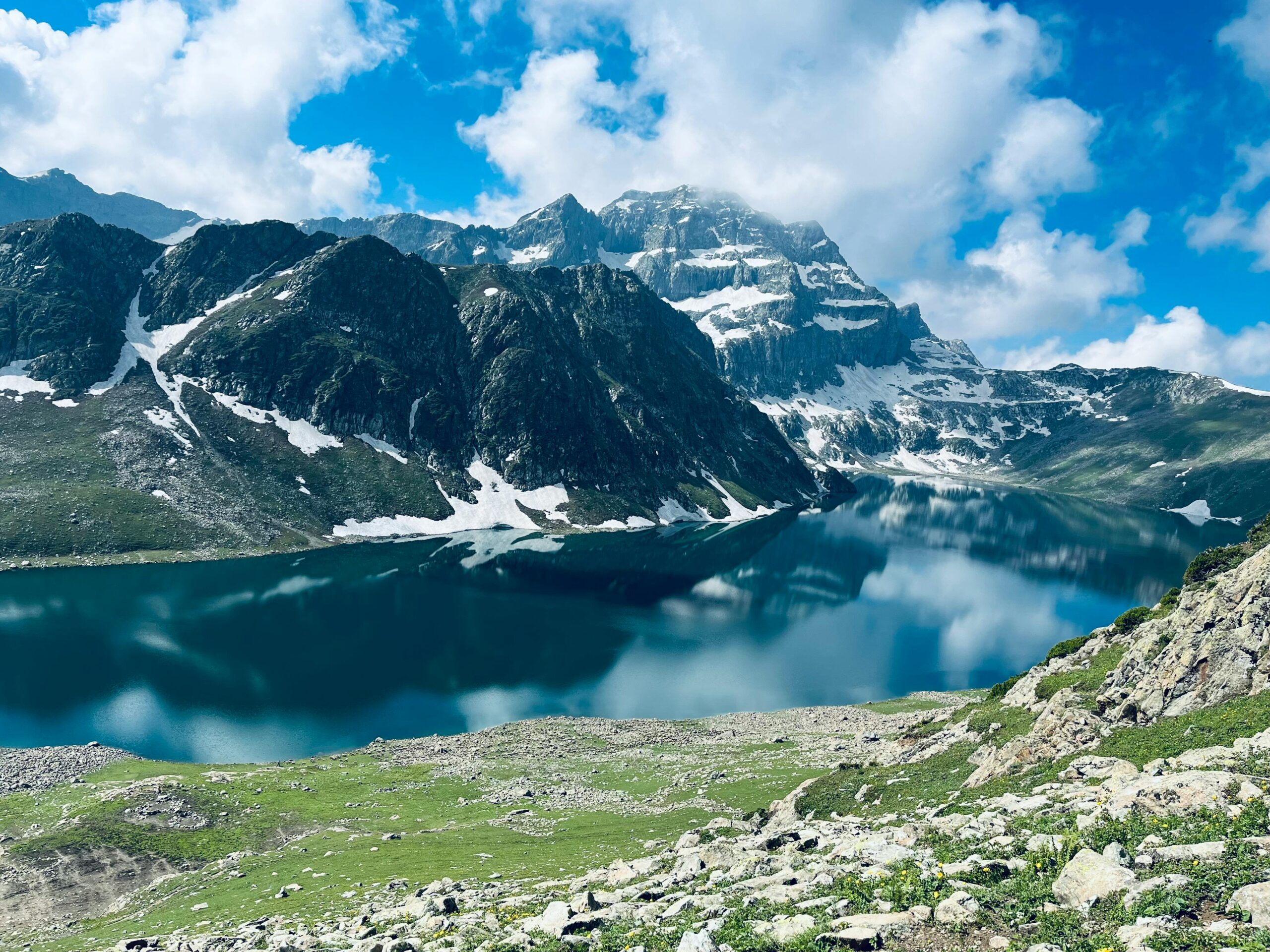
Gangabal is the best multi-day lake trek in Kashmir Valley. Plain statement, not a superlative. Everything else on this list takes one day or requires the full 7-day Great Lakes circuit. Gangabal fits a 4-day window. Doable for most fit people with the right preparation.
The lake sits at 3,570 m at the base of Mount Harmukh. But the real story is the twin. Nundkol Lake sits right beside it, separated by a narrow ridge at nearly the same altitude. Camp between the two, wake up with a different lake on each side. Gangabal is larger and open. Nundkol is smaller, tucked against the mountain wall. Together they make a campsite hard to leave in the morning.
The Naranag trailhead is the most common start point. Shared taxis run to Naranag from Srinagar, about 50 km on mountain road. The trek takes 3 to 4 days depending on pace. Gangabal is also sacred to Kashmiri Hindus, and the annual Harmukh Gangabal Yatra draws pilgrims every late summer. Trek in early June or October if you want the lake to yourself. Both work well.
Location: Ganderbal district, 3,570 m | Best months: June to October | How to reach: Shared taxis from Srinagar to Naranag (50 km); 13 km trek from Naranag
8. Vishansar and Krishansar: The Kashmir Great Lakes Pair
Two lakes sit near the high point of the Great Lakes Trek. Twenty minutes apart on foot and they look completely different. Vishansar sits at about 3,700 m. The water runs deep green from glacial melt feeding in from the east. Krishansar rises a few hundred metres higher, near 3,800 m, and the colour sharpens to a clear blue. The ridge between them is an easy scramble. From the top, you see both at once and that view does not look like most of India. Snow sits on the slopes above in July. Two high-altitude lakes below you. The kind of scene that makes people plan a second trip before the first one ends.
The Great Lakes Trek passes both lakes on Day 4 or 5. The standard route from Sonamarg runs 7 days. The full circuit covers seven lakes: Vishansar, Krishansar, Gadsar, Satsar, Gangabal, Nundkol, and others by route. This is not casual. The terrain is rugged. Passes are high. Camping gear is required. For fit people who want the best Kashmir has, nothing else comes close. Nothing.
Location: Near Sonamarg; Vishansar ~3,700 m, Krishansar ~3,800 m | Best months: July to September | How to reach: Start from Sonamarg, 80 km from Srinagar; trek groups manage logistics
9. Tarsar Lake: Pahalgam’s Best Trek Destination
Tarsar is teardrop-shaped, not a metaphor. Look at a satellite image and the outline is clear. One narrow end pointing north. The body of the lake widening south. All of it ringed by meadow grass and loose rock at about 3,800 m.
The Tarsar Marsar Trek starts from Aru Valley, 12 km from Pahalgam. It is a 5-day circuit that takes in both lakes. Tarsar comes first on Day 3. Marsar sits higher on the same loop. Smaller, more remote, moon-shaped. The two together are why you do this route rather than either lake alone. Day 1 and 2 are meadow walking on moderate trails. Day 3 is the climb to Tarsar. Day 4 crosses to Marsar. Day 5 returns to Aru.
For first-time Kashmir trekkers, this is the right start. Harder than a day hike. Easier than the Great Lakes circuit. The views are good at every stage. The reward at Tarsar on Day 3 is sharp enough to feel earned. Hard to argue. Most operators in Pahalgam run this route with guide, camping gear, and a cook. Book a week ahead in peak season.
Location: ~3,800 m, accessed from Aru Valley, 12 km from Pahalgam | Best months: June to September | How to reach: Taxi from Pahalgam to Aru Valley; trek begins at Aru
Nilnag Lake: Offbeat Yusmarg
Nilnag Lake sits quiet and blue in the forests near Yusmarg. The water has a deep tint. It almost looks painted. A short walk gets you there. The trail cuts through tall pine trees and open grass patches. It feels calm with no crowds. Locals link the lake’s name to the color. “Nil” means blue. And it fits. On a clear day, the shade stands out against the green around it. There’s no heavy setup around the lake. No big stalls. No loud crowds. Just a few people sitting by the edge. That’s the charm — go early if you can.
Location: Near Yusmarg, about 4–5 km from the main meadow, Best time: May to September, How to reach: Drive from Srinagar to Yusmarg (around 50 km), then take a short trek or pony ride to the lake.
Best Time to Visit the Lakes in Jammu & Kashmir
April to October is not wrong but just not useful. The answer depends on which lakes are on your list. Dal Lake is open every month of the year. A winter visit in December to February gives you cold mornings and snow on the Zabarwan hills. Houseboats run at lower rates. Not a bad trip at all. Now contrast that with Vishansar or Gangabal. Those sit under snow from November to June. Not reachable on foot until the passes clear. Same region, completely different calendar.
Season | Open lakes | What to expect |
January to March | Dal, Nigeen, Wular, Mansar, Manasbal | Cold, few crowds, lower rates, snow on hills |
April to June | All road-accessible; trek lakes from late June | Dal lotus in June; high-altitude lakes begin opening |
July to September | All lakes including Vishansar, Krishansar, Gangabal, Tulian | Peak trek season; Sheshnag crowded July to August due to Yatra |
October | All lakes; high-altitude ones closing by late October | Best month for Gangabal; Dal still very good |
In 2026, the Great Lakes Trek season runs from late June through September. Permit and group rules change year to year. Confirm with your operator before booking. For road-based trips, April to June and September to October give the best mix of weather and crowds. Not sure which window fits your schedule? The full best time to visit Kashmir guide breaks it down by traveller type and priority.
Conclusion
The lakes in Jammu & Kashmir reward focus. Pick one type of trip, commit, and go deep. A week on Dal, Nigeen, Manasbal, and Wular gives more than a rushed five-day attempt to see everything. If the Great Lakes circuit is the goal, give it the full seven days. The people who leave most satisfied decided what kind of trip they wanted before they arrived. Start there.