

Brahmatal Trek
The Most Scenic Winter Trek in the Indian Himalayas
Brahmatal Trek: Complete Overview
Brahmatal Trek is a 6-day winter trek in Uttarakhand, topping out at 12,250 ft. People do it for one reason. Snow. Not a technical climb. Not a survival test. It’s a short winter trek. Two frozen alpine lakes, a real summit, no months of training required. That’s the pitch, and it holds up. Brahmatal isn’t the only frozen-lake trek in Uttarakhand. It’s the one that fits a long weekend. Six days, start to finish. You still get two named lakes and a proper summit. Most winter treks at this altitude ask for a lot more time.
The first lake is Bekaltal. Oak trees ring it. By January it freezes solid. The second is Brahmatal itself, tucked below the summit, with a small temple beside it. Local legend says Lord Brahma meditated here. That’s not filler. It’s why the lake carries his name. It’s the kind of detail that gives a snow trek a story. Sound like a lot for six days? It is. The trail runs through oak and rhododendron forest. Then it opens into meadow. Tree cover, open sky, frozen water, all in one loop. Few treks this short manage all three.
5 Reasons Brahmatal Trek Stands Apart
Click each reason to read the full story.
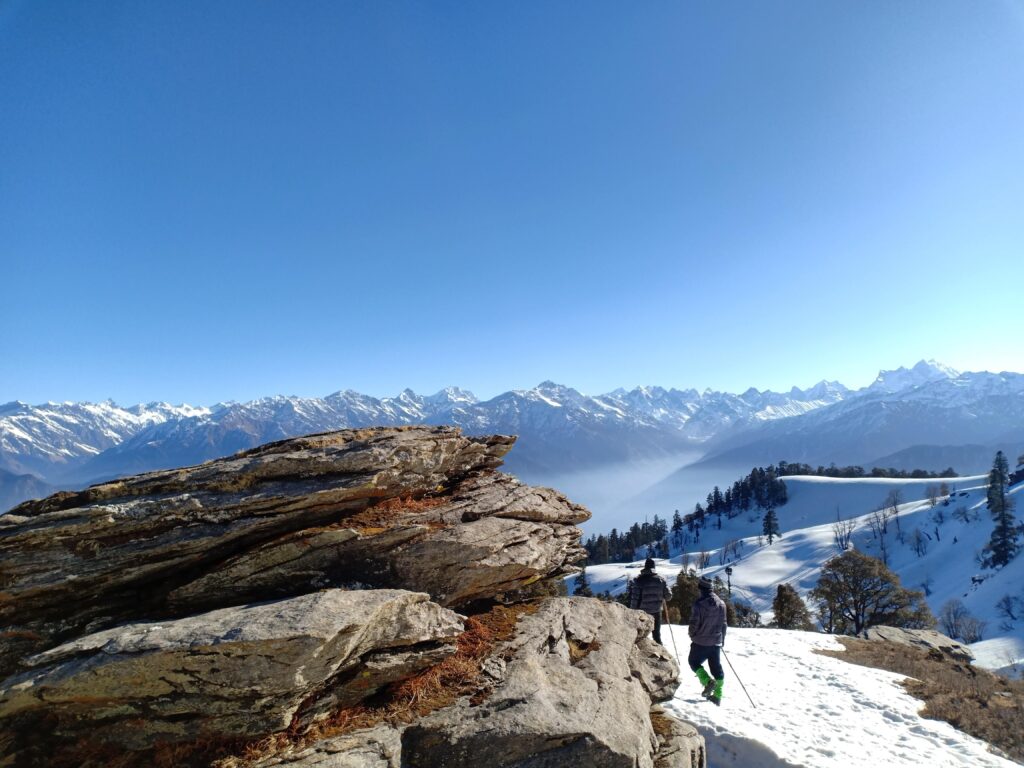
Brahmatal is known for its beautiful snow-covered trails, frozen lakes, and winter landscapes.
From the higher sections, you can see impressive Himalayan peaks such as Mt. Trishul and Mt. Nanda Ghunti.
The trek takes you to Brahmatal and Bekaltal, giving you the chance to experience two high-altitude mountain lakes on one route.
The route offers a classic winter trekking experience with snow, pine forests, mountain views, and cold-weather camping.
Brahmatal is considered a moderate trek, making it suitable for beginners who have basic fitness and prepare properly for the altitude and winter conditions.
Brahmatal Trek: Detailed Day-by-Day Guide
| DAY | ROUTE | ALTITUDE | ALTITUDE GAIN | ALTITUDE LOSS | DISTANCE |
|---|---|---|---|---|---|
| 1 | Dehradun → Lohajung | 7,600 ft | ~4,000 ft | — | ~280 km (Drive) |
| 2 | Lohajung → Bekaltal | 7,600 → 9,700 ft | ~2,100 ft | — | 6 km |
| 3 | Bekaltal → Brahmatal Base Camp | 9,700 → 10,300 ft | ~600 ft | ~0–300 ft | 7 km |
| 4 | Brahmatal Base Camp → Brahmatal Top → Base Camp | 10,300 → 12,250 → 10,300 ft | ~1,950 ft | ~1,950 ft | 5 km |
| 5 | Brahmatal Base Camp → Lohajung | 10,300 → 7,600 ft | — | ~2,700 ft | 8 km |
| 6 | Lohajung → Dehradun | 7,600 → 2,100 ft | — | ~5,500 ft | ~280 km (Drive) |
Quick stats: Distance: 260–270 km | Time: 10-11 hrs | Altitude: 6,350–6,400 ft
Start early, this is a 10 to 11 hour drive, roughly 250 km. The day is about the road, not the trail. The route passes three of the five sacred river confluences. Devprayag, Rudraprayag, Karnaprayag. Each one marks where two Himalayan rivers meet. Worth watching. The colour difference between the two currents shows clearly at each point. You’ll reach Lohajung by evening. Check into a guesthouse, then get briefed on the days ahead.
Quick stats: Distance: 4-5 km | Altitude: +2,300 m to 2,800 m | Time: 4-5 hrs
This is a forest day, not a views day. Set that expectation early. The trail climbs gently through oak, and lower down, patches of rhododendron. You’ll pass Mundoli, a small hamlet tucked into the upper slope. Keep following the water pipeline laid alongside the trail. It leads straight to a cluster of homes wrapped in rhododendron cover. Rhododendrons bloom February through March here. Before that, they sit under a light coat of snow, which is its own kind of striking.
A couple of hours in, the trail reaches Begum. It’s a small clearing with a wide view over the meadows below. Most groups stop here to catch their breath. From Begum, it’s roughly ten minutes to a stream crossing, then another hour to Gujreni itself. Camp sits right beside the stream, ringed by golden oak, silver oak, maple, and rhododendron. Bring binoculars if you can. Himalayan woodpeckers, Asian barred owlets, and blue-fronted redstarts show up often here, especially in the early evening.
Quick stats: Distance: 4-5 km | Altitude: +2,800 m to 3,200 m | Time: 3-4 hrs
The forest doesn’t fade slowly here. It ends. One stretch of trail, and the trees give way to open meadows, all at once. That’s the moment Trishul and Nanda Ghunti come into full view for the first time. Not glimpses through branches. A full panorama, with both peaks and their connected ranges filling the horizon. Today’s trail runs shorter than Day 2’s. That leaves real time to sit at camp and watch the range before sunset. The Tilandi campsite sits right on the meadow’s edge, wide open under a big sky. Clear nights here also make for strong stargazing, if the weather holds.
Quick stats: Altitude: 3,750 m | Distance: 6 km | Time: 7-8 hrs
This is the day the whole trek is built around. Longest hours, steepest climb, and the real reason people book this trip. Start early, on a ridge walk toward Jhandi Top. As the trail climbs, the Roopkund trail becomes visible off in the distance. It’s a useful marker for how much height you’ve already gained. From Jhandi Top, take the right-hand trail up a second ridge. That leads to Brahmatal Top, the actual summit at 12,250 ft and the highest point of the trip. Snow sits underfoot the whole way, so pace matters more than speed. Most trekkers spend fifteen or twenty minutes at the top before heading down.
Brahmatal Lake itself is the payoff. It’s frozen solid by January, with a small temple sitting right on its bank and mountains ringing every side. Ask most people which moment they remember most, and it’s rarely the summit. It’s the lake. Camp sits about 500 metres further, on a slope with a clear sunset view over the range.
Quick stats: Distance: 10 km | Altitude: 3,200 m to 2,300 m
Longer, not harder. Today covers the longest single distance of the trek. The terrain, though, is easier than Day 4’s. The trail retraces Day 2 and Day 3 in reverse, descending through the same ridge, meadow, and forest sections. Past the halfway point, you’ll pass shepherd huts locally called chhannis. Herders still bring livestock through here in the summer months. Expect around 8 hours on the trail total. You’ll reach Lohajung by late afternoon. Enough daylight is usually left for a short walk through the village before dinner.
Quick stats: Distance: 25 km | Time: 10hr
Same drive, reverse direction. Build in one buffer day if you’re trekking near the shoulder months. Road delays from weather aren’t rare on this stretch, so a spare day protects your onward travel plans.
How Difficult Is the Brahmatal Trek: Honest Assessment
Most of the trek is a gentle forest walk. Day 2 and Day 3 gain altitude slowly. Tree cover blocks the wind and hides the exposure. Nothing technical here. No ropes, no scrambling, no exposed ridge walking to scare off a first-timer. Day 4 is different. You climb to Jhandi Top, push on to the summit, then descend all the way to the lake. Eight hours, sometimes more if snow sits deep. This is the steepest sustained climb on the whole route. It’s also where fitness prep actually pays off.
Worried that means you need mountaineering experience? You don’t. Brahmatal trek difficulty sits at easy to moderate because the terrain forgives mistakes. Snow adds effort, not danger. That holds as long as your footwear is right and your pace stays honest on Day 4.
The Brahmatal Trek has a moderate mountain terrain with forest trails, gradual climbs, open ridges, and steep sections near the higher points. The trail passes through dense oak and rhododendron forests before reaching snow-covered meadows and ridgelines. During winter, snow can make the trail slippery and increase walking effort. The summit section involves a steeper ascent, especially in fresh snow. Good fitness, proper trekking shoes, and careful pacing make the terrain manageable for prepared beginners.
| MONTH | DAY TEMPERATURE | NIGHT TEMPERATURE | WEATHER & TRAIL CONDITIONS |
|---|---|---|---|
| January | 2°C to 8°C | -8°C to -4°C | Heavy snow, frozen lakes and very cold nights |
| February | 4°C to 10°C | -6°C to -2°C | Snow-covered trails and freezing conditions |
| March | 6°C to 12°C | -3°C to 2°C | Snow starts melting; cold and pleasant days |
| April | 8°C to 15°C | 1°C to 5°C | Clear trails, blooming rhododendrons and pleasant weather |
| May | 12°C to 18°C | 4°C to 8°C | Comfortable trekking weather with little snow |
| June | 15°C to 20°C | 8°C to 10°C | Warm days with cool nights |
| July | 15°C to 18°C | 10°C to 12°C | Monsoon rain, slippery trails and reduced visibility |
| August | 15°C to 18°C | 10°C to 12°C | Wet and cloudy with muddy trails |
| September | 12°C to 18°C | 6°C to 10°C | Post-monsoon weather with gradually clearer skies |
| October | 5°C to 16°C | -1°C to 5°C | Crisp, dry weather with excellent mountain views |
| November | 0°C to 12°C | -5°C to 5°C | Cold and dry; early snow possible at higher altitudes |
| December | 0°C to 8°C | -5°C to -10°C | Snowfall begins and winter conditions set in |
Brahmatal has cold mountain weather, with temperatures changing sharply between daytime and night. Winter brings snow-covered trails and freezing nights, while spring and autumn offer clearer and more comfortable conditions. July–September is generally avoided because of rain, slippery trails and poor visibility.
The Brahmatal Trek reaches around 12,200–12,250 ft at its highest point. The trail starts from Lohajung at about 7,600 ft and gains altitude gradually through the trek. Camps such as Bekaltal and Brahmatal help your body adjust before the summit day. Walk at a steady pace, drink enough water, eat properly, and avoid rushing at higher altitudes. If you experience severe headache, vomiting, unusual breathlessness, confusion, or loss of coordination, descend and seek medical help.
- Follow your trek leader: Stay with the group and follow instructions, especially on snowy or steep sections.
- Walk at your pace: Avoid rushing or overtaking on difficult terrain.
- Watch for altitude symptoms: Headache, nausea, dizziness and unusual tiredness should not be ignored.
- Keep warm: Carry proper thermal layers, gloves, a waterproof jacket and suitable trekking shoes.
- Stay hydrated: Drink water regularly, even when you do not feel thirsty.
- Use trekking poles: They provide better balance on snow, ice and uneven trails.
- Do not trek alone: Avoid leaving the marked route or campsite without informing the trek team.
- Emergency descent: If a trekker develops serious altitude sickness, injury or another medical emergency, the trek team can stop the ascent and arrange descent towards the lower camps and Lohajung, the main road-access point.
- Weather-related exit: In heavy snowfall, storms or unsafe trail conditions, the trek may be shortened or evacuated to a safer lower point.
- Medical support: Carry personal medicines and inform the trek team about any relevant medical or fitness concerns before starting.
Best Time to Do the Brahmatal Trek: Season by Season
ecember and March are not the same trek. Brahmatal’s best time isn’t one undifferentiated winter block. Each month trades snow for comfort, or comfort for snow. December brings the freshest snow of the season. Powder, not packed ice. But also the coldest nights you’ll face on this trip. Pack heavy. January and February are the reliable months. Snow sits deep and steady. Trails stay well-broken by earlier groups. The lakes freeze solid enough to photograph properly. March starts thinning the snow. Rhododendrons bloom along the lower trail instead, and nights turn noticeably milder.
This is the main season for experiencing Brahmatal as a snow trek. The higher trails are usually covered in snow, and the frozen lakes and white forests create the classic winter landscape. Temperatures can fall well below freezing at night, so proper winter gear and fitness are important.
Spring brings a mix of leftover snow and colourful rhododendron forests. The weather becomes more pleasant, while the higher sections can still hold snow in March. April is generally more comfortable for trekking and offers clear mountain views.
The snow largely disappears from the lower trail, leaving green forests, meadows and open mountain views. Days are relatively comfortable, although temperatures remain cold at higher camps. This period suits trekkers who want to explore Brahmatal without heavy winter snow.
Monsoon brings rain, wet and slippery trails, cloud cover and a higher risk of trail disruption. Visibility can also be poor. July and August are generally not preferred for Brahmatal, and trek operations depend on local weather and route conditions.
Autumn offers dry weather, clearer skies and excellent Himalayan views. October is particularly suitable for those who prefer crisp weather without deep winter snow. By November, temperatures drop considerably and early winter conditions can begin at higher elevations.
We do not operate the Brahmatal Trek in July and August because of heavy monsoon rainfall, slippery trails, poor visibility and difficult road conditions. Trek operations usually resume in September, depending on local weather and trail conditions.
How to Reach Brahmatal Trek: Complete Travel Guide
You don’t need to reach Lohajung on your own. You need to reach Rishikesh. Nearly every operator runs a shared drive from a fixed meeting point in Rishikesh. Usually early morning, straight to the base camp. Your real logistics problem, then, is getting to Rishikesh the night before. Not figuring out the road to Lohajung yourself.
Three ways to get there:
- By air: Fly into Dehradun’s Jolly Grant Airport, then a 30 to 45 minute taxi to Rishikesh
- By train: Overnight train to Haridwar or Dehradun, then a short drive to Rishikesh
- By bus: Overnight government bus from Delhi, arriving early morning
Reach Rishikesh the evening before departure. Trek coordinators almost always ask for this. The drive to Lohajung starts at 6 am sharp.
From Delhi, take a train, flight, or overnight bus to Rishikesh or Dehradun. From there, travel by road towards Lohajung, the base village for the Brahmatal Trek. The road journey from Rishikesh to Lohajung takes around 10–11 hours and covers roughly 260–270 km. Most organised trek groups arrange a pickup from Rishikesh or Dehradun before starting the trek.
From Mumbai, the easiest option is to take a flight to Delhi, followed by a flight or train to Dehradun or Rishikesh. From Rishikesh, continue by road to Lohajung, which is the starting point of the trek. The journey from Rishikesh to Lohajung takes approximately 10–11 hours. Plan your arrival with enough time to join the scheduled group transfer.
From Bangalore, take a direct flight to Delhi, then continue towards Dehradun or Rishikesh by flight, train, or road. From Rishikesh, travel by road to Lohajung, the Brahmatal Trek base village. The drive takes around 10–11 hours and passes through the mountain roads of Uttarakhand. Keep a buffer day if your flight or train schedule is tight.
After completing the Brahmatal Trek, keep your return journey relaxed rather than planning tight connections.
- Keep a buffer: Avoid booking flights or trains immediately after reaching Rishikesh or Dehradun.
- Expect delays: Mountain roads can be affected by traffic, weather and road conditions.
- Stay overnight: If you have an early flight or train, consider staying in Dehradun or Rishikesh.
- Keep essentials handy: Carry snacks, water, medicines and a power bank for the road journey.
- Book flexible tickets: This gives you more flexibility if the trek takes longer than planned.
- Rest after the trek: A long mountain drive can be tiring after several days of trekking.
Before the trek: Stay in Rishikesh or Dehradun if your trek operator provides pickup from either city. This gives you a comfortable starting point and helps avoid delays on the morning of departure. If your trek package starts directly from Lohajung, you can stay there the night before the trek.
After the trek: After returning from Lohajung, you can stay overnight in Rishikesh or Dehradun before catching your train or flight. This is especially useful if you have an early morning departure.
Tip: Keep at least one night as a buffer if you have a fixed flight or train, as mountain-road journeys can take longer than expected.
What the Brahmatal Trek Experience Is Like: Camps, Food, Stay
The Brahmatal Trek takes you through quiet forests, snowy trails, open meadows and high mountain ridges. You experience changing landscapes as you climb towards Brahmatal and the summit. Winter brings deep snow and frozen lakes, while clear days offer beautiful views of Trishul, Nanda Ghunti and surrounding peaks.
Accommodation on the Brahmatal Trek is simple and designed for mountain conditions. Before and after the trek, you can stay in hotels or guesthouses in Rishikesh, Dehradun or Lohajung. During the trek, accommodation is usually provided in tented camps at designated campsites such as Bekaltal and Brahmatal. Trekkers generally sleep in shared tents with sleeping bags, mattresses and basic camping facilities. In winter, camps can be surrounded by snow, so warm layers and proper sleeping gear are essential.
- Simple, nutritious vegetarian meals are usually provided throughout the trek.
- Breakfast generally includes options such as poha, upma, paratha, eggs, bread or porridge.
- Lunch may include rice, dal, roti, vegetables and salad.
- Evening snacks can include tea, coffee, biscuits or light snacks.
- Dinner usually consists of dal, rice, roti, vegetables and soup.
- Carry personal snacks such as dry fruits, energy bars and chocolates for extra energy.
- Food options become limited at higher camps, so avoid expecting restaurant-style meals.
- Inform the trek operator about dietary restrictions or allergies before the trek.
- Lohajung: Hotels and guesthouses generally have regular attached or shared bathrooms.
- During the trek: Toilets are usually temporary camping toilets set up near the campsites.
- No flush toilets: Facilities at higher camps are basic and do not offer city-style bathrooms.
- Carry toilet paper: Keep enough toilet paper, wet wipes and hand sanitiser with you.
- Personal hygiene: Carry a small towel, biodegradable soap, toothbrush and toothpaste.
- Water: Use treated or filtered water provided by the trek team for drinking.
- Waste disposal: Do not leave toilet paper, wrappers or other waste on the trail.
- Winter conditions: Water can be extremely cold or limited at higher camps, so maintain hygiene with wet wipes and sanitiser when necessary.
- 6:00–6:30 AM: Wake up, freshen up and get ready for the day.
- 7:00 AM: Have a warm breakfast and fill your water bottles.
- 7:30–8:00 AM: Begin the day’s trek with the group.
- Morning: Walk through forests, meadows and mountain trails at a steady pace.
- Midday: Take short breaks and stop for lunch along the route.
- Afternoon: Continue towards the campsite, with longer breaks on steep sections.
- 3:00–5:00 PM: Reach the campsite, depending on the day’s route and weather.
- Evening: Have tea or snacks, relax and enjoy the mountain surroundings.
- 7:00–8:00 PM: Have dinner and prepare your belongings for the next day.
- 9:00 PM onwards: Rest early, especially before the summit day.
Brahmatal Trek Packing List: What to Carry
Skip the thick single jacket. Layers work better here. This is the packing mistake first-timers make most often. One heavy jacket can’t adjust to changing effort. You overheat while climbing, then freeze the second you stop. Three thinner layers fix that. Add or shed one without changing your whole outfit. The second common mistake: assuming trekking shoes alone grip hard snow. They don’t, not once the trail packs down to ice. Microspikes fix that. Most operators rent them if you don’t own a pair.
Clothing: The Layering System
Layering on the Kedarkantha route works because it traps warm air in thin pockets between fabrics. One thick jacket cannot do what three thin layers can. You add layers when cold, strip layers when warm. That flexibility is the point.
Layering
- Base layer: Wear a moisture-wicking thermal or quick-dry T-shirt to keep sweat away from your skin.
- Mid layer: Carry a fleece jacket or warm sweater for insulation.
- Outer layer: Use a waterproof and windproof jacket to protect against snow, rain and strong winds.
- Lower body: Wear quick-dry trekking pants with thermal bottoms during winter.
- Head: Carry a warm beanie or woollen cap and a neck gaiter.
- Hands: Use warm fleece or woollen gloves, with waterproof gloves for snowy conditions.
- Feet: Wear good trekking socks and carry an extra pair to keep your feet dry.
- Tip: Use layers instead of one very thick jacket so you can easily adjust to changing temperatures
Footwear
- Wear ankle-support trekking shoes with a strong grip.
- Choose waterproof or water-resistant shoes for snow and wet trails.
- Make sure the sole has deep treads for better traction.
- Carry 3–4 pairs of trekking socks.
- Break in your shoes before starting the trek.
- Carry extra socks to keep your feet dry.
- Use gaiters during snowy conditions.
- Microspikes may be needed when the trail is icy or heavily snow-covered.
Gear
- Backpack: 40–50 litre backpack with a rain cover.
- Trekking poles: Useful for steep, uneven and snowy sections.
- Headlamp: Carry one with spare batteries.
- Sunglasses: UV-protection sunglasses for bright snow and sunlight.
- Water bottles: Carry 1.5–2 litres of water.
- Waterproof jacket: Essential for rain, snow and strong winds.
- Gloves: Carry warm and waterproof gloves during winter.
- Gaiters: Helpful for keeping snow and moisture out of your shoes.
- Microspikes: Useful on icy or hard-packed snowy sections when conditions require extra traction.
- Sunscreen & lip balm: Protect exposed skin from strong mountain sunlight.
- Power bank: Useful because charging facilities are limited during the trek.
- Personal first-aid kit: Carry basic medicines, blister care and any prescribed medication.
Personal Essentials
- Backpack: 40–50 litre backpack with a rain cover.
- Daypack: Small 10–20 litre daypack for essentials during the trek.
- Headlamp: Carry a headlamp with extra batteries.
- Water bottles: Carry at least 1.5–2 litres of water.
- Sunglasses: Choose UV-protection sunglasses for snow and bright sunlight.
- Sunscreen: Use SPF 30–50 sunscreen and carry lip balm with SPF.
- Personal medicines: Carry prescribed medicines and basic first-aid supplies.
- Toiletries: Pack toothbrush, toothpaste, hand sanitiser, toilet paper and wet wipes.
- Power bank: Keep a charged power bank for your phone and other devices.
- Energy snacks: Carry dry fruits, energy bars, chocolates or other lightweight snacks.
- Identification: Keep a valid photo ID and required trek documents.
- Plastic or dry bags: Use them to keep clothes, electronics and important items dry.
What NOT to Carry
Heavy jeans or cotton clothing. Cotton absorbs sweat and refuses to dry at altitude. This is how hypothermia starts. More than 8 to 9 kg total backpack weight. If your bag is heavier, use our offloading service. Carry a daypack with water, snacks, sunscreen, rain cover, and a warm layer. Leave the rest.
How to Get Fit for the Brahmatal Trek
Start preparing 6–8 weeks before the Brahmatal Trek with regular walking, jogging, cycling or other cardio exercises. Gradually build up to longer walks and add stair climbing to prepare for uphill sections. Strengthen your legs and core with squats, lunges, step-ups and calf raises. Practice walking with a light backpack and increase the load slowly. Take proper rest, sleep well and maintain a balanced diet throughout your training.
The Fitness Benchmark
Run this test tomorrow. If you pass all three, you are ready for the Kedarkantha trail.
If you cannot clear these right now, you have 6 weeks. That is enough. Follow the plan below.
Week 1–2: Start with 30–40 minutes of brisk walking 4 days a week. Add 10–15 minutes of stair climbing twice a week and simple strength exercises such as squats, lunges and calf raises. Focus on building a regular routine rather than pushing too hard.
Week 3–4: Increase your walking time to 45–60 minutes and include one longer walk each week. Add 20–25 minutes of stair climbing twice a week. Continue strength training and start carrying a light backpack during some walks to prepare your body for trekking with a load.
Week 5–6: Build up to 60–90 minutes of walking on most training days, with one longer 2–3 hour walk each week. Increase stair climbing gradually and continue leg and core exercises. During the final week, reduce the intensity towards the end so your body is rested and ready for the trek.
If you are not physically prepared, the Brahmatal Trek can feel much harder than expected. You may get tired quickly, struggle with uphill sections and need more frequent breaks. Long trekking days can also lead to muscle soreness, blisters and slower recovery. At higher altitudes, poor fitness may make it harder to maintain a steady pace. Good preparation helps you walk comfortably, manage your backpack and enjoy the trek without exhausting yourself too early.
Trekkers aged 55+: Older trekkers should prepare well before attempting Brahmatal. Build stamina gradually, include strength and balance exercises, and discuss the trek with a doctor if there are any health concerns. A slower pace and proper acclimatization are important.
Children: Children should only join if they have the required fitness, experience and suitable supervision. The winter conditions, long walking hours and altitude can make the trek challenging for younger trekkers. Check the trek operator’s minimum-age requirements before booking.
Medical conditions: Anyone with a known medical condition should seek medical advice before undertaking a high-altitude trek. Carry necessary prescribed medicines and inform the trek leader about relevant concerns. Do not continue ascending if you develop severe symptoms such as breathing difficulty, confusion, loss of coordination or persistent vomiting.
Brahmatal Trek Cost: Complete Pricing Breakdown
No ranges. No “starting from” estimates. Here is the exact cost.
| PACKAGE | PRICE PER PERSON | INCLUDES |
|---|---|---|
| Brahmatal Trek | ₹6,999 | Accommodation, meals, trek guide, camping equipment and permits |
| Transportation | ₹1,500–₹2,500 | Pickup and drop between Rishikesh/Dehradun and Lohajung, depending on package |
| Personal Expenses | ₹500–₹1,500 | Snacks, personal medicines, toiletries and other individual expenses |
| Approx. Total | ₹8,999–₹10,999 | Estimated cost including common additional expenses |
Offloading and cloakroom are optional.
What Is Included
- Trek package cost
- Transportation
- Food
- Accommodation
- Permits/forest fees
- Trek equipment
- Porter/mule charges
- Personal expenses
- Hidden/additional costs
- Total estimated cost
What Is Not Included
- Travel to and from the pickup point
- Personal expenses
- Extra snacks or drinks
- Porter or mule charges
- Emergency evacuation
- Personal medicines
- Anything not mentioned under inclusions
- Travel to the pickup point – Your journey to Dehradun or Rishikesh may not be included.
- Personal snacks – Extra chocolates, energy bars, tea or drinks can add to the cost.
- Porter charges – You may need to pay extra if you want help carrying your backpack.
- Trekking gear rental – Shoes, jackets, poles, gaiters or other gear may cost extra.
- Personal medicines – Carrying basic and prescribed medicines is your responsibility.
- Emergency evacuation – Helicopter or other emergency evacuation costs may not be included.
- Extra hotel stay – Delays before or after the trek can require an additional night.
- Tips – Tips for guides, drivers or support staff are usually optional but commonly given.
- Damages or lost equipment – Rental equipment may have replacement or damage charges.
The Brahmatal Trek cost covers more than just the trek itself. Your package includes trained trek leaders, camping equipment, meals, accommodation, permits and support staff. The price also covers transport and logistics in remote mountain areas, where moving food, equipment and staff is more difficult. We focus on providing a safe, organised and comfortable trekking experience without cutting corners on essential services.
| CANCELLATION TIME | REFUND |
|---|---|
| 30 days or more before trek | 90% refund |
| 15–29 days before trek | 50% refund |
| 7–14 days before trek | 25% refund |
| Less than 7 days before trek | No refund |
| No-show or trek started | No refund |
- Follow the instructions of the trek leader and support team at all times.
- Do not leave the marked trail or trek alone.
- Maintain a steady pace and avoid rushing on steep sections.
- Carry enough water and stay hydrated throughout the trek.
- Wear proper trekking shoes with good grip.
- Keep yourself warm and use suitable layers, especially in winter.
- Inform the trek leader immediately if you feel unwell, dizzy or unusually tired.
- Do not continue climbing if you have serious altitude-related symptoms.
- Follow all campsite, forest and local safety rules.
- Trek schedules may change because of heavy snow, rain, strong winds or other unsafe conditions.
- The trek may be stopped or the route changed if weather or trail conditions become unsafe.
Lohajung to Lohajung
(Transportation Included)
Upcoming Batches
Brahmatal Trek: Frequently Asked Questions
Is Brahmatal trek good for beginners?
Yes. It’s rated easy to moderate. Most operators accept first-timers who’ve done basic fitness prep beforehand.
Brahmatal or Kedarkantha, which is better for a first winter trek?
Both work well. Kedarkantha gets heavier snowfall late in winter, which raises its difficulty. Brahmatal stays more consistent from December through March.
Will I get network coverage at Lohajung?
Yes, most carriers work in Lohajung village itself. Coverage drops once you start trekking toward Gujreni and beyond.
What's the minimum age for this trek?
It varies by operator. Commonly between 9 and 12 years old. Check directly with whoever you’re booking through.
Do I need prior trekking experience?
No, but fitness matters more than experience here. See the fitness section above for the actual benchmark.
Is the Brahmatal Trek safe in heavy snow years?
Yes. Operators adjust routes and pacing based on snow depth each season. Groups turn back if conditions turn unsafe.
Treks Similar to Kedarkantha: What to Do Next
Brahmatal Trek
Brahmatal’s summit sits at 12,250 feet, just 250 feet lower than Kedarkantha. The trekking distance is longer at 22 km across 4 trekking days. The trail passes two frozen lakes instead of one. The mountain views are different: Trishul and Nanda Ghunti dominate the skyline instead of Swargarohini and Bandarpoonch. If you loved the snow and summit experience on the Kedarkantha trail and want a similar challenge with new scenery, Brahmatal is the natural next step. Best done in January or February.
Har Ki Dun
Har Ki Dun runs 7 days and covers 45 km through the same national park. Both treks start from Sankri. The difficulty is comparable, but the longer duration tests endurance more than altitude. The route follows the Supin River through ancient Garhwali villages. Swargarohini appears up close from the valley floor. If you want to go deeper into the same mountain range, this is the trek.
Dayara Bugyal
Dayara Bugyal is a high-altitude meadow trek that peaks at around 11,800 feet. The gradient is gentler than Kedarkantha. The meadows are wider. No steep summit push. If you are trekking with children under 8 or family members who prefer rolling green terrain over snow and summits, Dayara Bugyal is the safer introduction.
Deoriatal Chandrashila
Deoriatal Chandrashila combines a lake, a temple (Tungnath), and a summit (Chandrashila, 13,123 ft). The trek is 6 days and mixes cultural stops with mountain trail. If you want more variety in terrain and experience types than Kedarkantha offers, this trek delivers that range.
Further Reading on the Kedarkantha Trek
How We Started Running the Kedarkantha Trek from Sankri — by our founder. The origin story of our Sankri operations, why we chose this route, and what we learned in the first three seasons.
Kedarkantha Trek in January: A Complete Month Guide — by Sneha, who trekked with us in January 2026. Trail conditions, crowd levels, and what surprised her about deep winter on this route.
What Our Youngest Trekker Taught Us About the Kedarkantha Trail — by trek leader Vikram. The story of Aarav Kapoor, age 10, and how his pace changed how we think about family batches.
Kedarkantha vs Brahmatal: Which Winter Trek Should You Do First? — A head-to-head comparison by a trekker who did both in the same season.
The Season-Wise Kedarkantha Packing Guide — with month-by-month clothing recommendations and a downloadable checklist.
