
Kashmir Great Lakes Trek
The Most Iconic Trek in Kashmir, India Through Pristine Alpine Lakes and Valleys
Kashmir Great Lakes Trek: Complete Overview
The Kashmir Great Lakes Trek is a seven to eight day high altitude walk from Sonamarg to Naranag. It passes six or seven alpine lakes. It crosses three mountain passes above 13,000 feet. The trek only opens from July to September, once the passes clear of heavy snow. This guide covers the route, the day by day itinerary, the real cost, the difficulty, and what to pack for 2026. Skip the postcard language. Here’s what actually happens on the trail, from the first drive out of Srinagar to the last descent into Naranag.
Most Himalayan treks build toward one payoff. A summit. A pass. One big viewpoint at the very end. The Kashmir Great Lakes Trek works differently. Almost every day ends at a different alpine lake. Each one sits in its own bowl of ridges and meadow, a different shade of blue or green. That changes how the fatigue feels. On a summit trek, the hard days come first and the reward waits until the last. Here, the reward resets daily. Vishansar on day three. Gadsar on day four. Gangabal on day seven. Nobody gets bored on this trail.
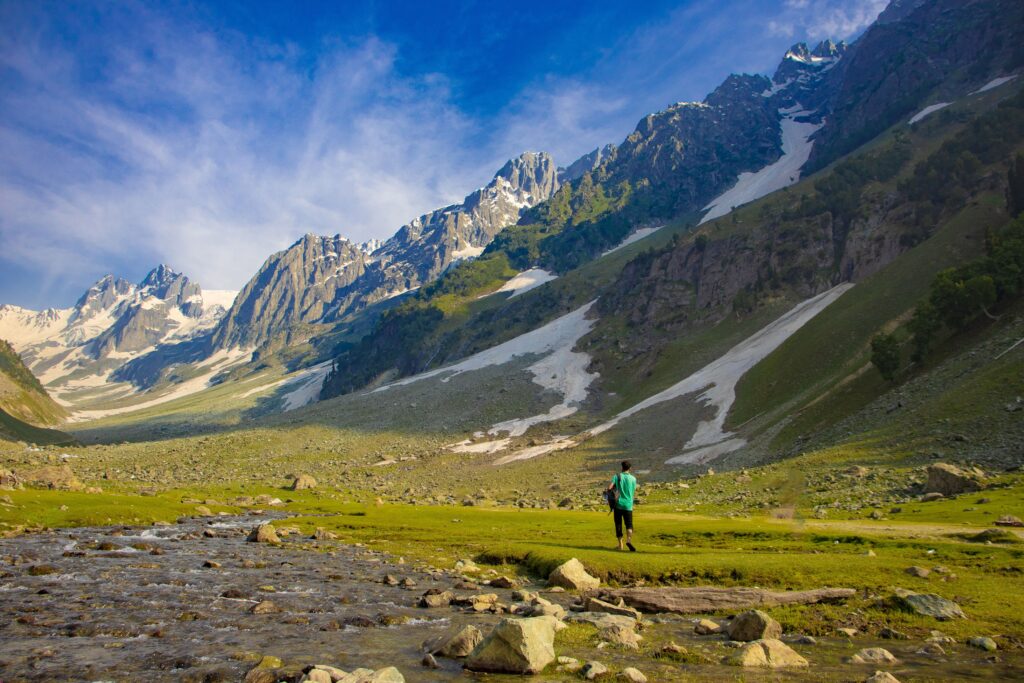
The route traces a chain of lakes. Vishansar, Krishansar, Gadsar, the Satsar cluster, Nundkol, and Gangabal. Glacier melt and monsoon snow feed all of them. Between the lakes sit wide alpine meadows. Pine forest covers the lower stretches. Three passes above 13,000 feet link one valley to the next.
5 Reasons Kashmir Great Lakes Trek Stands Apart
Click each reason to read the full story.
The six alpine lakes of the Kashmir Great Lakes Trek—Kishansar, Vishansar, Gadsar, Satsar, Gangbal, and Nundkol—create a stunning chain of turquoise waters, surrounded by rugged mountains, green meadows, and dramatic Himalayan landscapes.
Three high-altitude passes above 13,000 ft add adventure to the trek, with steep climbs, rocky trails, and sweeping views of Kashmir’s mountains and alpine valleys.
Gadsar Pass is the highest point of the Kashmir Great Lakes Trek, standing at around 13,700–13,850 ft. The pass involves a steep ascent but rewards trekkers with dramatic views of surrounding mountains, valleys, meadows, and the remote Himalayan landscape.
Wildflowers are at their best in July, covering the meadows with vibrant colours. By September, the monsoon influence reduces, bringing clearer skies, better mountain visibility, and crisp views across the alpine landscapes of the Kashmir Great Lakes Trek.
Gangabal and Nundkol lakes sit together at the foot of Mount Harmukh, creating one of the most striking landscapes on the Kashmir Great Lakes Trek. The twin lakes reflect the surrounding peaks, meadows, and rugged Himalayan terrain.
Kashmir Great Lakes Trek: Detailed Day-by-Day Guide
| DAY | ROUTE | DISTANCE | DURATION | DIFFICULTY | START ALTITUDE | END ALTITUDE |
|---|---|---|---|---|---|---|
| 1 | Srinagar → Sonamarg | 90 km drive | 3–4 hrs | Easy | 5,200 ft | 8,700 ft |
| 2 | Sonamarg → Nichnai | 11 km | 6–8 hrs | Moderate | 8,700 ft | 11,500 ft |
| 3 | Nichnai → Vishansar Lake | 12 km | 6–7 hrs | Moderate–Difficult | 11,500 ft | 12,000 ft |
| 4 | Vishansar → Gadsar | 14 km | 7–8 hrs | Difficult | 12,000 ft | 12,000 ft |
| 5 | Gadsar → Satsar | 12 km | 5–7 hrs | Moderate | 12,000 ft | 11,800 ft |
| 6 | Satsar → Gangbal | 11 km | 6–7 hrs | Difficult | 11,800 ft | 11,800 ft |
| 7 | Gangbal → Naranag | 11 km | 5–6 hrs | Moderate | 11,800 ft | 7,450 ft |
| 8 | Naranag → Srinagar | 60 km drive | 2–3 hrs | Easy | 7,450 ft | 5,200 ft |
Quick stats: Distance: 80-90 km | Time: 3-4 hrs | Altitude: 3,300–3,800 ft
Day 1 is a drive, not a trek. Pickup usually happens in Srinagar late morning. The drive to Shitkadi, the base camp village near Sonamarg, takes roughly three to four hours. Road conditions and army checkpost queues both add to that. This day gets treated as a throwaway by most guides. It isn’t. Altitude adjustment quietly starts here. Srinagar sits around 1,600 meters. Base camp sits closer to 2,400 meters. That gain matters more than the drive time itself.
Carry original ID and a few photocopies. Army checkposts along this stretch typically ask for both. Evening at base camp usually means tent allocation, a briefing, and an early dinner. Sleep comes early. Tomorrow starts the real trekking.
Quick stats: Distance: 11 km | Altitude: +3,000 ft | Time: 6-7 hrs
The morning on day two is easier than the afternoon. That gap trips people up more than anything else on this day. The trail opens through pine forest first, gentle underfoot, almost like a park walk. By early afternoon, the forest thins and the trail opens into wide meadow. The incline sharpens right when legs start to tire from an unfamiliar pace. Most first-timers misjudge their effort exactly here. Too fast in the easy morning stretch. Paying for it later.
Nichnai camp sits in open meadow. Cold enough at night that most trekkers reach for a down jacket well before dinner. Expect one or two stream crossings along the way. Usually shallow enough to hop across on stones.
Quick stats: Distance: 12 km | Altitude: +500 ft m | Time: 6-7 hrs
Nichnai Pass isn’t the hardest climb on this trek. It’s just the first. First passes teach a lesson nobody explains beforehand. At 13,500 feet, a slope you’d jog up at sea level turns into a slow, deliberate climb. Stopping to breathe every few minutes. That’s normal. Not a sign you’re unfit. Wind at the top can bite even in July. Cold enough that a windproof layer should already be on before you reach the crest, not after.
The descent on the far side drops into the valley that holds Vishansar Lake, the trek’s first big alpine payoff. Large, strikingly blue, ringed by barren peaks still carrying snow patches well into August. Most trekkers camp right on its shore. Krishansar, a smaller twin lake, sits just over a low ridge nearby. A short walk connects the two. Many operators build that walk into the following morning instead of this one.
Quick stats: Altitude: 1,700–1,850 ft | Distance: 12 km | Time: 6-7 hrs
Every operator running this trek gives the same advice about day four. Start early. This is the one day where start time isn’t a suggestion. Groups that leave Vishansar camp by 5:30 or 6 a.m. cross Gadsar Pass while the weather window is still calm. Groups that start late hit the exposed ridge section right as afternoon wind and cloud build up. That’s where the day turns miserable instead of just hard.
The climb to Gadsar Pass runs long and steady rather than sharply steep. It still sits at the trek’s highest point, and altitude alone does the damage here. Expect a tough three to four hour push before the pass, longer if the group stops often to catch its breath. A long descent follows into the Gadsar valley on the far side.
Gadsar Lake itself sits at the base of snow-clad cliffs once you reach it. Streams from the pass above feed it directly. Many trekkers call it the most striking lake on the whole route. Blue water against white snow and dark rock, all in one frame. Worth the early alarm.
- Start by 5:30 to 6 a.m., not later
- Layer up before the exposed ridge section, not after you feel cold
- Keep a steady, slow pace rather than pushing hard early
Quick stats: Distance: 12 km | Altitude: +500 ft
Expect an army checkpost stop on this stretch. Nobody explains this clearly in most guides, and it makes first-timers anxious for no real reason. It’s a straightforward identity and permission check. Not an interrogation. Original ID and the operator’s paperwork typically get logged, and the group moves on within a reasonable wait. This checkpost sits close to the Line of Control. That’s exactly why the process exists at all.
The trail itself alternates between gradual descent and a long climb back up over a ridge. A rhythm that roughly mirrors the trek as a whole. Terrain turns rocky and bouldery in stretches. More boulder-hopping than walking in places. Satsar camp sits near the first of several small lakes in the cluster. How many you actually see depends on the season and how much snow has melted that year.
Quick stats: Distance: 11 km | Altitude: +1,600 ft
Satsar is not a single lake. It’s a shifting cluster, reported as up to seven lakes total. Usually only four or five hold visible water, depending on how much snow has melted that season. A more honest answer than the flat “Satsar lakes” label most pages use. The day’s trek climbs out past the largest of the Satsar lakes over bouldery ground. Then it gains height again toward Zajibal Pass, the trek’s third and final crossing above 13,000 feet. The trail here turns barren and rocky. A sharp contrast to the greenery waiting on the descent side.
Once over Zajibal, the trail opens toward Gangabal, and the landscape shifts almost at once. Trees reappear. The valley widens. Somewhere in that shift, Mount Haramukh comes into view for the first time, towering over the valley ahead.
Gangabal camp, when you finally reach it, sits at the most photographed spot on the entire route. Cameras come out before tents go up.
Quick stats: Distance: 2-3 km | Altitude: +100ft
Every other lake on this trek sits alone. Gangabal doesn’t. It shares its basin with Nundkol, a smaller twin lake just below it. Together, the two lakes sit at the foot of Mount Haramukh with no ridge blocking the view. Two lakes, one mountain, unobstructed sightline. That combination is what most trekkers photograph the most on the whole route. Many itineraries build in a rest day here instead of a full trekking stage. Others opt for a short unladen walk around the lake shore.
Locals consider Gangabal a spiritually significant site. Small shrines dot the shoreline. Fishing is common here too. A few trekkers with the right permission try their luck with a rod brought along for exactly this stop. Trout run in the connecting stream between the two lakes, though catching one takes more patience than a single afternoon usually allows.
Quick stats: Distance: 11 km | Altitude: -4,350 ft
Day eight is a long descent, not a short victory lap. The drop into Naranag covers well over a thousand meters in a single day. By day eight, knees that have handled a week of trekking start to feel every step of it. Trekking poles matter more on this day than any other. Downhill on tired legs is its own kind of hard. Treating it as easy just because it’s downhill is how people end up limping into Naranag.
Naranag itself sits at the trailhead. Old stone temple ruins are worth a short look before the drive back. From there, it’s roughly two to three hours back to Srinagar, where the trek officially ends.
How Difficult Is the Kashmir Great Lakes Trek: Honest Assessment
Most people read “moderate” and picture a hill station walk. Wrong picture. The Kashmir Great Lakes Trek difficulty comes from three things stacking together, not one single obstacle. First, the distance. Daily stretches run 10 to 15 km. That’s longer than most weekend hiking habits prepare a person for. Second, the altitude. Three passes above 13,000 feet mean thinner air across multiple days, not one hard summit push. Third, the terrain shifts constantly. Soft meadow grass gives way to loose scree, then genuine boulder-hopping near the Satsar lakes, where every step demands attention.
Someone who has only ever done a weekend trek near a city will feel this hardest around day four. Not day one. The early days ease you in gently. By day four, tired legs meet the highest altitude. They also meet the longest exposed stretch. Same day, both at once. That’s the day operators warn people about most.
Fitness alone doesn’t fix this either. A runner who has never slept above 12,000 feet can still struggle. More than a slower hiker who acclimatized properly on an earlier trek. Altitude doesn’t care about your 5K time. It cares about how well your body adjusts. That adjustment happens on the trail itself, not in a gym.
This is why operators build acclimatization into the itinerary rather than leaving it to chance. Camping a night at Nichnai before pushing higher gives the body time to produce more red blood cells and adapt to lower oxygen. Skip that buffer, and even a strong, well-trained hiker can end up with a pounding headache at 13,000 feet that no amount of gym work would have prevented.
| MONTH / PERIOD | DAY TEMPERATURE | NIGHT TEMPERATURE | WEATHER & TRAIL CONDITIONS |
|---|---|---|---|
| Early July | 15–20°C | 2–7°C | Snow patches may remain near higher passes; meadows begin blooming |
| Mid-July – August | 15–20°C | 4–8°C | Green meadows, wildflowers, mild showers and pleasant trekking days |
| Late August – Early September | 14–18°C | 0–5°C | Cooler weather, fewer showers and clearer mountain views |
| Mid-September | 12–17°C | 0–4°C | Cold nights, changing meadow colours and possible snowfall at higher altitudes |
The Kashmir Great Lakes Trek has a short trekking season, generally from July to September. Temperatures fall quickly at higher camps, especially after sunset. July and August bring greener meadows and occasional showers, while September is cooler with clearer skies.
The Kashmir Great Lakes Trek reaches around 13,700–13,850 ft at Gadsar Pass, with camps mostly between 8,500 and 12,000 ft. The trail gains altitude gradually, but some days involve steep climbs and long hours. Acute Mountain Sickness (AMS) can occur above 8,000 ft, especially with headache, nausea, dizziness, unusual tiredness, or poor sleep. Walk slowly, drink water regularly, eat properly, and avoid alcohol. Give your body time to adjust at higher camps. If symptoms become severe or worsen, stop ascending and descend to a lower altitude. Serious symptoms such as confusion, breathing difficulty at rest, or inability to walk require urgent evacuation.
The Kashmir Great Lakes Trek reaches high altitudes, so weather, altitude sickness, slippery trails and sudden temperature drops need careful planning. Stay with your trek group, follow the trek leader and avoid crossing passes during poor visibility or storms. Carry essential medicines, rain protection, warm layers, a headlamp and enough water. AMS symptoms such as headache, nausea, dizziness and unusual fatigue should not be ignored.
For severe symptoms, descend immediately and seek medical help. Emergency exits are generally possible towards Sonamarg, Gadsar or Naranag, depending on the trek location and weather. Evacuation routes can change, so follow the local trek team’s instructions.
Best Time to Do the Kashmir Great Lakes Trek: Season by Season
Book July if wildflower meadows matter more to you than dry footing. The trek only runs July through September. A narrow window, dictated entirely by snow. Outside those three months, the high passes stay buried and the route simply isn’t open.
July gets you the meadows at full bloom. Purple iris and wildflowers carpet the valleys the trail passes through. The trade-off is a trail still soft with early snowmelt. Muddier underfoot. Stream crossings running higher than later in the season.
August sits in the middle. Meadows are still green. Streams have settled a little. This is typically the busiest month on the trail. It lines up with school holidays and peak monsoon travel windows across India, so campsites fill up fast and booking early actually matters this month more than any other.
September trades the flower carpet for clearer skies and sharper light. Nights get noticeably colder at the high camps. Cold enough that a three-season sleeping bag alone won’t cut it without a good liner. Fewer trekkers means quieter campsites, and some people value that more than the flowers.
How to Reach Kashmir Great Lakes Trek: Complete Travel Guide
Srinagar is the gateway. The trek itself starts further away. Most trekkers fly into Srinagar’s airport. It stays well connected to major Indian cities. Your operator picks you up from there directly. Flying in and starting the drive to base camp the same day is possible. But tight. Monsoon season overlaps with the entire trekking window here, and a delayed flight can throw off the whole first day. A buffer night in Srinagar before the trek starts is worth considering rather than cutting it close.
Road access exists too, for anyone who prefers not to fly. The drive from Jammu to Srinagar runs roughly eight to ten hours through mountain roads, scenic but long, and most trekkers only choose it when flights are booked solid during peak season.
Delhi to the Kashmir Great Lakes Trek usually starts with a flight or train journey to Srinagar. From Srinagar, trekkers travel by road to Shitkadi or Sonamarg, the trek’s base area, before beginning the trail towards Kashmir’s alpine lakes.
Travellers from Mumbai or can fly to Srinagar, usually with a connecting flight depending on the schedule. From Srinagar, the journey continues by road to Shitkadi Base Camp, where the Kashmir Great Lakes Trek begins.
Travellers from Bangalore can take a flight to Srinagar, usually with a connection in Delhi or another major city. From Srinagar, drive around 80–90 km to Shitkadi Base Camp, where the Kashmir Great Lakes Trek begins.
After completing the Kashmir Great Lakes Trek, trekkers descend to Naranag and drive back to Srinagar. Keep your return journey flexible because mountain roads can face delays due to weather or traffic. If you have a flight from Srinagar, avoid booking it too close to your trek’s finishing time. Keep some buffer time for road delays, rest, and unexpected changes. Carry snacks, water and a charged phone for the drive, and confirm your transport arrangements before leaving Naranag.
Srinagar is the most convenient place to stay before and after the Kashmir Great Lakes Trek. Before the trek, stay near areas such as Dal Lake, Lal Chowk or Rajbagh for easy access to transport and food. After returning from Naranag, spending another night in Srinagar is useful before catching your flight or train.
If your trek operator starts directly from Sonamarg or Shitkadi, you can also stay near the base area the night before. Keep your stay simple and choose a property with easy road access, especially if you have an early morning pickup.
What the Kashmir Great Lakes Trek Experience Is Like: Camps, Food, Stay
The Kashmir Great Lakes Trek combines scenic camps, simple mountain meals, shared tents and long trekking days. Expect basic facilities, cold nights, fresh landscapes and a close connection with nature.
Accommodation on the Kashmir Great Lakes Trek is mainly in tents at designated mountain campsites. Trekkers usually stay in shared tents, with sleeping mats and sleeping bags arranged by the trek operator. Camps are set near meadows, valleys and alpine lakes, giving you beautiful views from your tent. Facilities remain basic, with limited washing and toilet arrangements at remote camps.
There is usually no regular electricity, so carry a power bank for essential charging. Nights can be very cold, especially at higher camps, so warm layers are important. The simple campsite setup is part of the high-altitude trekking experience.
Food on the Kashmir Great Lakes Trek is simple, warm and focused on providing enough energy for long trekking days. Trek operators usually serve breakfast, lunch, evening snacks and dinner, with meals prepared at the camps. The menu may include rice, dal, roti, vegetables, noodles, khichdi, pasta and tea.
Breakfast is generally filling, while packed lunches are useful during long trail days. Vegetarian meals are commonly provided, but travellers with specific dietary needs should confirm options before booking. Carry a few personal snacks such as dry fruits, energy bars and chocolates. Since fresh food is limited at high-altitude camps, meals remain basic but practical.
Hygiene facilities on the Kashmir Great Lakes Trek are basic, especially at remote campsites. Trekkers generally use temporary toilet tents or designated dry-toilet areas, depending on the campsite and operator. There are no regular Western-style toilets on most high-altitude camps. Bathing facilities are also limited, so carry wet wipes, biodegradable soap and hand sanitiser.
Use toilets only in designated areas and avoid contaminating streams or lakes. Keep toilet paper and personal waste in a disposal bag rather than leaving it on the trail. A small personal hygiene kit, quick-dry towel and extra socks can make the trek more comfortable.
6:00–6:30 AM: Wake up and get ready for the day.
7:00 AM: Have a warm breakfast at the campsite.
7:30–8:00 AM: Start trekking with the group.
Morning: Walk through meadows, forests, valleys and mountain trails.
Midday: Take short breaks and have a packed lunch.
Afternoon: Continue towards the next campsite, with rest stops as needed.
3:00–5:00 PM: Reach the campsite, depending on the day’s route.
Evening: Have tea or snacks and relax around the campsite.
7:00–8:00 PM: Enjoy dinner and prepare your gear for the next day.
9:00 PM onwards: Rest early for the following day’s trek.
Kashmir Great Lakes Trek Packing List: What to Carry
A generic Himalayan packing list misses what this trek specifically demands. A rain jacket isn’t a generic add-on here. Clear skies at the Gadsar Pass campsite can turn to sleet within the hour. A light jacket that works fine on a day hike back home won’t cut it at 13,000 feet.
Layering matters more than any single expensive item. Days can run warm enough for a t-shirt in the meadows. Nights at Nichnai or Vishansar drop cold enough for a down jacket well before dinner. Footwear needs to handle soft meadow grass, loose scree, and genuine boulder-hopping near Satsar. Ankle support isn’t optional here.
Clothing: The Layering System
Layering
- Thermal layers
- Fleece or down jacket
- Rain jacket
- Quick-dry trekking pants
Footwear
- Broken-in trekking shoes with ankle support,
- Camp shoes,
- Wool socks
Gear
- Trekking poles
- Headlamp
- Sleeping bag rated for near-freezing nights,
- Backpack rain cover
Personal Essentials
- Sunscreen
- Lip balm
- Basic first-aid
- water bottles or a hydration bladder
What NOT to Carry
Heavy jeans or cotton clothing. Cotton absorbs sweat and refuses to dry at altitude. This is how hypothermia starts. More than 8 to 9 kg total backpack weight.
How to Get Fit for the Kashmir Great Lakes Trek
Trekkers who struggle on the Kashmir Great Lakes Trek usually skipped the training plan. They weren’t naturally less fit. Build cardio, leg strength, and some altitude tolerance ahead of time. Pack for real weather swings, not a fair-weather hike. Book with an operator who explains exactly what’s included, not just the headline price. Do that, and this trek hands back six days of lakes that earn every step it takes to reach them. Few walks in the Himalaya give back that much, that often, in a single week.
Week 1: Start with 30–40 minutes of brisk walking for four days. Add basic exercises such as squats, lunges, calf raises and planks. Focus on building a regular routine rather than pushing hard.
Week 2: Increase your walking to 40–45 minutes. Add light jogging if comfortable. Continue strength exercises three times a week, with extra focus on your legs and core.
Week 3: Walk or jog for 45–60 minutes, four to five days a week. Introduce stairs, step-ups or uphill walking to prepare for climbs.
Week 4: Build towards 60-minute cardio sessions. Add longer stair or hill sessions and continue strength training. Try walking on uneven terrain if possible.
Week 5: Include one longer hike of 3–5 hours with a light backpack. Keep two to three strength sessions during the week and maintain regular cardio.
Week 6: Reduce training volume and focus on recovery. Take shorter walks, stretch regularly and avoid exhausting workouts in the final few days. Prioritise good sleep, hydration and nutrition before starting the trek.
If you are not physically prepared for the Kashmir Great Lakes Trek, long walking days, steep climbs and high-altitude passes can feel much harder. You may experience early fatigue, muscle soreness, breathlessness and slower recovery, making it difficult to maintain the group’s pace. Poor fitness can also increase the strain of carrying a backpack and walking on uneven terrain. At high altitude, fitness does not prevent Acute Mountain Sickness (AMS), so altitude symptoms still need attention. If you cannot keep up, the trek leader may ask you to rest, reduce your pace or descend for safety.
The Kashmir Great Lakes Trek is a high-altitude trek, so age, fitness and existing health conditions should be considered before booking. Trekkers aged 55 and above should build fitness gradually and consider a medical check-up before the trek. Children should have enough stamina to handle long walking days, steep climbs and cold conditions; the minimum age can vary by trek operator. Anyone with a heart, lung, blood pressure or other medical condition should speak with a doctor before attempting a high-altitude trek. Carry prescribed medicines and inform the trek leader about relevant medical needs. Never ignore serious altitude symptoms, regardless of age or fitness.
Kashmir Great Lakes Trek Cost: Complete Pricing Breakdown
No ranges. No “starting from” estimates. Here is the exact cost.
| COST HEAD | APPROX. COST | DETAILS |
|---|---|---|
| Trek Cost | ₹15,500 | Base trek package cost |
| Trek Insurance | ₹240 onwards | High-altitude trek insurance; coverage varies by policy |
| Backpack Offloading | ₹3,000–₹4,800 | Optional service for carrying your backpack |
| Cloakroom | ₹200 onwards | For storing extra luggage at the base camp |
Travel to and from Srinagar: Flights, trains, taxis or buses are usually separate from the trek package.
Personal snacks and drinks: Energy bars, dry fruits, chocolates and extra beverages can add to your daily spending.
Backpack offloading: If you do not want to carry your full backpack, you may need to pay an additional offloading fee.
Extra accommodation: An additional night in Srinagar or near the base camp may be needed due to travel schedules.
Personal gear and equipment: Trekking shoes, jackets, rainwear, walking poles and other equipment may need to be purchased or rented separately.
Our ₹15,500 KGL trek cost covers the essential services needed for a safe and organised high-altitude trek. The price goes towards experienced trek leaders, support staff, campsite arrangements, meals, tents, sleeping equipment and other trail logistics. Operating in remote Himalayan areas also involves additional transport, staff movement and supply costs. We focus on maintaining proper support throughout the trek rather than keeping the package price low by cutting essential services. Some expenses, such as travel to Srinagar, insurance, backpack offloading and personal equipment, remain separate because they depend on individual requirements. This keeps the package transparent and helps trekkers plan their complete budget.
| CANCELLATION PERIOD | REFUND |
|---|---|
| 30 days or more before trek date | 90% refund |
| 15–29 days before trek date | 70% refund |
| 8–14 days before trek date | 50% refund |
| 4–7 days before trek date | 25% refund |
| 0–3 days before trek date | No refund |
| After the trek begins | No refund |
Trek Safety Terms
The Kashmir Great Lakes Trek involves high-altitude trails, steep sections, changing weather and unpredictable mountain conditions. Every trekker must follow the instructions of the trek leader and support team. The itinerary may be changed, delayed or cancelled if weather, trail conditions or other safety concerns make the planned route unsafe. Trekkers must disclose relevant medical conditions and carry prescribed medicines. AMS symptoms such as headache, nausea, dizziness or unusual weakness should never be ignored. If necessary, the trek leader can stop a trekker from continuing or arrange descent for safety. Emergency evacuation, medical treatment and other additional expenses may be charged separately unless covered by the applicable insurance or package terms.
Sonmarg to Naranag
(Transportation Not Included)
Upcoming Batches
“I started Kedarkantha Trek because the mountains changed my life, and I wanted to make that transformation accessible to anyone willing to walk. Every trail we run, I ask: would I send my own family on this batch?”
Ritesh Mishra
Founder, kedarkanthatrek.in • 12 years in Himalayan trekking
Kashmir Great Lakes Trek: Frequently Asked Questions
Is solo trekking allowed on the Kashmir Great Lakes Trek?
Not independently, in most cases. The route runs through sensitive border-adjacent zones with army checkposts. Operators typically require trekkers to join an organized group rather than walk it alone.
Is there network connectivity on the trail?
Barely. Don’t count on it. A few spots near passes occasionally catch a weak signal. Most campsites sit in dead zones for the full week.
Is there an age limit for this trek?
Most operators set a rough floor around 12 to 14 years old. The upper limit stays soft, based on fitness rather than age itself. Fitness matters more than the number on your ID here.
Can you do this trek if it's raining?
Yes, within reason. The trek runs during monsoon season, so light rain is expected. Operators typically only halt movement for severe weather, real storms, not routine drizzle.
Can you join without your own group?
Yes. Most operators run fixed departure batches specifically for solo trekkers and small groups joining a larger cohort. Arriving without friends isn’t a barrier.
Is altitude sickness common on this trek?
Mild symptoms show up often, since three passes sit above 13,000 feet. Severe cases stay rare when the itinerary paces acclimatization properly. Listen to your body. Report headaches or nausea to your trek leader early, not late.
hat happens if the weather turns bad on a pass day?
Trek leaders hold the group back rather than push through a real storm. That sometimes means an extra rest day at camp, waiting for a clear window. Build a spare day into your travel plans on either end for exactly this reason, since flights back from Srinagar rarely bend around a delayed descent.
Do you need travel insurance for this trek?
Most operators don’t require it, but skipping it is a real gamble at this altitude. A medical evacuation from a remote camp near Gadsar Pass costs far more than any policy premium, and basic domestic health cover usually doesn’t extend to helicopter rescue in a border-adjacent zone like this one.
Treks Similar to Kedarkantha: What to Do Next
Brahmatal Trek
Brahmatal’s summit sits at 12,250 feet, just 250 feet lower than Kedarkantha. The trekking distance is longer at 22 km across 4 trekking days. The trail passes two frozen lakes instead of one. The mountain views are different: Trishul and Nanda Ghunti dominate the skyline instead of Swargarohini and Bandarpoonch. If you loved the snow and summit experience on the Kedarkantha trail and want a similar challenge with new scenery, Brahmatal is the natural next step. Best done in January or February.
Har Ki Dun
Har Ki Dun runs 7 days and covers 45 km through the same national park. Both treks start from Sankri. The difficulty is comparable, but the longer duration tests endurance more than altitude. The route follows the Supin River through ancient Garhwali villages. Swargarohini appears up close from the valley floor. If you want to go deeper into the same mountain range, this is the trek.
Dayara Bugyal
Dayara Bugyal is a high-altitude meadow trek that peaks at around 11,800 feet. The gradient is gentler than Kedarkantha. The meadows are wider. No steep summit push. If you are trekking with children under 8 or family members who prefer rolling green terrain over snow and summits, Dayara Bugyal is the safer introduction.
Deoriatal Chandrashila
Deoriatal Chandrashila combines a lake, a temple (Tungnath), and a summit (Chandrashila, 13,123 ft). The trek is 6 days and mixes cultural stops with mountain trail. If you want more variety in terrain and experience types than Kedarkantha offers, this trek delivers that range.
Further Reading on the Kedarkantha Trek
How We Started Running the Kedarkantha Trek from Sankri — by our founder. The origin story of our Sankri operations, why we chose this route, and what we learned in the first three seasons.
Kedarkantha Trek in January: A Complete Month Guide — by Sneha, who trekked with us in January 2026. Trail conditions, crowd levels, and what surprised her about deep winter on this route.
What Our Youngest Trekker Taught Us About the Kedarkantha Trail — by trek leader Vikram. The story of Aarav Kapoor, age 10, and how his pace changed how we think about family batches.
Kedarkantha vs Brahmatal: Which Winter Trek Should You Do First? — A head-to-head comparison by a trekker who did both in the same season.
The Season-Wise Kedarkantha Packing Guide — with month-by-month clothing recommendations and a downloadable checklist.
