Should you offload your backpack on the Kashmir Great Lakes Trek? Offload it if an injury, medical advice or your fitness makes carrying it unsafe. Carry your own backpack if you have trained with a loaded pack and can walk for several hours without pain or extreme tiredness. Offloading can reduce strain, but it does not make this demanding trek easy.
The Kashmir Great Lakes Trek usually takes about eight days, covers roughly 68–75 km depending on the itinerary, and reaches around 13,750 ft. The route has long walking days, high mountain passes, rocky sections and steep climbs and descents. The Gadsar Pass day is often one of the hardest, while the final descent to Naranag can be tough on your knees.
When should you offload your backpack?
Use this simple guide to make your decision.
Your situation | Better choice |
You have an injury or a health condition that makes carrying a pack difficult | Discuss it with your doctor and trek operator. Offloading may be needed. |
You cannot walk for about three hours on a training hike with your planned pack without pain or severe fatigue | Improve your fitness first. Consider offloading if the trek is suitable for you. |
You have trained with a loaded backpack and can manage long hikes comfortably | Carry your own pack if you can keep it light. |
You are new to trekking but have good fitness | Do not assume you need a porter. Test your fitness and pack before deciding. |
You want to enjoy the walk without carrying your main luggage | Compare the cost, service rules and environmental impact before booking offloading. |
Offloading is not a replacement for fitness. You still have to climb high passes, walk over uneven ground and manage altitude. If you feel unwell at high altitude, carrying less weight does not remove the risk of altitude sickness.
How much does backpack offloading cost?
Travelsket charges ₹3,000 per bag for backpack offloading on the Kashmir Great Lakes Trek. This service lets you walk without carrying your main backpack, helping you save energy during long climbs and high mountain passes.
Before booking, confirm the allowed bag weight, whether the fee covers the full trek, and how your luggage will be transported to each campsite. Keep water, snacks, warm clothing, rain protection, medication and other essentials in your daypack.
What is the difference between a mule and a personal porter?
On this route, offloading usually means handing your main trekking bag to the operator’s support team. Depending on the package, the bag may be carried by a mule or pony, or by a porter. The exact arrangement is not the same with every operator.
- Mule or pony offloading: Your packed bag travels with the animal support team. Ask when you will get access to it at camp and whether it will be protected from rain.
- Personal porter: A person carries your bag. Confirm whether the operator actually offers this service, the weight limit, the price and whether the porter is assigned to you or carries shared loads.
- Camp support animals: Some packages use animals to move shared equipment and supplies. That does not automatically mean your personal backpack is included.
Do not assume that “offloading” means you will have someone walking beside you with your bag. Ask who carries it, how it is labelled, and what happens if you need to leave the trek early.
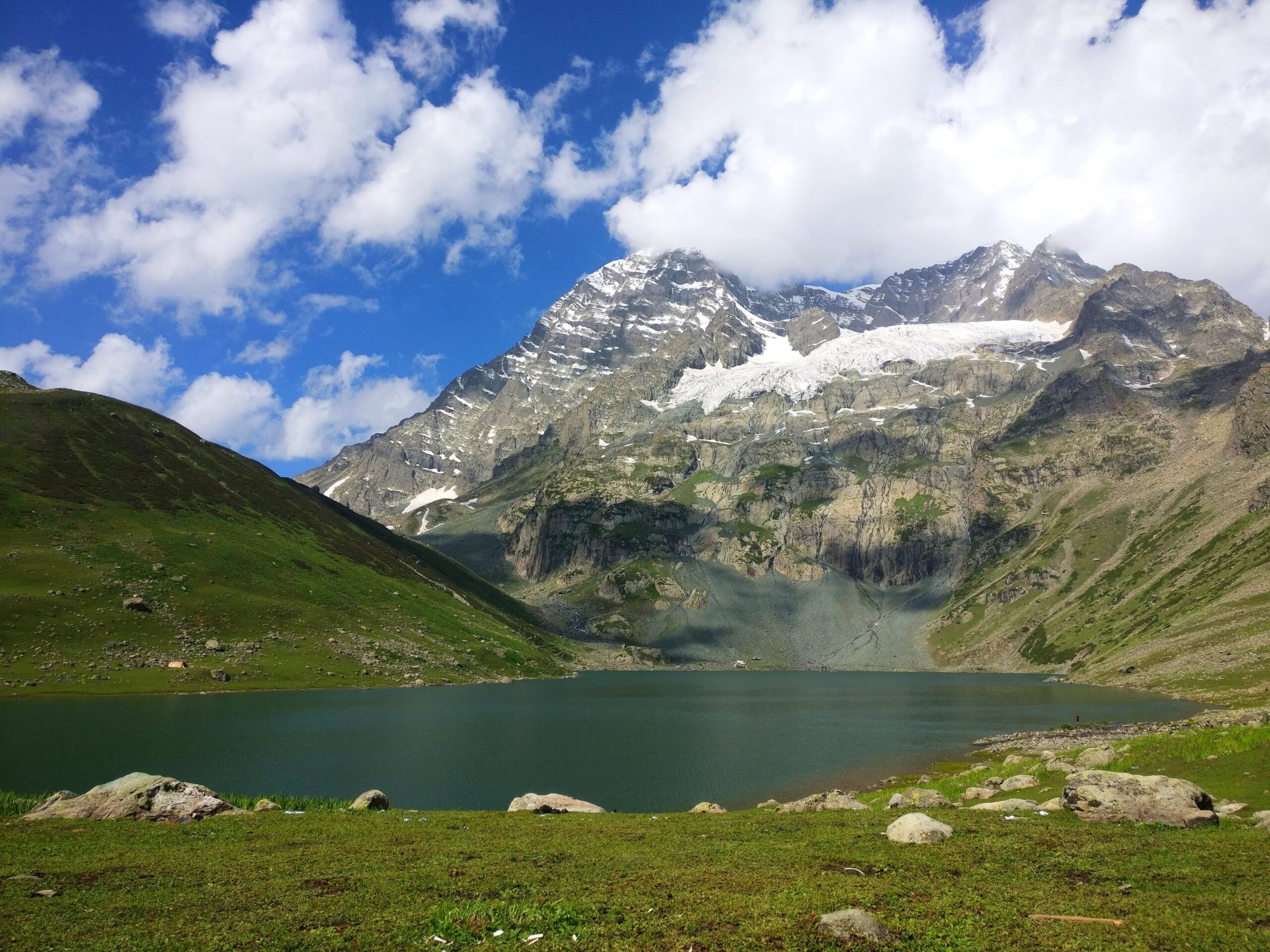
Does offloading help on the hardest days?
It can reduce the load on your back, but it does not shorten the route or remove the climbs. The exact distance and walking time vary by itinerary and conditions.
Trek section | What makes it demanding | How offloading may help |
Shitkadi to Nichnai | A long uphill walk | Less weight on your shoulders during the climb. |
Nichnai Pass to Vishansar Lake | High pass, ascent and descent | Can reduce fatigue while crossing the pass. |
Vishansar to Gadsar via Gadsar Pass | A high pass followed by a long descent | Less load on your back, but careful footing is still essential. |
Satsar to Gangabal | Uneven ground and a pass crossing | May make balance and movement feel easier, though your daypack still needs to be secure. |
Gangabal to Naranag | A long, steep descent | May reduce strain from carrying a heavy pack, but your knees and legs still do the work. |
Frequently asked questions
Is backpack offloading compulsory on the Kashmir Great Lakes Trek?
No. It is an optional service with operators that offer it. Some operators encourage trekkers to carry their own bags, while allowing offloading for people with medical needs or other limitations. Check the current rules for your chosen operator before booking.
Can I offload my backpack only on pass days?
Possibly, but you must confirm this with the operator. Some charge a fixed fee for the full trek rather than for individual days. Ask whether part-route service is allowed and how your bag will be moved and returned to you.
Can I tip the porter or pony handler?
Ask Travelsket whether tips are expected or shared among the support team. If you choose to tip, do so respectfully and according to the operator’s guidance. Do not assume a tip is included in the offloading fee.