Kuari Pass in March is a good choice if you want snow on the upper trail and early spring views below. Early March often feels like winter, while the middle and end of the month bring a mix of snow, bare trails and fresh blooms. But the weather can change fast, so you should check the trail before booking. If you want snow without the harshest winter cold, mid to late March is worth considering.
March is worth considering if you want a mix of snow and spring views. The upper trail can hold snow, while lower slopes start to clear. You may also see dwarf rhododendrons, called buransh, begin to bloom in the forest. The wide views of Nanda Devi and other Himalayan peaks are a major reason to choose this trek.
The month is a time of change. Still, March is not a promise of clear skies or a white trail. A warm spell may melt snow at lower points, while a fresh spell can cover the path again. Think of March as a changing season, not a fixed snow window.
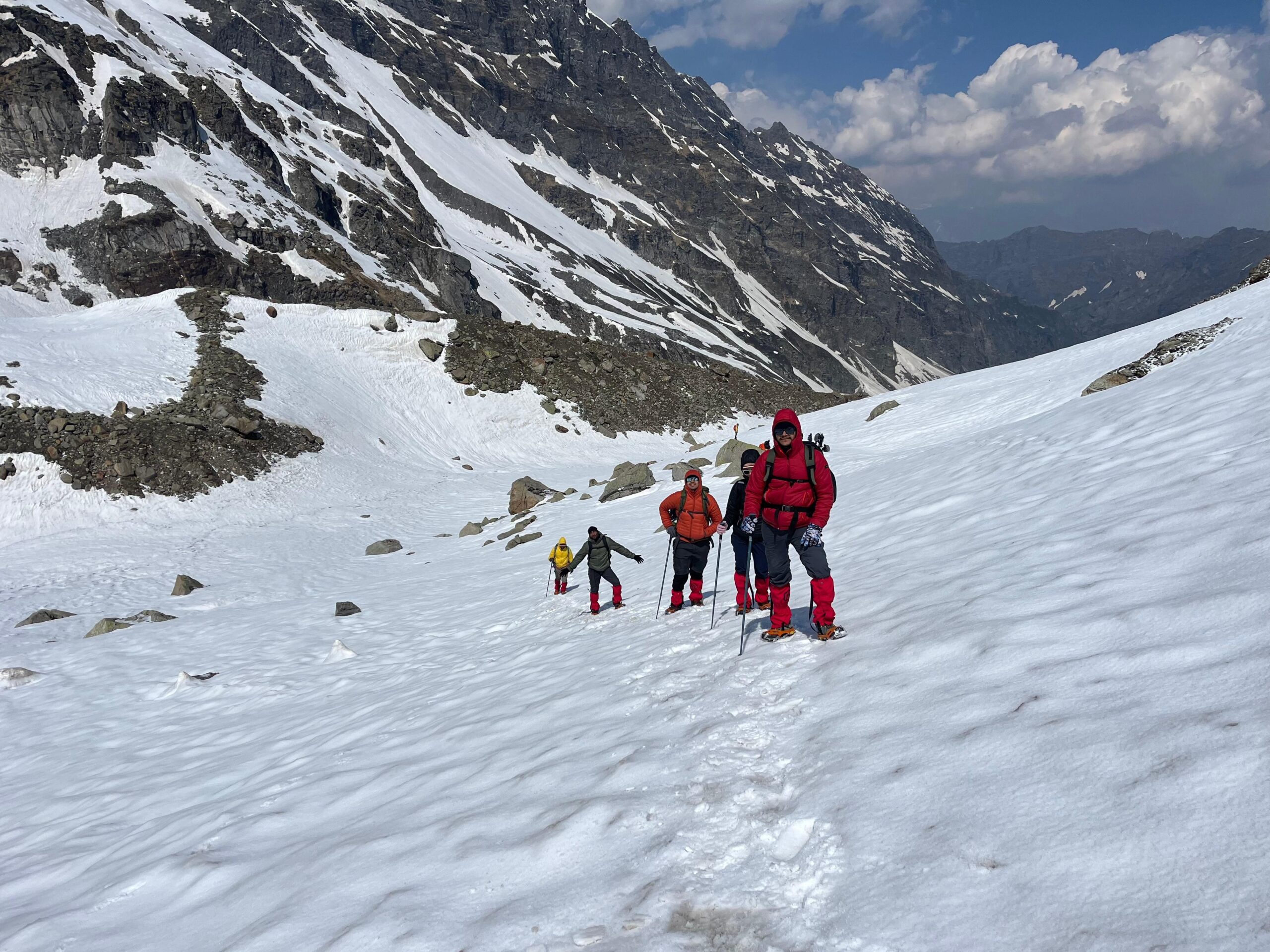
Kuari Pass Temperature in March
The temperature depends on the height of your camp, the wind and the weather that week. Days can feel pleasant while you walk, but the cold returns quickly after sunset. Camps near Khullara and other high areas need warm clothing, even when the sun is out.
Published guides do not give one agreed temperature range for every March day. Use the table below as a planning guide, not as a live forecast.These are broad seasonal patterns, not fixed dates for snow. A fresh snowfall can change the route at any time. Before you book, ask the operator what the last group found on the trail and whether snow gear is needed for your dates.
Kuari Pass Temperature Table
Weather factor | Temperature / conditions |
Day temperature | 5°C to 12°C |
Night temperature | -5°C to 0°C at higher camps |
Snow | Possible on higher trails, especially in early March |
Rain | Possible during changing weather |
Wind | Can make temperatures feel much colder |
Trail surface | May include mud, rocks, snow and icy patches |
Early March vs Mid-March vs Late March
Period | Expected conditions | Who should consider it |
1–10 March | Colder weather, with a greater chance of snow on higher trails | Trekkers who want a winter experience |
11–20 March | A mix of snow, melting patches and clearer trail sections | Trekkers who want both snow and milder days |
21–31 March | Lower trails may be clearer, but snow can remain at higher points | Trekkers prepared for changing trail conditions |
These temperatures are estimates for planning. Actual conditions depend on altitude, snowfall and the weather during your trek.
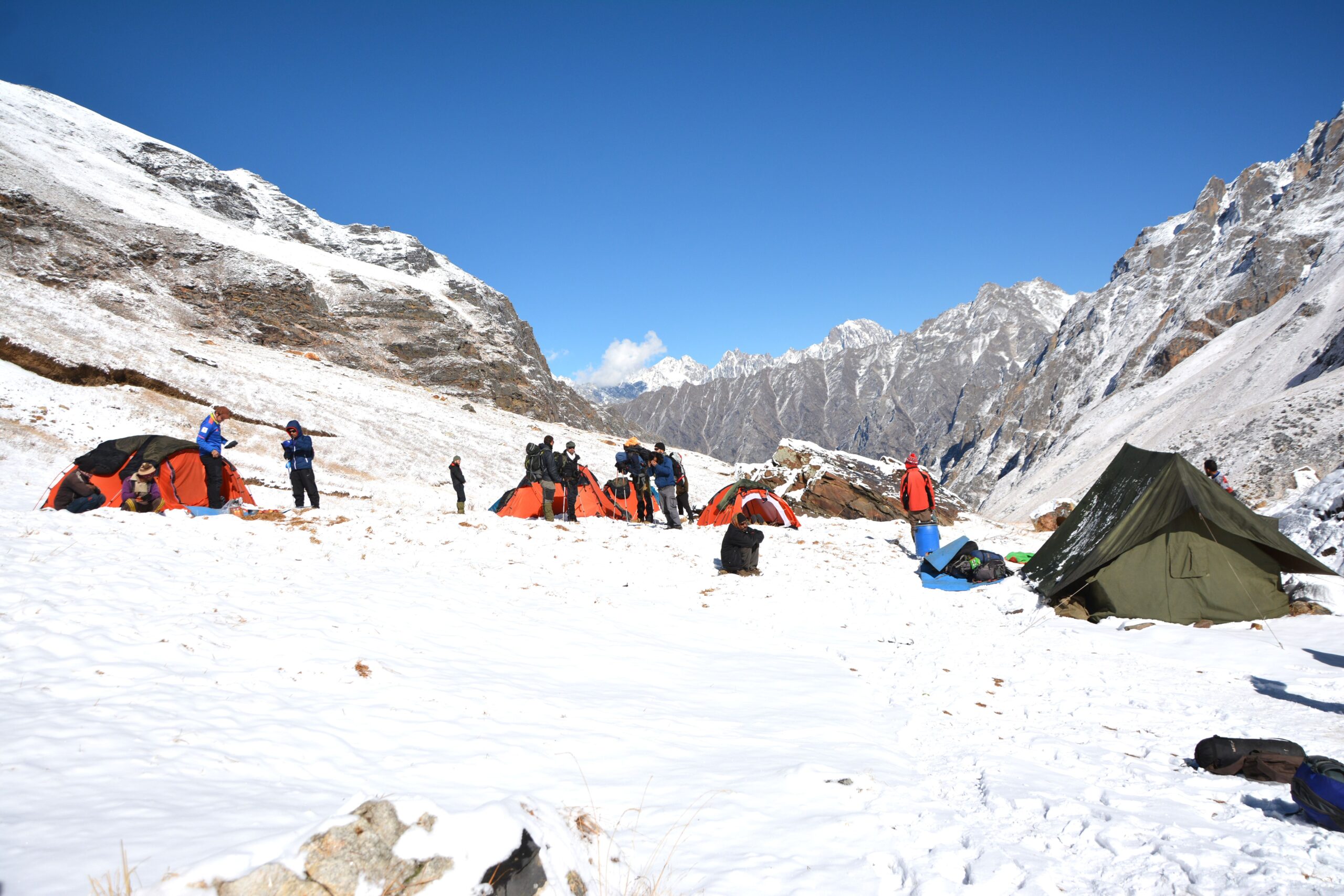
What to Pack for Kuari Pass in March
Pack for cold nights, wet trails and strong sun. You may start walking in mild weather and reach a cold, windy area later that day. Keeping one dry set of clothes for camp can make a big difference.
Carry warm base layers, a fleece, a padded jacket, a waterproof jacket, gloves, a woollen cap and trekking shoes with good grip. Sunglasses and sunscreen are useful when sunlight reflects off snow. A headlamp, personal medicines, a water bottle and a waterproof bag cover are also important.
Ask whether the operator provides microspikes and gaiters. These can help on icy or snowy sections, but they do not make an unsafe trail safe. Use them only as your trek leader advises.
Safety Tips for March
Snow and changing weather are the main risks. Follow your trek leader’s advice, keep warm and do not walk onto steep snow or ice without guidance. Tell the team if you feel dizzy, sick or unusually weak, as these can be signs of altitude trouble.
Phone signals may be weak or missing in parts of the trail. Let your family know you may not be able to call each day. Ask the operator how the team handles emergencies and what happens if the route must change. Check local weather and road updates before leaving for the mountains.
March can give you snow, fresh forest colour and wide Himalayan views. But the best trek is not the one that reaches the pass at any cost. It is the one that brings you back safely, with memories you can enjoy long after the snow has melted.






