Tawang Monastery
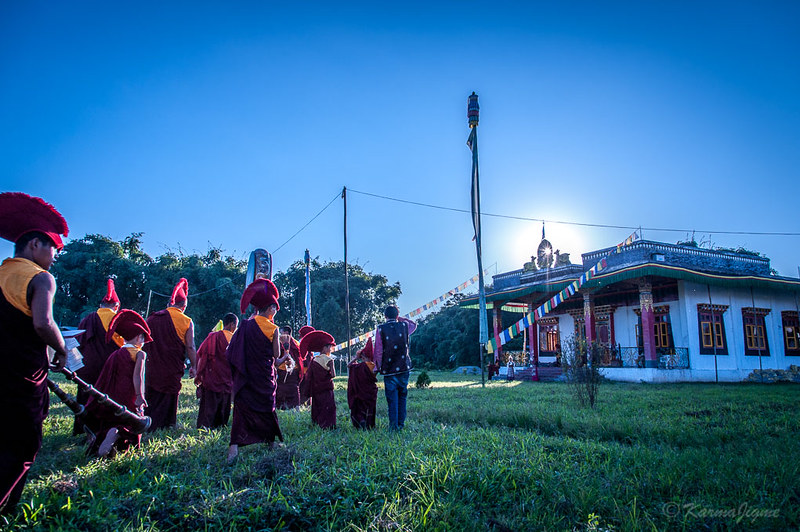
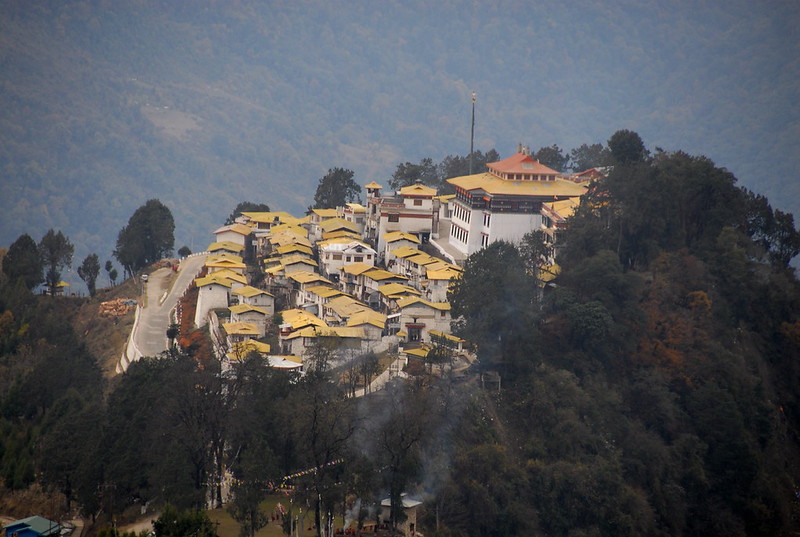
India’s largest monastery is not just a landmark, it is a working religious community. Most visitors see only a fraction of what it holds. The main prayer hall gets most of the foot traffic. But the old library on the upper floor is where the monastery earns its age. It is lined with hand-painted thangkas and ancient scriptures. Most people walk past the staircase without going up. The courtyard fills with monks during morning prayer, usually before 8 AM. Arrive later and you get the building without the life inside it.
The 28-foot golden statue of the Buddha is the visual centrepiece of the hall. It is as large and precise as it sounds. After the main monastery, the rooftop offers the best view back over Tawang town. It beats most other viewpoints in the area. The monastery is about 3 km from the market. A taxi is the standard route, but the walk in good weather is fine. The monastery is open roughly 6 AM to 6 PM. Morning is better, go early, go up to the library, and give it at least two hours.
Sela Pass
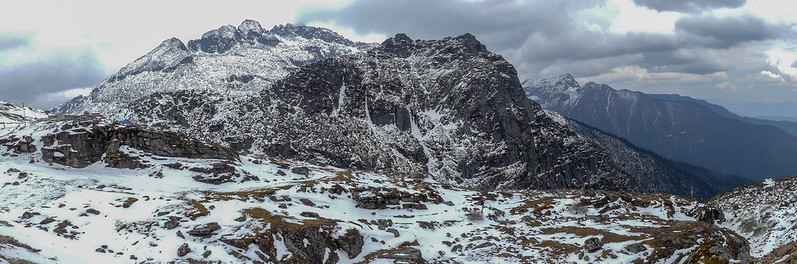
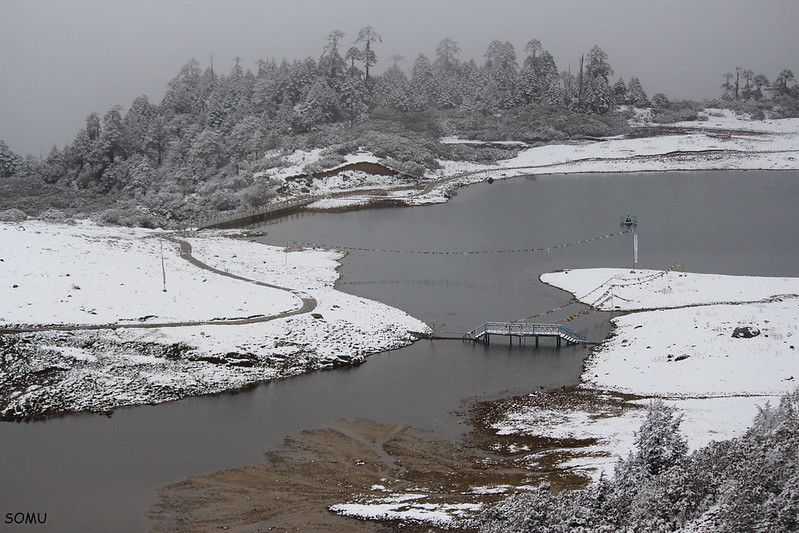
The drive to Sela Pass does not match what people expect. It starts in thick forest, gains altitude steadily, and then opens up at 13,700 feet. The landscape at the top is bare, wide, and completely still. The lake beside the pass is often partly frozen, even in summer months. Prayer flags run in long lines across the ridge. On the road up to the pass, about 15 km before you reach it, is Jaswant Garh. Most vehicles drive past without stopping. That is a mistake. Rifleman Jaswant Singh Rawat of the 4th Garhwal Rifles held off Chinese forces alone for 72 hours here. That was in 1962, one man. There is a small shrine and a display inside and it takes 20 minutes.
The pass itself is worth the altitude discomfort. Go slowly, drink water, and do not plan a big afternoon after you come back down. Altitude headaches are real at 13,700 feet, especially if you have just arrived in Tawang.
Madhuri Lake (Sangetsar Lake)
The Bollywood name is not the reason to go. In fact, it sets the wrong expectation. Sangetsar Lake does not look like a typical Himalayan lake. An earthquake in the 1950s shifted the ground and trapped a forest under rising water. Dead tree trunks still rise out of the surface. The water is blue and clear and that combination is good. Unlike anything at lower elevations in the northeast. The lake sits about 35 km from Tawang on the road toward Bum La Pass. If you plan a Bum La trip, the road to the border passes Madhuri Lake on the way. There is no reason to make two separate days of it. Almost every driver in Tawang routes these two together. Tell your driver this upfront and confirm before you leave town.
The altitude here is over 3,700 metres. Plan for cold, bring layers, and do not skip this even if Bum La gets cancelled, the lake stands on its own.
Nuranang Waterfall (Jang Falls)
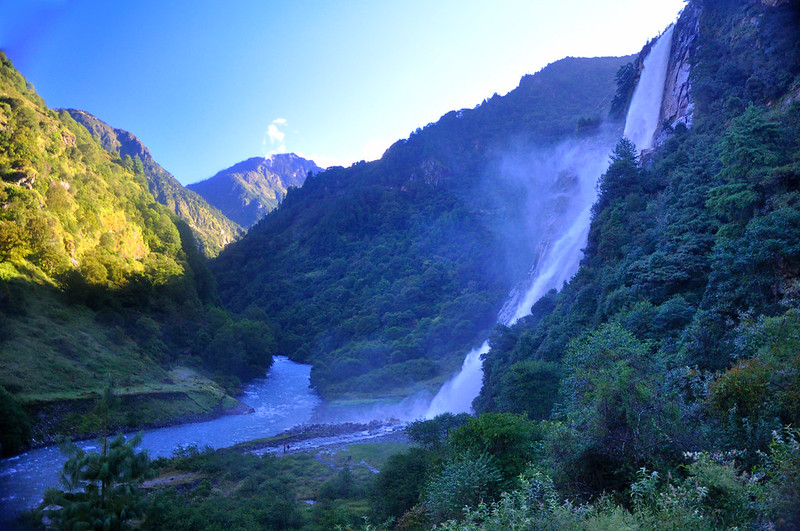
Stop here on your way into Tawang. Not as a day trip from town later. The waterfall sits on the Guwahati-Tawang road, about 40 km before you reach the town. Most people are in a vehicle already travelling this road. The detour takes under an hour, worth every minute. The drop is about 100 metres. You reach the base by walking down roughly 100 steps. At the bottom, the spray reaches you fully.
The forest around it is thick and green. In the months after monsoon, the volume of water is at its strongest. The sound is intense in a way that is hard to prepare for. The waterfall is also linked to a story from the 1962 war. A local girl named Nuranang, whose account became part of the oral history of this valley. The ticket price as of 2025 is Rs 40 per person. Go down to the base, do not just photograph from the top and leave.
Tawang War Memorial
This is a solemn place, not a scenic one. The 40-foot stupa-style structure stands against the Tawang-Chu valley. All 2,420 names from the 1962 Sino-Indian war are engraved on the walls. The light and sound show runs in the evening. It covers the 1962 battle through narration, sound, and light effects against the Himalayan backdrop about 30 minutes. More direct and more emotional than most visitors expect.
Book your seat at the counter by afternoon. In peak season, June and October specifically, seats are gone by 5 PM. The show is the reason most people say this memorial is their strongest memory of the trip. Sound like a small thing? It lands differently in person, go for the show, not just the structure.
PT Tso Lake (Pangateng Tso)
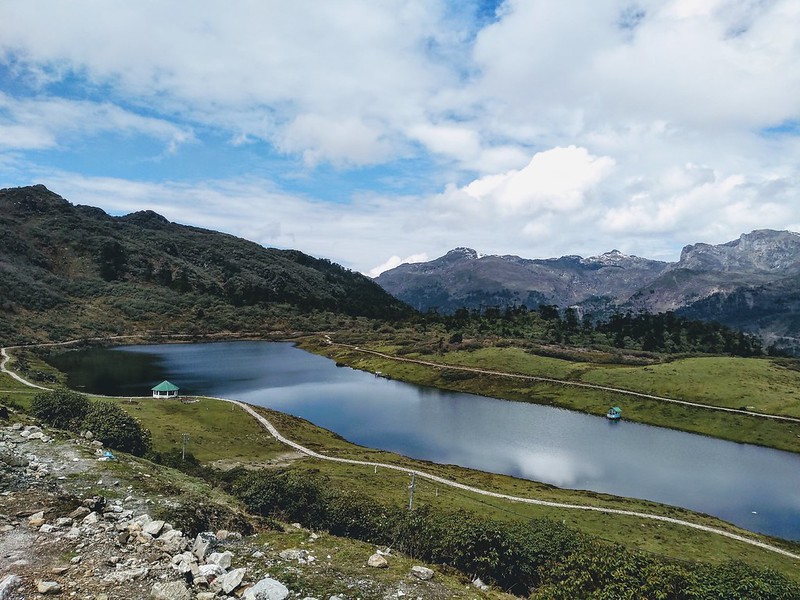
Madhuri Lake is not always the right call. The road to Bum La is rough. The convoy schedule is Army-dependent. Not every visitor wants that day. PT Tso sits just 17 km from Tawang town. The road is decent, no military permit needed. It is a half-day trip at most. The lake is wide and still, sitting in a bowl of hills at about 4,640 metres. During spring, rhododendrons cover the slopes above the waterline.
In winter, the surface freezes flat. On weekdays in shoulder season, you may have it almost entirely to yourself. That is not a small thing after the crowds at the monastery. It is also a good stop for birdwatching during migration months, if that matters to you. Pair PT Tso with Vihara Market in town on the same day. Together they make a relaxed and complete fourth day.
Bum La Pass
This one is for people who came specifically to stand at the India-China border. Know what you are getting into before you build a day around it. The pass sits at 15,200 feet. The road from Tawang is rough and the drive is long. The trip runs in an Army convoy. Here is what no guide explains clearly: you do not just show up and go. The night before your planned visit, go to the Deputy Commissioner’s office in Tawang town.
Ideally before 5 PM. Bring your original ILP, your photo ID, and your vehicle details. The application goes through the DC office. Final clearance comes from the Brigadier’s office at the War Memorial. The permit is usually ready by 9 AM the next morning. Even with a valid permit, the Army can cancel the convoy on the day. Weather, security checks, border conditions. If Bum La is locked into your itinerary with no flexibility, you may miss it. Build in a backup day. Your driver or hotel will know this process well. Pair the trip with Madhuri Lake on the same road. The Dalai Lama crossed this pass in 1959 on his way into India. The border guards know the history and will share some of it if you ask.
Urgelling Monastery
Yes, the Urgelling monastery is worth visiting. It takes about 45 minutes and sits 3 km from town. Urgelling is the birthplace of the 6th Dalai Lama, Tsangyang Gyatso, born here in 1683. That fact alone makes it a different kind of stop. You are not walking into a large institution. You are walking into a small, quiet place with a specific and important history. Different energy entirely.
Combine this with the main monastery on the same morning. Visit the big monastery first, spend two hours, then come here before noon. The village walk around Urgelling is unhurried and good. Locals go about their day with little attention to visitors. Spend the time, read the plaques, understand what the place is before you leave.
Gyangong Ani Gompa (The Nunnery)
The main monastery is vast and formal, the nunnery is neither. About 50 nuns live and study here. The daily routine is visible in a way that the main monastery’s scale does not allow. Morning kitchen work, study groups in the courtyard, the quiet details of life inside a religious community.
A ropeway connects Tawang Monastery to the nunnery. It costs Rs 100 per person and takes a few minutes. Take it after you finish at the main monastery, not as a separate trip. If the ropeway is under maintenance, a short road route by taxi gets you there. The nunnery sits on a forested hill above town. The view from the top is a quiet bonus.
Thingbu Hot Springs
Skip this in summer. Tawang has too much else going on and the drive is 60 km each way. But in winter or early spring, Bum La is closed. The high-altitude lakes are off, Thingbu fills the gap. It becomes the best outdoor option in the area. The springs are fed by the Mago Chu River. In winter they are warm enough to be the best outdoor option for miles around. The drive is about 3.5 hours from town. But in January or February, most headline attractions are weather-limited. Thingbu gives your trip a full day with purpose. Go if the season calls for it. Skip it if the rest of your list is open.
Get Your Permits Before You Go: ILP and Bum La
Most visitors find out about the permit from their driver at a checkpoint. That is not where you want to learn about it. Sort this before you book anything. Indian citizens need an Inner Line Permit (ILP) to enter Arunachal Pradesh. This includes Tawang. Without it, you will not pass the Bhalukpong checkpoint on the way in. In 2026, the online application is the fastest route: apply at arunachalilp.com. Upload your photo ID, a passport-size photo, and your travel plan. Online processing is often same-day. The permit costs about Rs 100 to 200. Verify the current fee on the portal before you apply and it is valid for up to 14 days. Carry printed copies. Checkpoints between Bhalukpong and Tawang ask for it multiple times. The network in this corridor is unreliable for digital-only documents.
Foreign nationals do not apply for an ILP. They need a Protected Area Permit (PAP). Different process, more involved. Apply through Indian Missions abroad, an FRRO office, or a registered tour operator in India. Foreign nationals visiting Tawang must travel with a registered operator. Plan well ahead, this is not a same-week application.
Bum La is separate from both. Your standard ILP covers all of Tawang town, the monastery, Sela Pass, Madhuri Lake, and PT Tso. Bum La sits inside a restricted military zone. It needs a local permit arranged in Tawang, at the DC office, the evening before you go. This is not something you can pre-book from home. Your driver or hotel will guide you through it on arrival. Planning sightseeing in Tawang that includes Bum La? Build a full extra day into your schedule as a buffer.
Plan Your Tawang Sightseeing: How Many Days You Need
Most people under-plan and regret it. They budget three nights, spend two days in transit, and end up rushing four places. Five nights minimum is the honest answer. Here is how those days actually work. Day one in transit is productive: Sela Pass and Nuranang Falls sit on the approach road. No detour needed. Day two covers the monastery, Urgelling, the nunnery, and the War Memorial evening show. All close to town. One full day handles it. Day three is Bum La and Madhuri Lake on the same road. Day four is PT Tso and Vihara Market in town. Day five is a buffer. Either Thingbu if the season warrants it, or time to return somewhere that deserved more.
Six days is better if you want to breathe between drives. Sounds like a long trip? For a destination this far from any major airport, a short visit wastes the journey.
Best Time to Visit Tawang for Sightseeing
October is the right answer for most people. Clear skies and the temperatures between 5 and 15 degrees. Bum La is reliably open. October 2026 offers the best conditions of the year for Tawang sightseeing. That includes the border pass and the high-altitude lakes. The valley has a dry quality to the light in October. Mountains look sharp at any distance.
But the best time shifts based on what you want. March and April bring rhododendrons across the hillsides above PT Tso and along the Sela road. The colour is real, the weather is mild. But Bum La may still be closed from winter snowfall. February has Losar, the Monpa new year festival. The monastery is filled with ceremony and local families who travel in from surrounding villages. A specific and good reason to visit in the cold. Winter, December to January, turns Tawang quiet and snowy. Bum La is often off. But if you want the town in a rare stillness, this is it. Monsoon, July and August, brings landslide risk on the mountain roads. Most people avoid it. June and September are solid shoulder months on either side of the monsoon window.
Conclusion
Get the ILP sorted before anything else. That one step determines whether your trip runs from Bhalukpong without a problem. Everything after it is yours to plan. Tawang is far enough that people who visit tend to stay longer than planned. Budget for that possibility, it is not a bad problem to have.