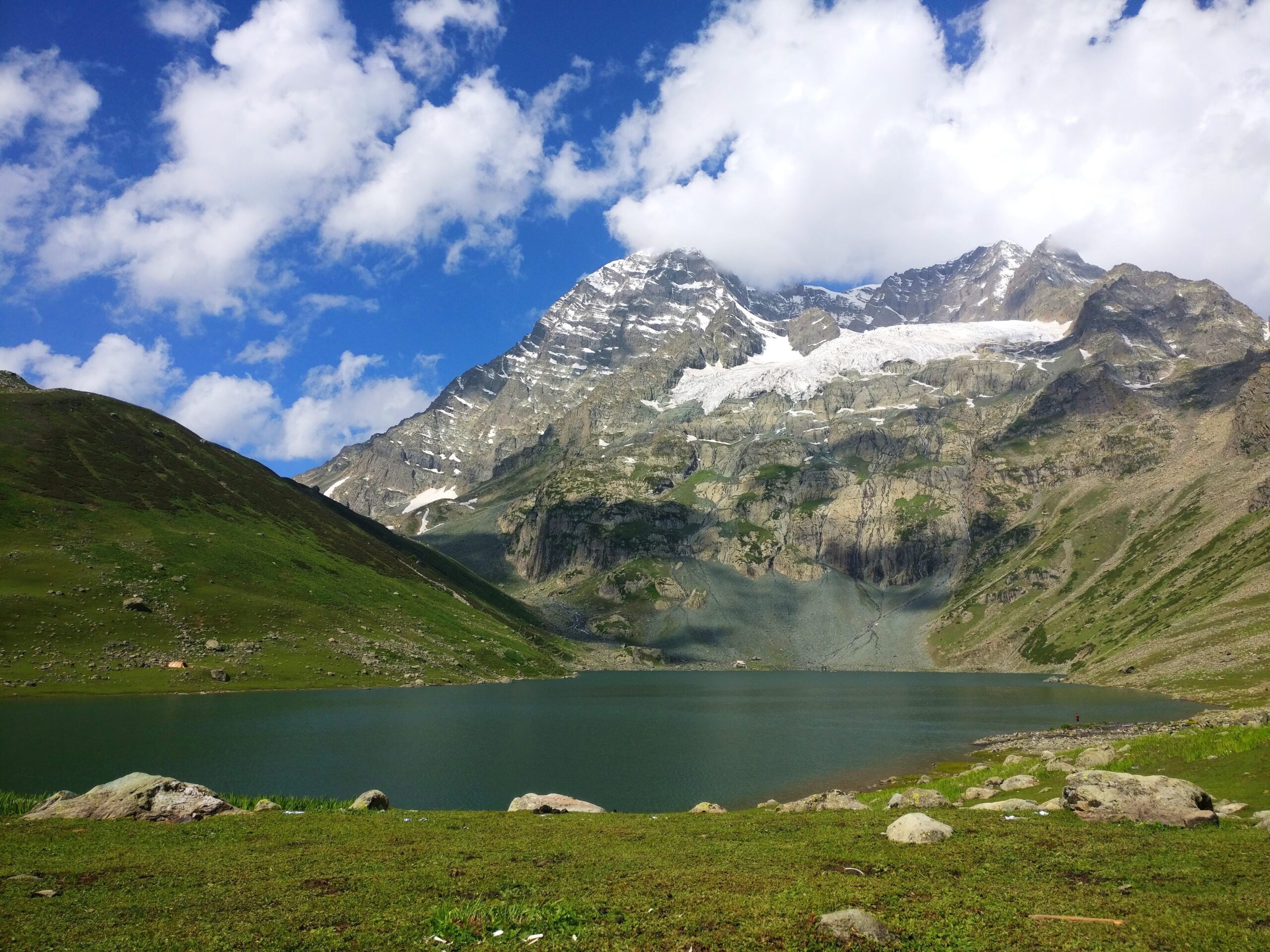
The Giant Buddha Statue Tawang is a 30-foot gilded bronze figure set on a small hill at the edge of town. It was consecrated in 2015. New by any measure, yet it pulls a steady stream of visitors each season. Partly for the spiritual weight. Partly because the views from that hill are hard to beat. This guide covers what the statue is, where it sits, and how to reach it. It also maps out what to combine it with for a smart half-day in Tawang.
One thing to clear up before you go. The outdoor statue on the hill and the golden figure inside Tawang Monastery’s prayer hall are two different things. Many visitors confuse them, this guide covers the outdoor one.
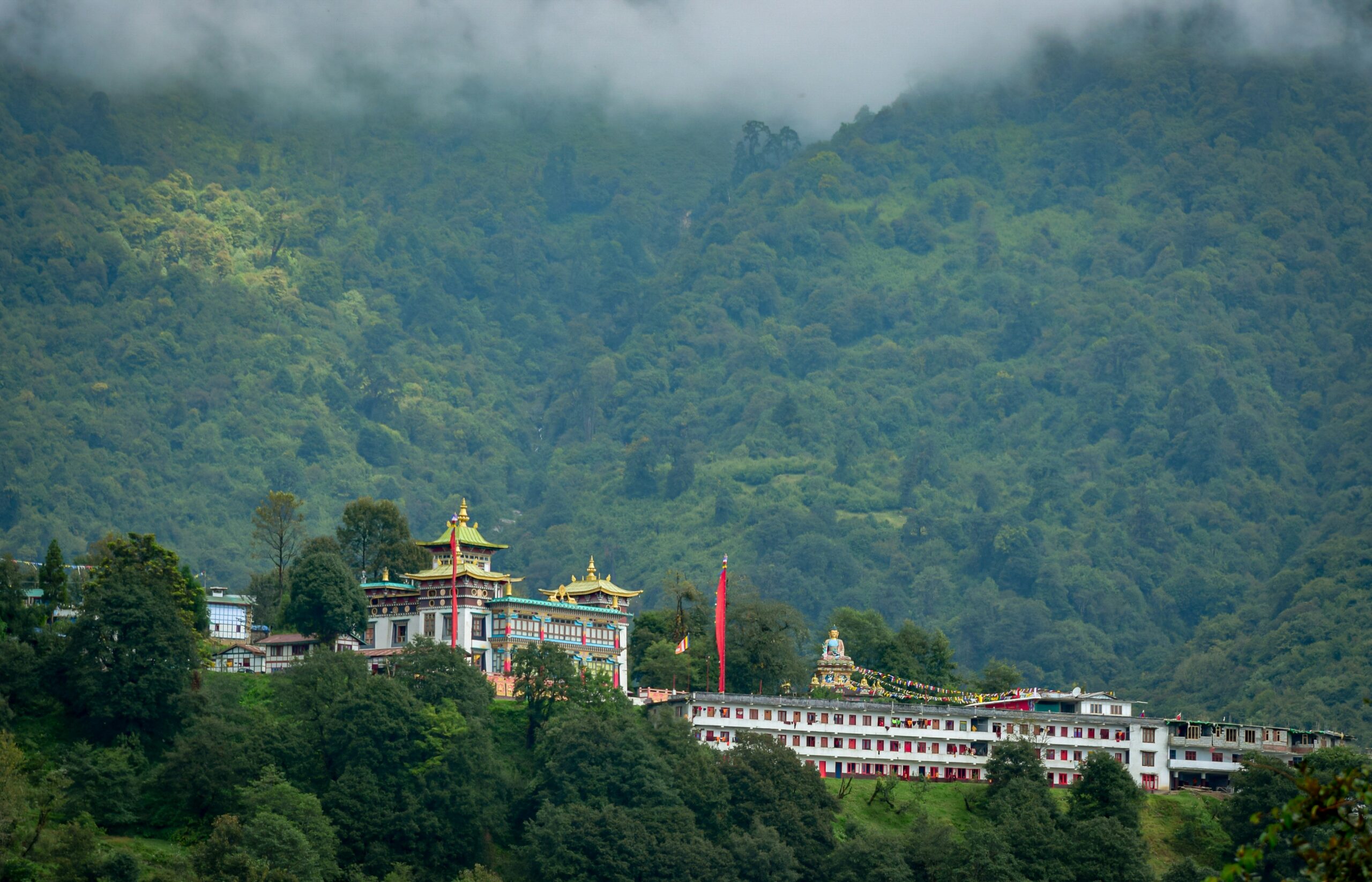
What Is the Giant Buddha Statue in Tawang?
This is not the biggest buddha statue in the world. The Spring Temple Buddha in China holds that title at 128 metres. The largest buddha statue in the world dwarfs this one on paper. But none of that matters once you’re standing in front of it. What matters is the mudra, the hand position, and what it signals. The Tawang statue shows the Buddha in Bhumisparsha Mudra. Right hand touching the earth and left hand open in the lap. This is the pose the Buddha held at the moment of enlightenment. He called the earth to witness his victory over Mara, the force of temptation. Sounds like abstract mythology? It changes what you see when you look at the figure. Not a statue at rest but a declaration.
The material is gilded bronze, height is about 30 feet. H.E. Thegtse Rinpoche consecrated it in 2015. The platform at the base is open and paved. Prayer flags on poles, clear sightlines to the Tawang Chu valley, peaks beyond. The figure faces the valley deliberately, that view is part of the visit, not a bonus.
Location: Where Is the Giant Buddha Statue?
Sit less than 4 km from Tawang Monastery, the site is on a low hill near the Circuit House junction. If you drive between Tawang town and Bumla Pass, you will almost certainly spot it through the window before you plan to stop. That is how most visitors first notice it. Passing by on the way somewhere else.
The planned visit is different from the roadside glimpse. The platform at the base takes 20 to 30 minutes to walk properly. The hill is not steep, a short paved path leads up from the road. Parking sits close to the Circuit House.
How to Reach the Giant Buddha Statue in Tawang
Getting to the statue takes 15 minutes once you’re in Tawang. Getting to Tawang takes two days from Guwahati. Keep that contrast in mind when you plan. From Guwahati, the nearest major city and practical base for most visitors, the road runs 10 to 12 hours. It passes through Bhalukpong, Bomdila, Dirang, and Sela Pass. Most people split this into two days with a night in Bomdila. Sela Pass sits at 13,700 feet. Snow and landslides can affect the road depending on the season. Leave early on driving days. Local drivers push to clear the pass before afternoon clouds arrive.
Once in Tawang, reaching the site is straightforward:
- By shared taxi: Take a shared taxi from Tawang town centre toward the Circuit House area. Fare is around Rs. 20 to 30 per person. The ride takes about 15 minutes. Tell the driver Circuit House or Giant Buddha Statue.
- By private car: Head south from Tawang Monastery on the main road. At the Circuit House junction, turn left. The site is about 1 km from that junction on your right.
- On foot: About 3.5 km from Tawang Monastery. A 45-minute walk downhill on the main road. Fine in good weather. Avoid in rain as the road shoulder narrows.
- ILP note: Your Inner Line Permit gets checked at Bhalukpong, the Assam-Arunachal Pradesh border. Not at the statue area. By the time you reach Tawang, the permit step is long done. Keep a digital copy on your phone throughout.
Entry Fee, Timings, and Visitor Rules
No entry fee, no ticket window. The area is free to walk in, sit at, and photograph. Voluntary donation boxes may be present near the site. Your choice, not a requirement. The outdoor area has no fixed closing hours, but visiting after dark serves no purpose. Morning and late afternoon are the right slots. Soft light, cooler air, fewer people than midday. The gilded bronze surface catches the morning sun cleanly before 9 AM. That is the window worth targeting.
Photography is welcome across the full site. Avoid flash near anyone in prayer. Do not crowd people doing pujas at the base. This is an active place of worship, not only a viewpoint. Covered shoulders and knees are expected, same as at any monastery nearby.
Best Time to Visit the Giant Buddha Statue
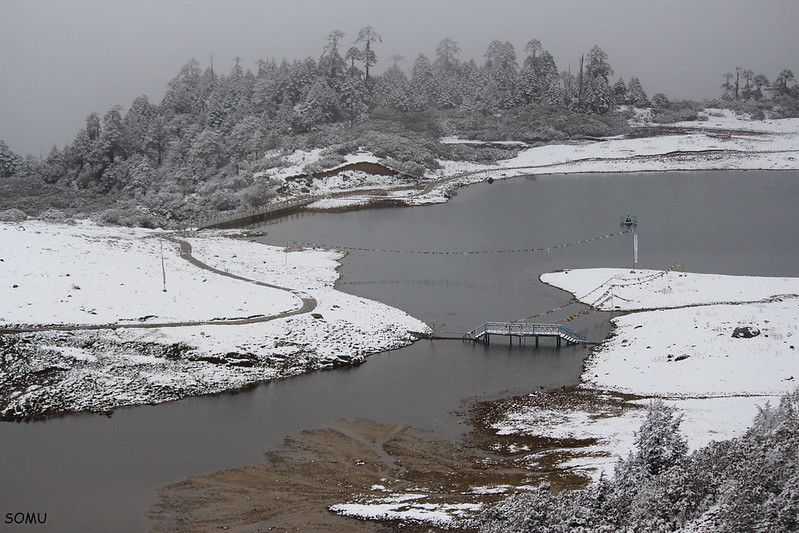
October is the best time to visit Gaint Buddha Statue. Muntain backdrop that often carries early snow. That is the combination that makes the photographs from this hill look the way they do. For 2026 travel, the October to November window gives you the clearest skies and the best chance of a snow-dusted peak in the background. The valley floor stays green at lower elevations. Light is sharp, Crowds thin compared to summer. It is the right window for both photos and peace.
June to August is popular for Tawang broadly. Warm by hill-station standards, roads open. But cloud cover at altitude is frequent. The Himalayan peaks can vanish into mist for full days. You might get a clear morning. You might not, That is the monsoon gamble.
December to February brings heavy snow and raises road risk at Sela Pass. The site is reachable on clear days, but the journey becomes genuinely difficult. Go in this window only with flexible dates and comfort around high-altitude winter travel. Best time of day, in any season: early morning. Same quality light returns from the west in late afternoon. Midday is flat regardless of season.

What to See Near the Giant Buddha Statue
The statue is not an hour-long destination on its own. Plan 25 to 35 minutes at the site and move on. Three nearby stops sit close enough to build into one morning without backtracking. Start at the statue in the morning, Then take these in order:
- Tawang War Memorial: About 1 km toward town. A tribute to Indian soldiers lost in the 1962 Indo-China war. Names of over 2,400 soldiers appear on granite plaques. The Indian Army runs a light and sound show each evening at 5:30 PM. Worth staying for if your schedule allows. Timings: 7 AM to 6 PM.
- Urgelling Gompa: A short drive further into town. Birthplace of Tsangyang Gyatso, the 6th Dalai Lama. Small and quiet now. Takes 20 minutes. Key stop for anyone interested in the Dalai Lama lineage.
- Tawang Monastery: End here. India’s largest Buddhist monastery. The main prayer hall holds a separate 8-metre golden figure of Lord Buddha inside. That is the one often confused with the hilltop statue. These are completely different in scale, setting, and feel. See both. Plan 60 to 90 minutes. Timings: 7 AM to 7 PM.
This route moves you downhill from the hilltop into town, finishing at the Monastery above. It flows better in this direction than in reverse.
Practical Tips Before You Go
ATMs in Tawang fail regularly, especially during peak travel months when demand outpaces the machines. In 2026, this remains a known issue among recent travellers. Sounds like excessive caution? Ask anyone who arrived in July without cash. Carry enough from Guwahati to cover your full stay. Cards are not reliably accepted at smaller hotels, local food stalls, or shared transport.
The network in Tawang runs on BSNL and Airtel in patches. Coverage exists in parts of town but drops on roads heading out. Download offline maps before you leave Guwahati. Google Maps often does not load reliably past Bomdila. An offline map on your phone is the practical standard here, not a backup option.
A few more things worth knowing:
- Carry a warm layer even in summer. The hilltop is exposed and afternoon wind picks up fast.
- Tawang sits at about 10,000 feet. If you are coming from a low-altitude city, take a rest day before a full day of sightseeing. Altitude affects people at different rates.
- No food stalls sit near the site. Eat before you go or carry something.
- Wheelchair access is limited. Some slopes and steps are uneven. Partial access is possible with help, but prepare for it.
- Foreign nationals need a Protected Area Permit rather than an ILP. PAPs require travel through a registered tour operator in groups of two or more. Arrange this well before you travel.
Conclusion
The statue takes 30 minutes. The journey from Guwahati takes two days. That gap is the whole story of Tawang. The effort is built into the trip, go with a plan, carry cash, and leave enough time on the drive back to clear Sela Pass before afternoon cloud sets in.