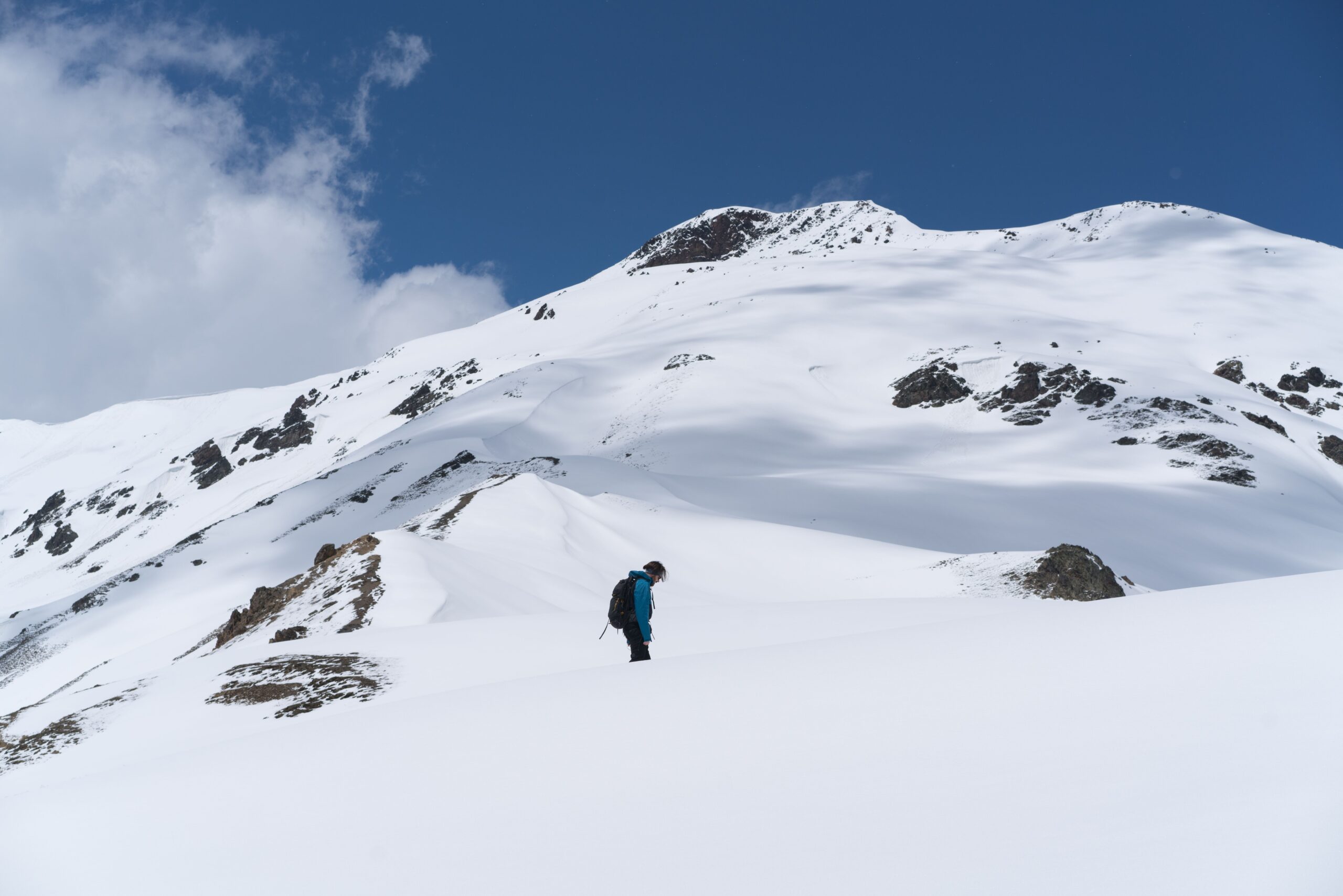
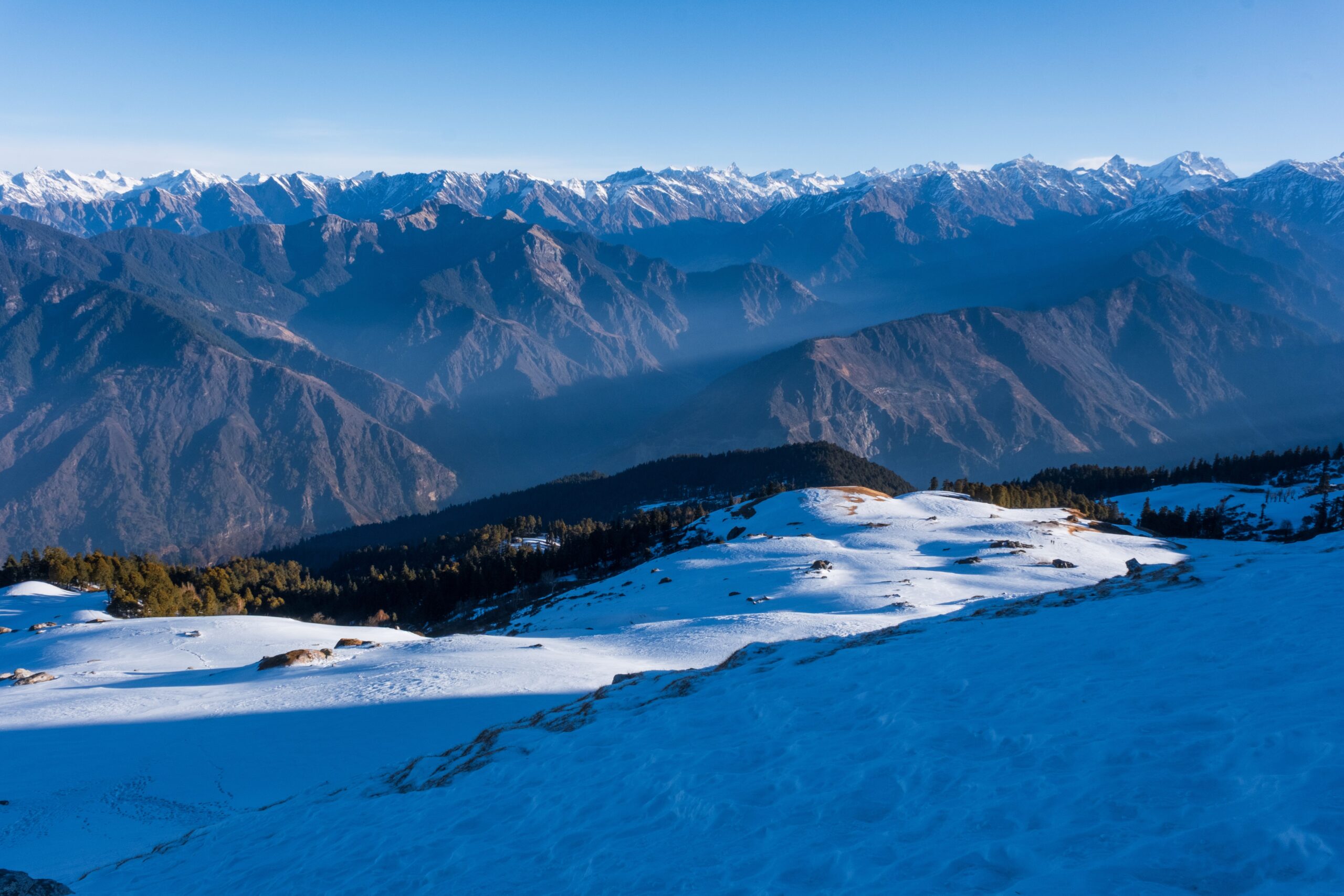
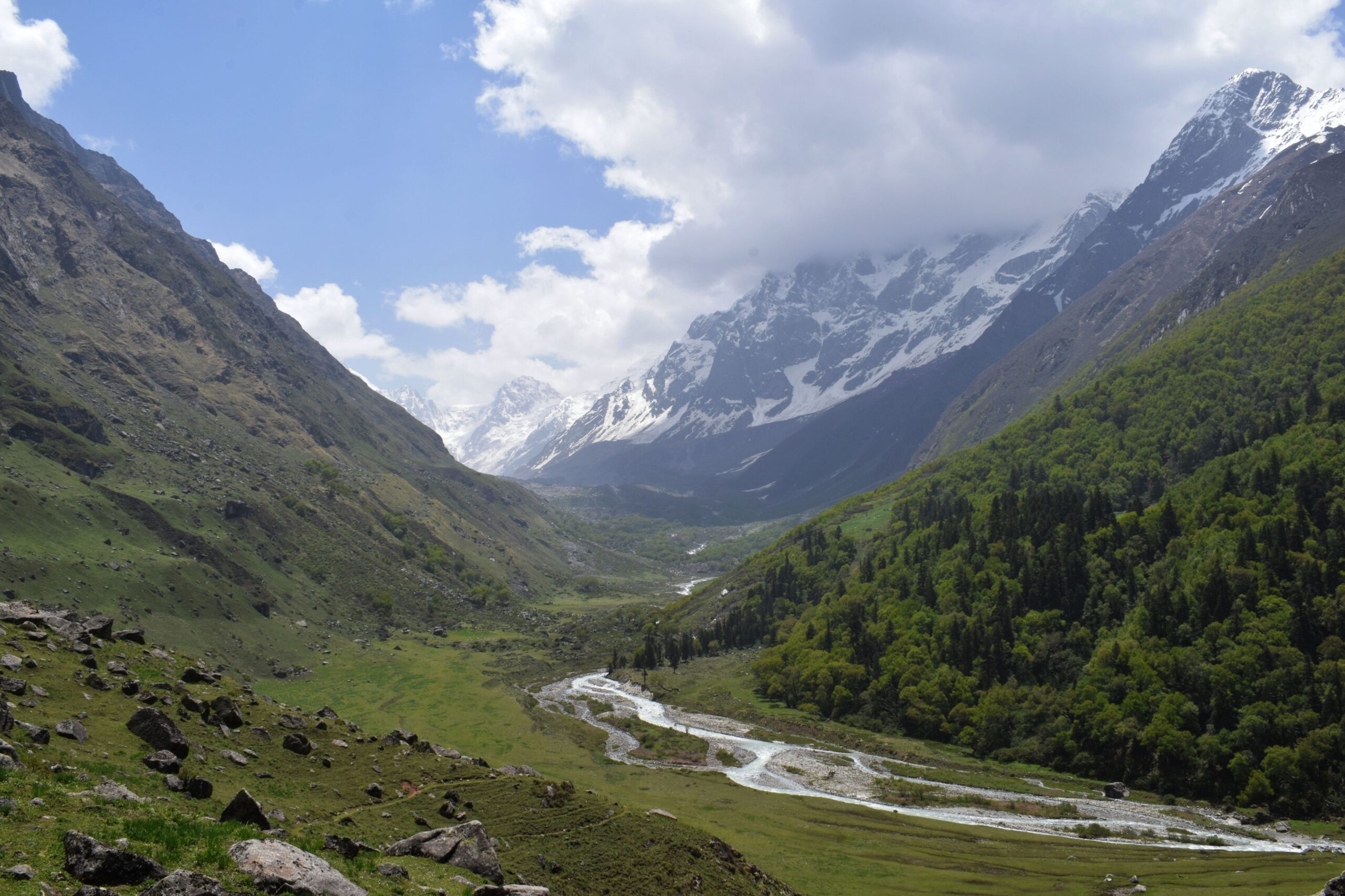
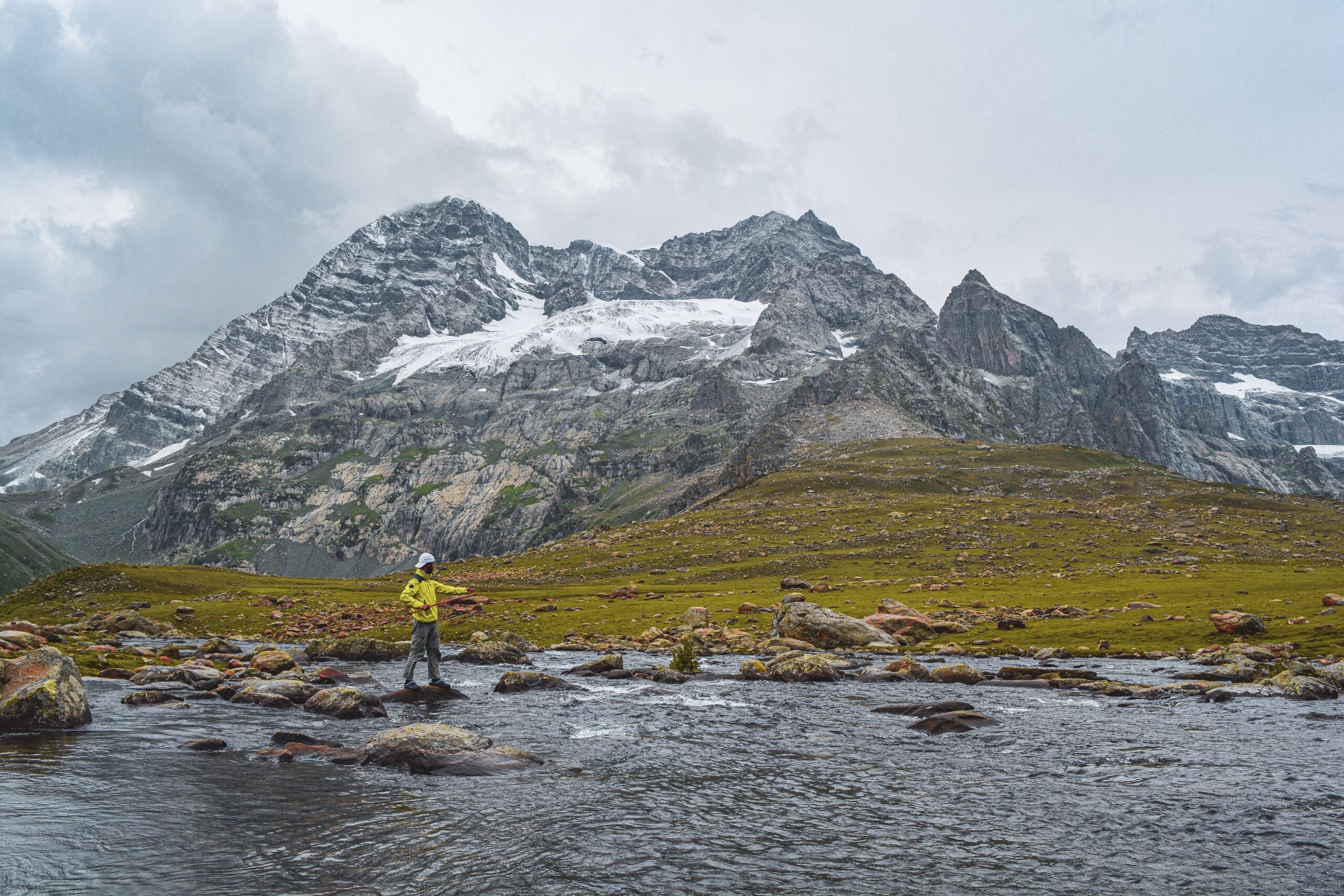
Chandrashila in January is a good choice if you want to see snow-covered trails and mountain views. Snow is common around Chopta, Tungnath and Chandrashila during this month. But the trek is harder in winter. Ice, fresh snowfall and road closures can affect your plans. There are two main ways to do this trek. The shorter route starts from Chopta and goes to Tungnath and Chandrashila. The longer Deoriatal–Chandrashila route starts from Sari village and passes through Deoriatal Lake, Rohini Bugyal and Baniyakund before reaching the summit.
Both routes offer beautiful winter views. But they need different levels of fitness and planning. One important point for January 2027: do not assume that the summit will be open on your travel date. The route is used for winter treks, but heavy snowfall, ice or local orders can stop the trek. Check the latest trail and road conditions with local guides and forest staff before you travel.
Two Routes to Chandrashila in January
1. Chopta to Tungnath and Chandrashila
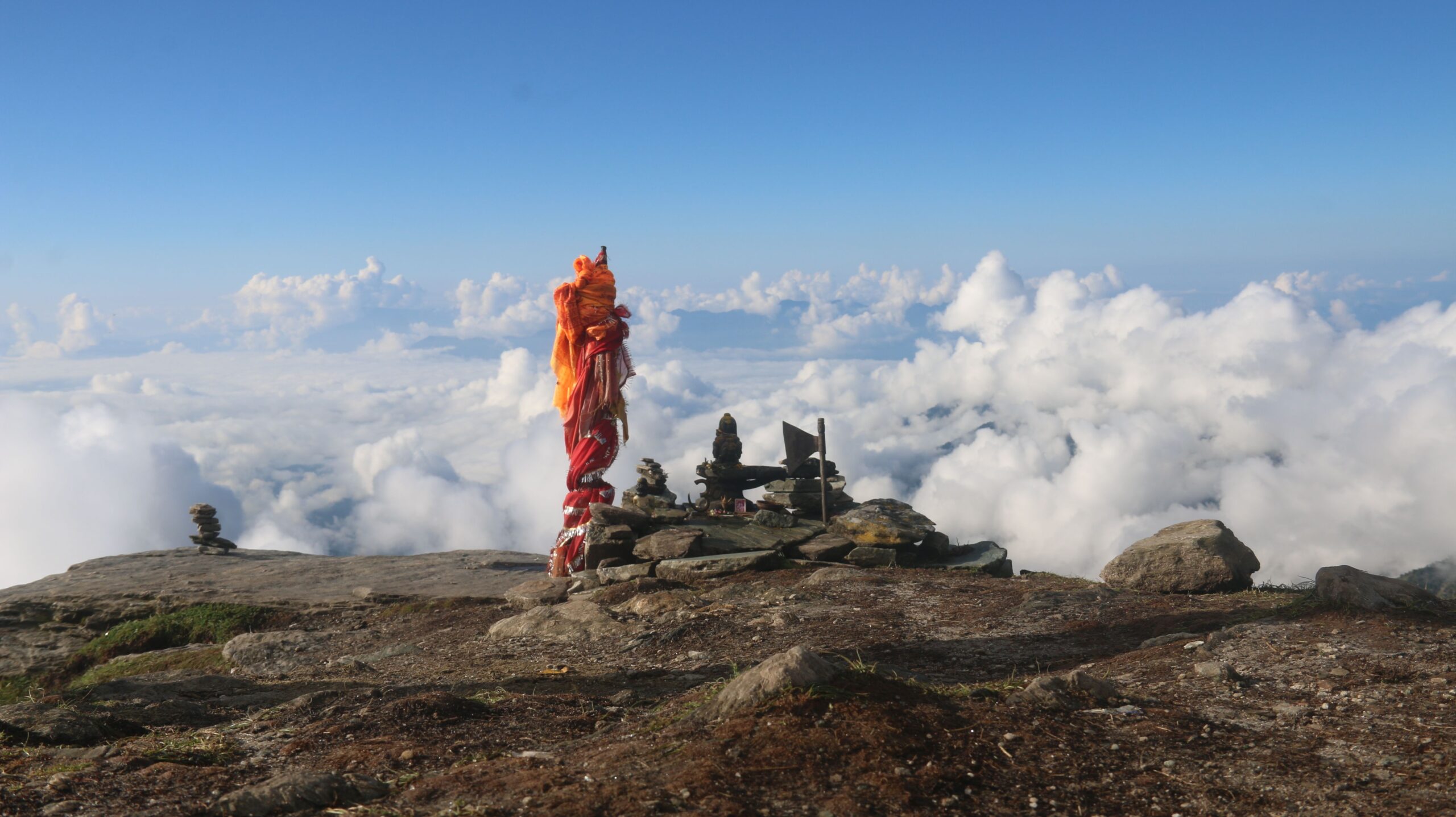
This is the shorter route. You stay near Chopta and start walking from the Chopta roadhead. The trail climbs towards Tungnath Temple. From there, you take the steeper path to Chandrashila. This route is a good choice if you have only two or three days. It is also easier to plan because you do not need to walk for several days or carry camping gear.
The last part of the trail is the hardest in winter. Snow can cover the path, and strong winds can make the summit very cold. A local guide is a good idea if there is snow or ice.
2. Deoriatal–Chandrashila Trek
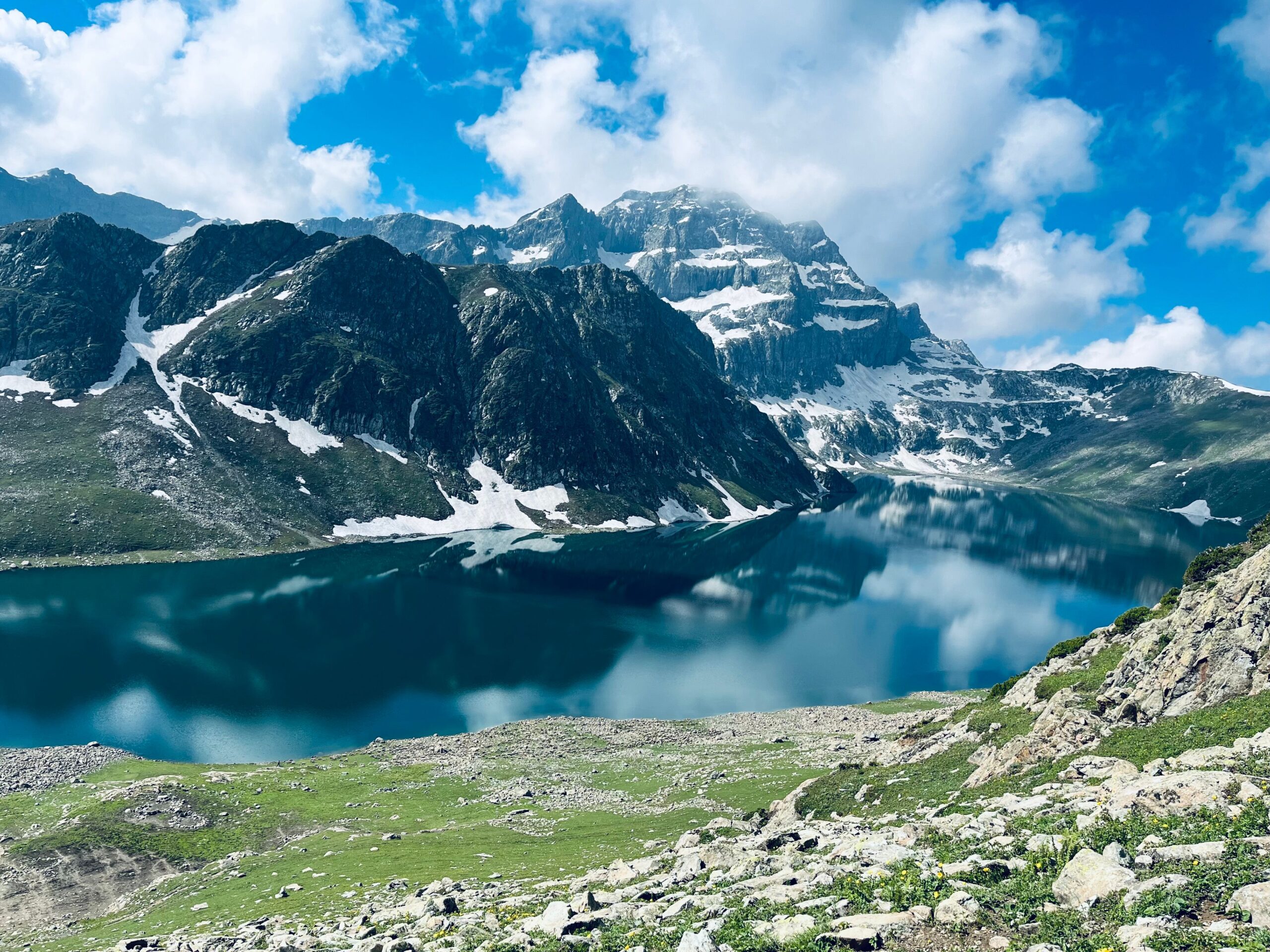
The longer route starts from Sari village. You first walk to Deoriatal Lake, which is about 8,000 ft high. The trail then passes through forest paths and Rohini Bugyal before reaching the Baniyakund area. From there, you move towards Chopta, Tungnath and Chandrashila. This route takes more days than the Chopta route. You get to see a lake, forests, open meadows and mountain views along the way.
But it also needs more planning in January. Snow can affect the walking paths and campsites. You will also spend more time in the cold.
Not every trek operator runs this full route in January. Before booking, ask which camps are used and whether the route is open in the current weather.
Chandrashila Temperature in January
January is one of the coldest months around Chopta. Day temperatures are often around 2°C to 8°C. At night, the temperature can fall to around -6°C to -10°C.
Tungnath and Chandrashila are higher than Chopta. They can feel much colder, especially when strong winds blow. The temperature at Chopta should not be treated as the exact temperature at the summit.
Place | Approximate January temperature |
Chopta | 2°C to 8°C during the day; around -6°C to -10°C at night |
Tungnath | Often below 0°C during cold spells |
Chandrashila | Colder and windier than Tungnath |
Early, Mid and Late January: What Changes?
January does not have the same weather every year. Fresh snowfall can happen at any time. The amount of snow also changes with the weather.
Period | Likely conditions | What you should do |
Early January | Snow may already cover the upper trail. Chopta may also have snow after a fresh snowfall. | Check the road and trail before travelling. |
Mid-January | Snow is often found on higher parts of the route. Ice can make the final climb harder. | Carry microspikes and walk with a local guide. |
Late January | Snow may remain on the trail, and fresh snowfall is still possible. | Keep an extra day in your travel plan. |
Mid to late January is often a good time to look for snow. But there is no fixed date for deep snow. Some years get early snowfall, while other years have dry days between snowfalls.
How Much Snow Can You Expect in January?
Snow is common around Chopta and the higher trail in January. But the amount changes every year.
A few sunny days can reduce snow near Chopta. Higher areas near Tungnath and Chandrashila may still have snow and ice. Fresh snow can also hide stones, steps and parts of the walking path.
There is no fixed snow-depth figure for the whole month. Carry proper winter gear even if Chopta looks clear when you arrive. The trail can become colder and more slippery as you climb.
What to Pack for Chandrashila in January
You need warm clothes and shoes with a good grip. Regular sports shoes are not safe for icy trails.
- Thermal innerwear and warm trekking trousers.
- Fleece and a thick winter jacket.
- Waterproof and windproof jacket.
- Waterproof trekking shoes with good grip.
- Microspikes for walking on ice.
- Gaiters to stop snow from entering your shoes.
- Warm gloves and spare gloves.
- Woollen socks, a cap and a neck warmer.
- Sunglasses to protect your eyes from snow glare.
- Trekking poles for balance.
- Headlamp, water bottle and snacks.
- Personal medicines and a small first-aid kit.
Keep your gloves and cap on near the summit. The open ridge can feel much colder than the forest trail.
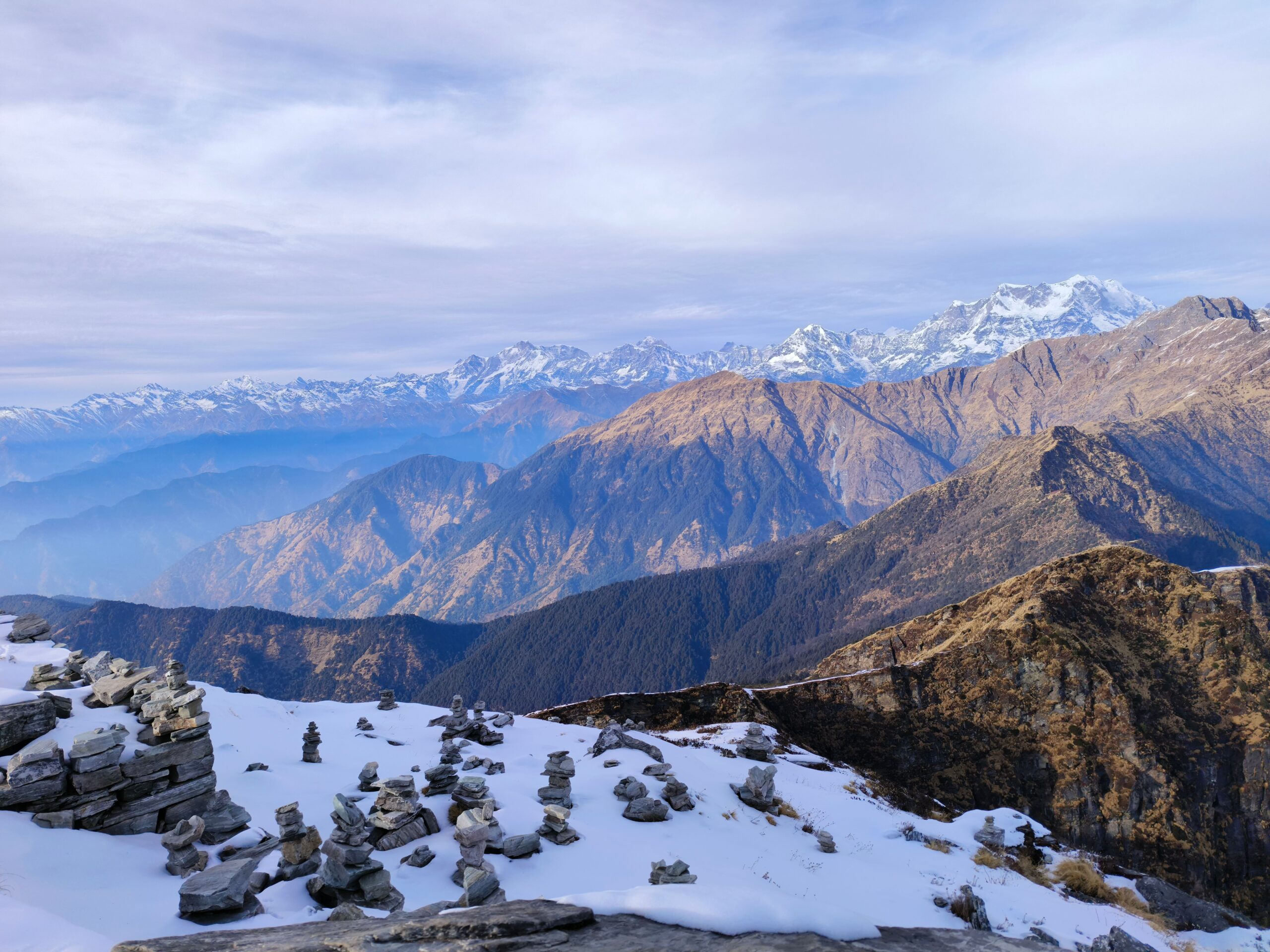
Safety Tips for a January Trek
The main risks are slipping on ice, getting caught in bad weather and becoming too cold. High altitude can also affect your body.
Walk slowly and take breaks. Tell your guide if you have a headache, feel sick, become dizzy or feel very weak. These can be signs of altitude sickness. Do not climb higher if these problems get worse.
Watch for signs of hypothermia. These include strong shivering, confusion, unclear speech and poor balance. Frostbite can make your fingers, toes, ears or nose feel numb. The skin may also look pale or waxy. Move to a warm place and get medical help if you notice these signs. Do not rub frostbitten skin.
The nearest larger medical centres are far from the summit. Do not expect quick hospital help from the upper trail. Ask your guide about local medical help near Ukhimath and Rudraprayag. Save emergency numbers before you leave areas with mobile network.
Do not climb to the summit alone in deep snow. Turn back if the weather gets worse, the path becomes hard to see or your guide says the slope is unsafe.
Frequently Asked Questions
Is Chandrashila open in January?
Chandrashila is a known winter trekking route, but it may not be open every day. Snowfall, ice, road closures and local rules can stop the trek. Check with local guides and forest staff before travelling.
How much snow is there on Chandrashila in January?
Snow is common on the upper trail in January, but its depth changes every year. There may be more snow near Tungnath and Chandrashila than at Chopta. Do not plan your trip around a fixed snow-depth figure.
Can beginners trek Chandrashila in January?
A fit beginner may be able to do the Chopta route with a trained local guide and the right gear. But snow and ice make it harder than the summer trek. If you have never walked on snow, do not try the summit alone.
Can I reach Tungnath Temple in January?
You may be able to reach the Tungnath area if the trail is safe. The temple closes for winter. The deity is worshipped at Makkumath, also spelled Mukkumath, during this period. Do not expect the temple to be open like it is during the main pilgrimage season.
Can I see the sunrise from Chandrashila in January?
You may see the sunrise if the trail is open and the sky is clear. But reaching the summit before sunrise means walking in the dark on snow or ice. Do this only with an experienced local guide who has checked the trail and weather. Your safety is more important than the sunrise view.
Is a guide needed for Chandrashila in January?
A local guide is strongly recommended. Snow can cover the normal path and make the final climb hard to follow. A guide can help you judge the weather, route and safe time to turn back.
Is the Deoriatal route better than the Chopta route in January?
The Deoriatal route is better if you want a longer trek with a lake, forest and meadow walks. The Chopta route is shorter and suits people who mainly want to visit Tungnath and Chandrashila. Both routes need local checks in January because snow can affect the trail, camps and road.