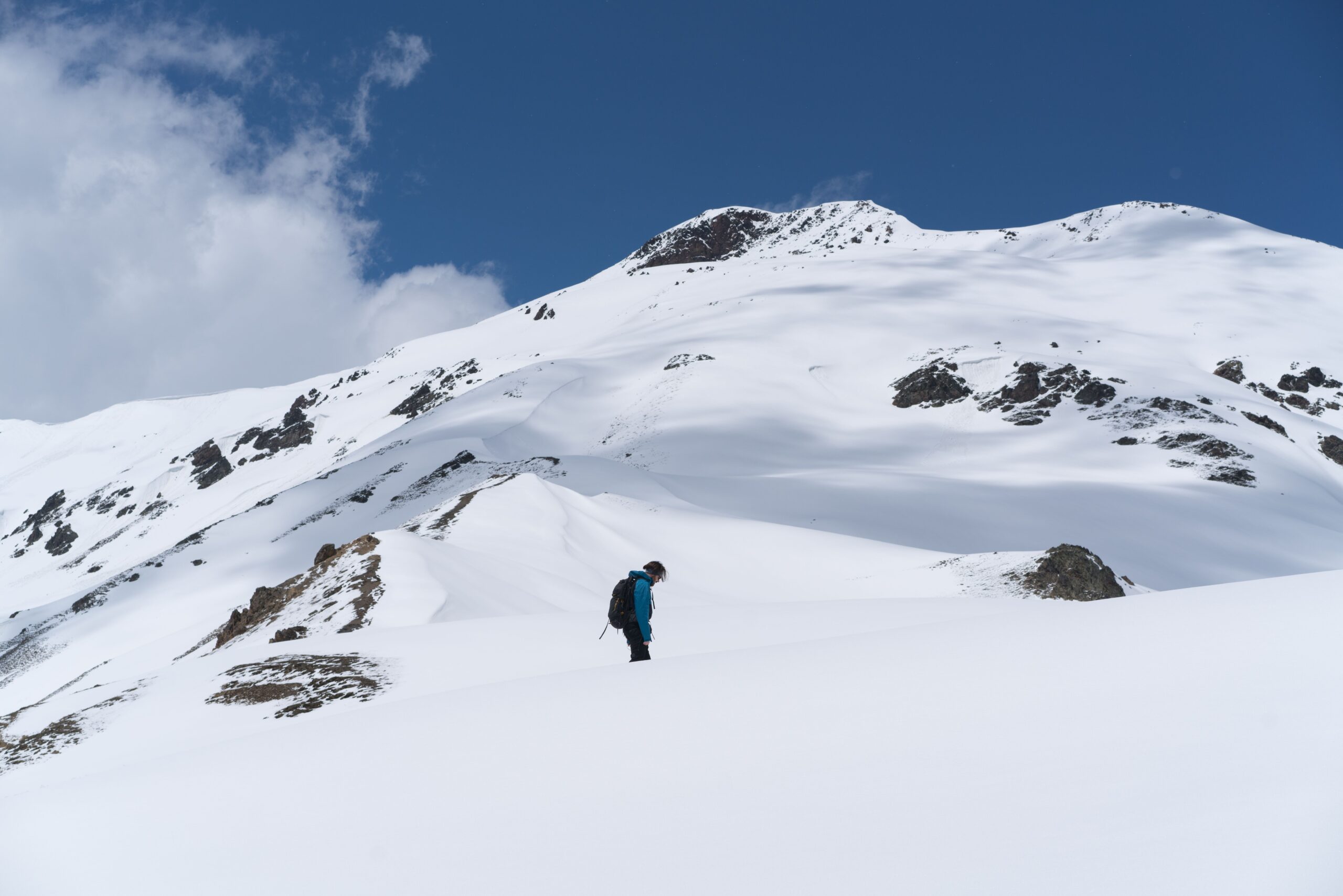
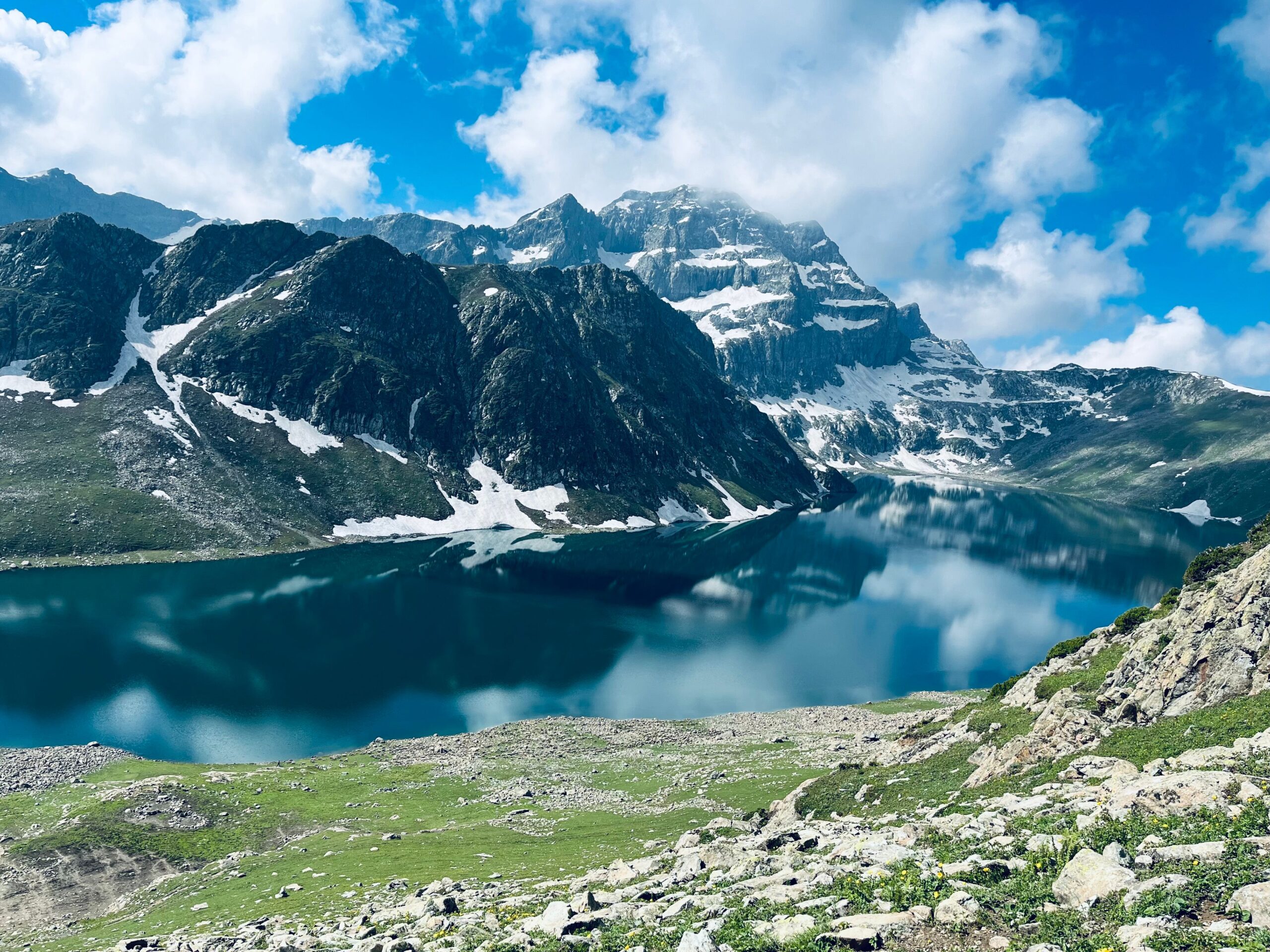
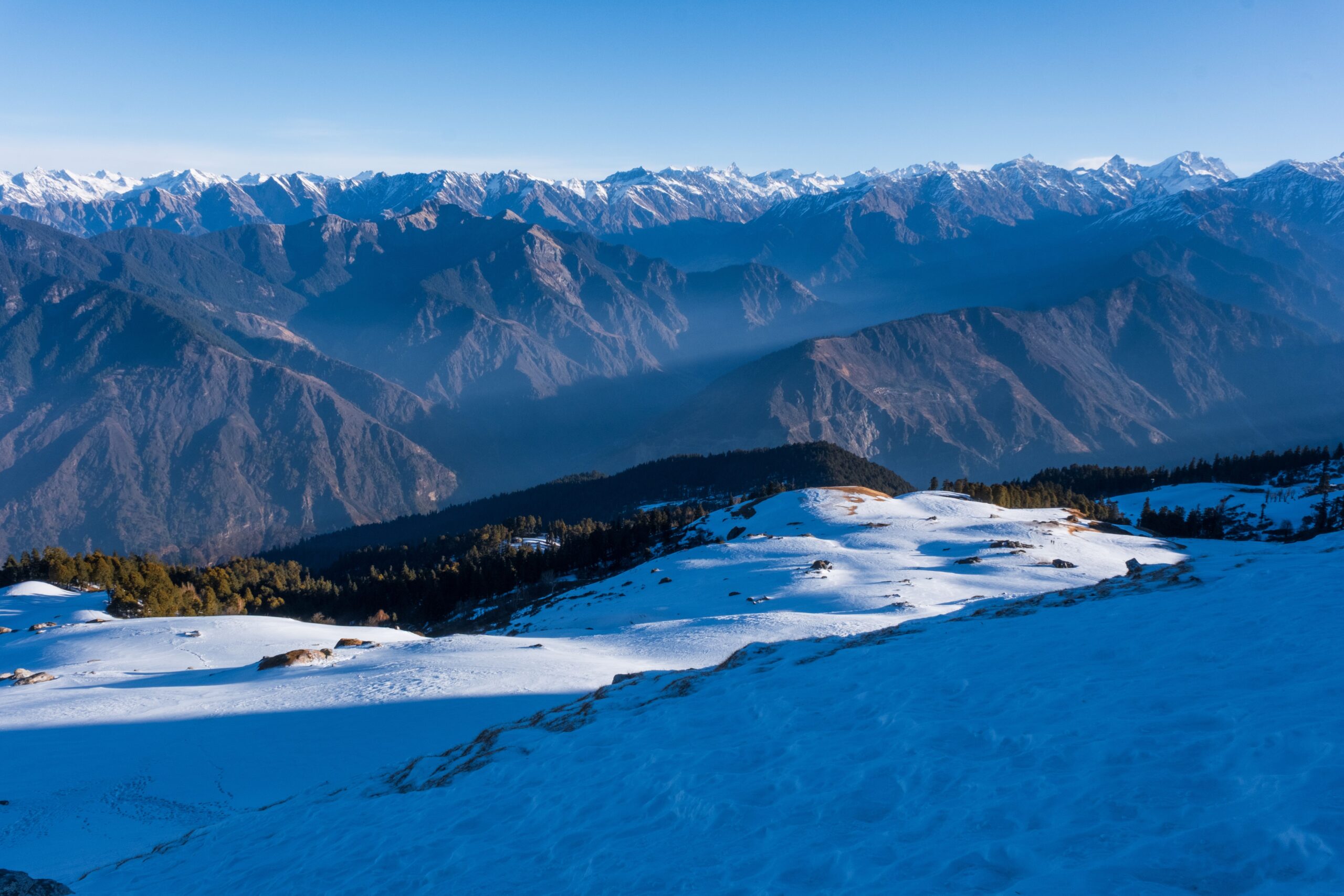
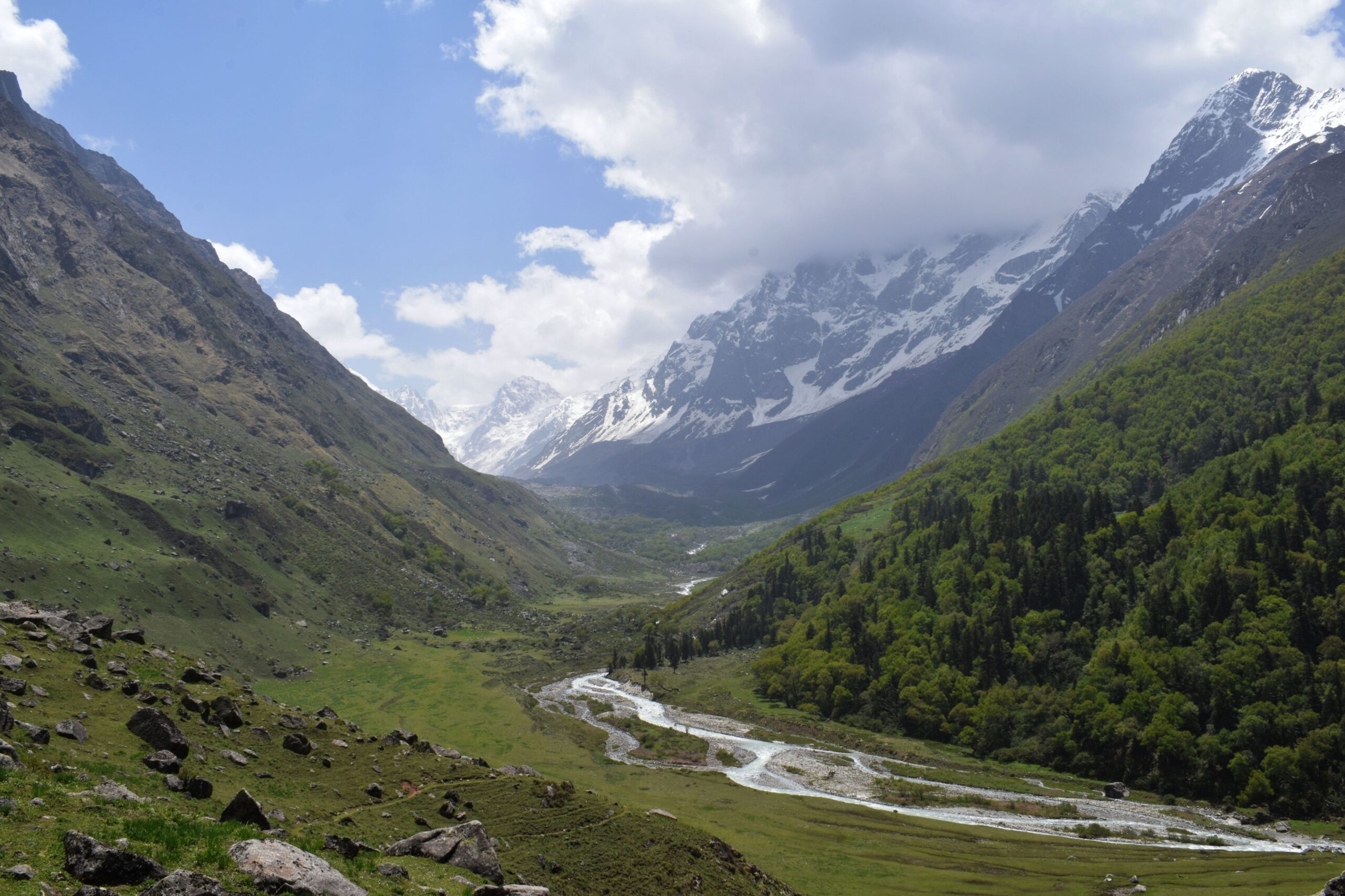
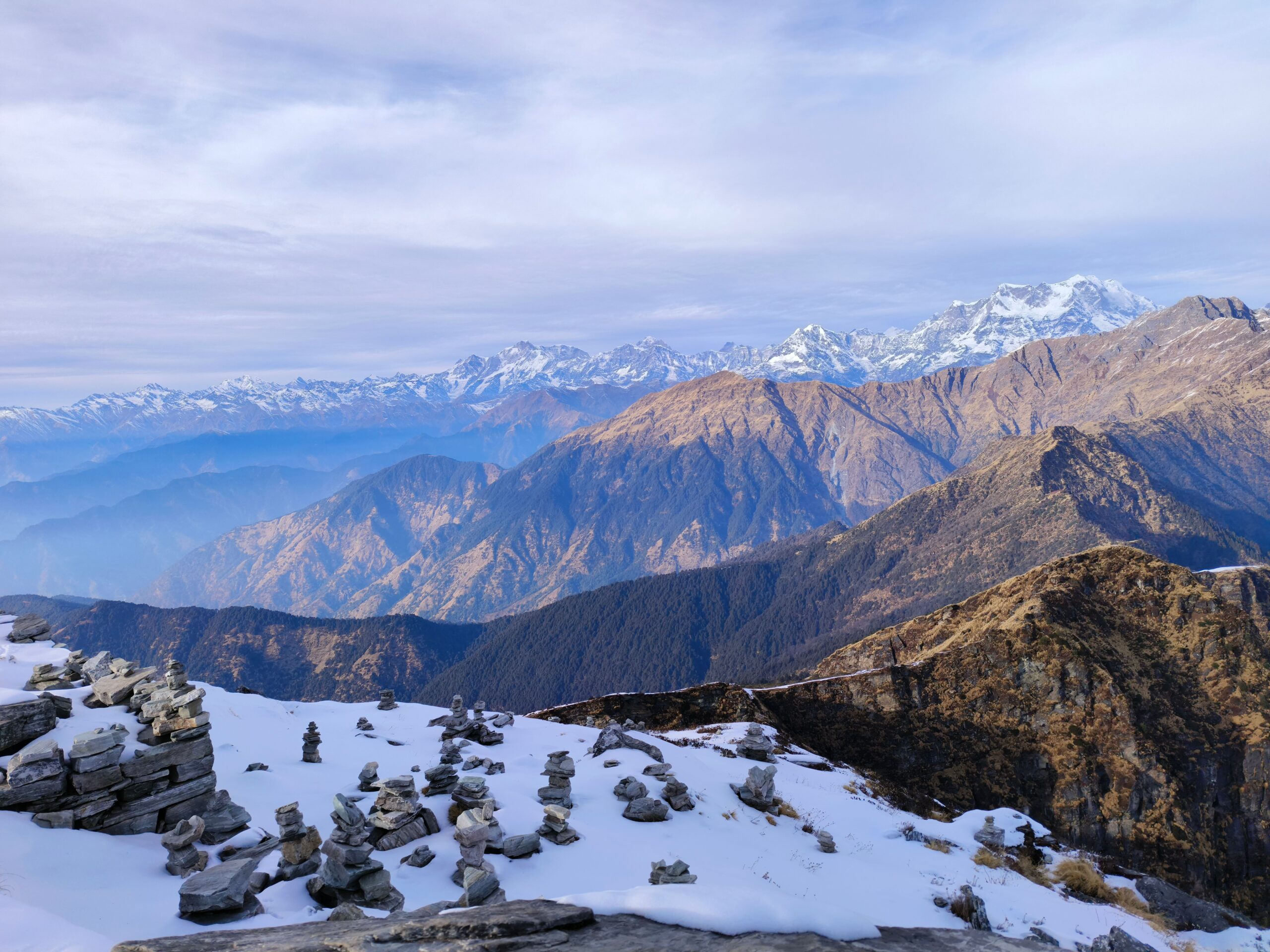
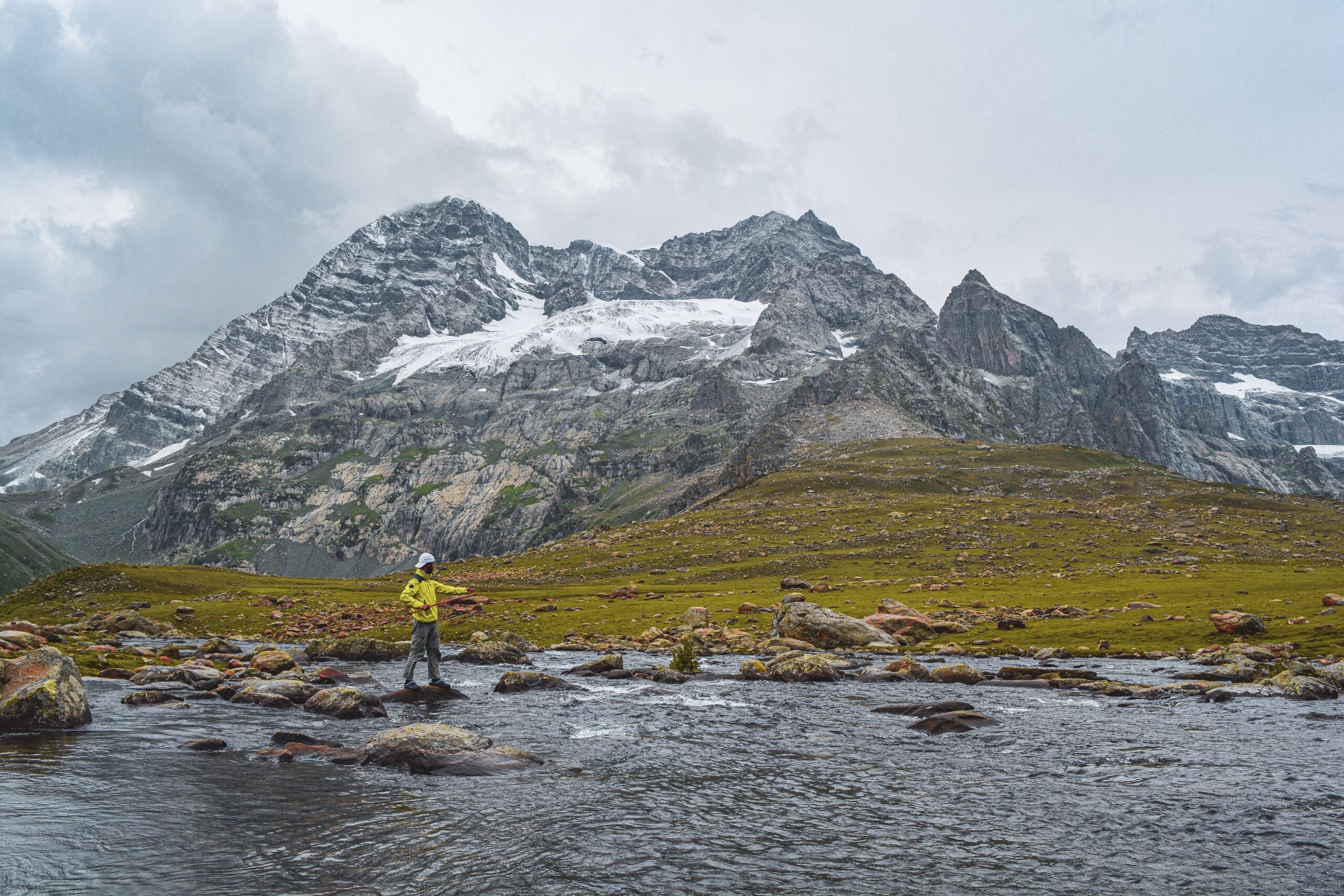
You can see the Swargarohini peaks from the Har Ki Dun valley and the trail leading to it. The views become closer as you walk towards the valley. You can also get a different view by taking the side trail towards Jaundhar Glacier. However, this is a longer and harder walk.
Swargarohini is one of the main sights on the Har Ki Dun trek. Its high peaks rise above green meadows, streams and mountain slopes. On a clear day, you can see the snow-covered mountain group. But you may not see every peak from the same spot. Clouds and nearby ridges can also hide some of the summits.
You can see the Swargarohini mountain group from a few points along the trek. The view from Kalkatiyadhar is wide but distant. The view becomes closer as you walk towards Har Ki Dun. The final part of the trail is one of the best places to look for the peaks.

Viewing point | What you can see |
Osla and the trail beyond | Views of the nearby mountains as the trail climbs above the village. |
Kalkatiyadhar | A wide view of the upper valley and nearby mountain ranges. |
Trail towards Har Ki Dun | The Swargarohini mountain group becomes clearer as you get closer. |
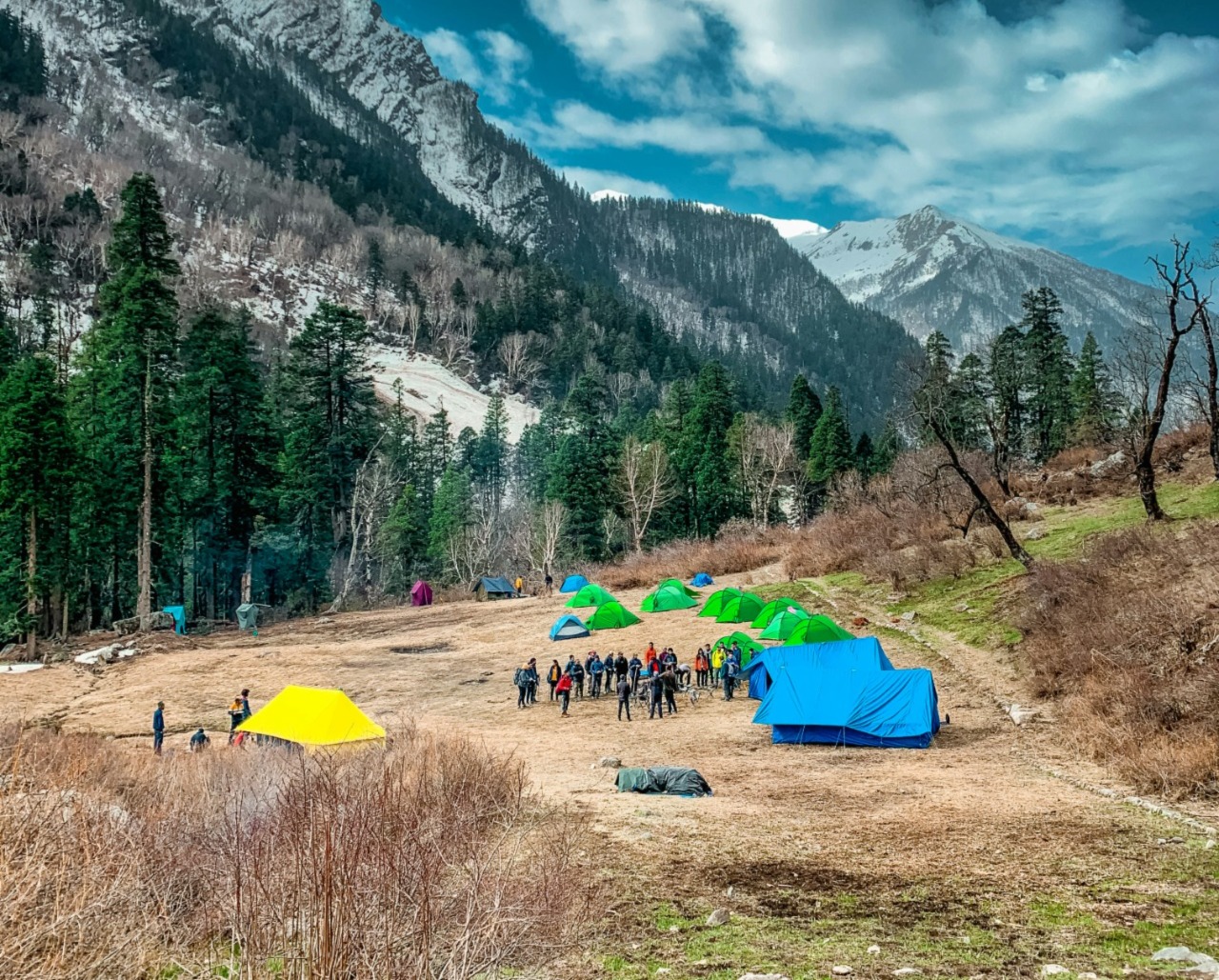
Har Ki Dun valley and campsite | A closer view of the high peaks. Swargarohini I, II and III can be seen from the final stretch. |
Jaundhar Glacier route | A longer walk towards the glacier and closer views of the mountain area. |
Which Swargarohini Peaks Can You See from Har Ki Dun?
The Swargarohini group has several high peaks. But different sources do not agree on the total number. Many travel pages list four or five peaks. Some Himalayan Club records mention six.
Here are the peaks and heights listed in mountaineering records:
Peak | Height |
Swargarohini I | 6,252 m |
Swargarohini II | 6,247 m |
Swargarohini III | 6,209 m |
Swargarohini IV | 5,966 m |
Swargarohini V | 5,984 m |
Swargarohini VI | 5,845 m |
Best Time to See Swargarohini from Har Ki Dun
The best time to see the peaks is when the sky is clear and the weather is stable. Har Ki Dun is usually visited in spring, summer and autumn. But the weather can change quickly in the mountains.
Season | What to expect |
March to April | Snow may remain on the upper trail and in the valley. It can be very cold, and snow may affect the route. |
May to June | A popular time for the trek. The valley turns green, and clear days can offer good mountain views. |
July to August | Rain and clouds can hide the peaks. The trail may also become slippery. |
September to October | The sky can be clear after the monsoon. Nights become colder as winter gets closer. |
November to February | Snow and cold can make the route hard to reach. Regular trek trips may not run during this period. |
Can You See Swargarohini from Outside Har Ki Dun?
But these views are not the same as seeing the mountains from Har Ki Dun. The distance and viewing angle change how the peaks look. If your main aim is to see Swargarohini closely, the upper Har Ki Dun valley is a better place to plan for.
Why Is Swargarohini peak Linked to the Pandavas?
The name Swargarohini means a path or climb to heaven. Local belief says that the Pandavas used this mountain route on their final journey to heaven. This story gives the mountain a special place in local tradition.
The story of the Pandavas’ final journey appears in the Mahabharata. It is told in the Mahaprasthanika Parva and the Svargarohanika Parva. These parts describe how the Pandavas leave their kingdom and travel towards the Himalayas.
Yudhishthira continues the journey with a dog. His brothers and Draupadi fall along the way. However, the epic does not clearly name the Swargarohini peaks above Har Ki Dun as the exact route they took.
The link between this mountain group and the Pandavas comes from local belief. It is important to explain this as a local story, not as a fact proved by the epic. There is also another place that people often confuse with this mountain. The famous Swargarohini steps are linked to the glacier route near Satopanth Tal in the Badrinath region. This is different from the Swargarohini mountain group seen from Har Ki Dun.
Where to Stand for the Best Swargarohini Views
Use this simple checklist when you reach the upper valley:
- For a wide view: Stop at Kalkatiyadhar and look towards the upper Har Ki Dun valley.
- For a closer view: Spend time in the Har Ki Dun valley and look for an open spot near the campsite.
- For a longer walk: Ask your guide if the Jaundhar Glacier route is safe during your visit.
- For lake views: Check whether the trail to Marinda Tal is open and safe.
- To identify the peaks: Use a photo taken from the same viewing point. Do not depend only on left and right directions from other photos.
- For clear photos: Wait for the clouds to move and keep your camera or phone ready. Clear views are never guaranteed.
For most trekkers, the Har Ki Dun valley offers a good view of the Swargarohini group without the need for a difficult glacier walk. If you want to go closer, check the weather and trail with your guide first. The best view is worth waiting for, but safety should always come first.