The rains at Kashmir Great Lakes Trek are usually lighter than the heavy monsoon showers seen in many parts of Himachal Pradesh and Uttarakhand. Kashmir lies in a rain-shadow region, but this does not mean the trail stays dry. July and August can bring short afternoon or evening showers, while early September is often clearer and colder. You should be ready for wet grass, slippery rocks, rising streams and sudden changes in weather, especially near Nichnai, Gadsar and Zaj Pass.
The Pir Panjal range blocks much of the moisture coming from the south-west monsoon. This is why Kashmir gets a different rain pattern from many trekking areas in Himachal Pradesh and Uttarakhand. However, the rain-shadow effect is not a safety guarantee. Local showers can still make the high trail wet and cold. A clear morning can turn cloudy by afternoon, and a short shower can make a rocky descent harder.
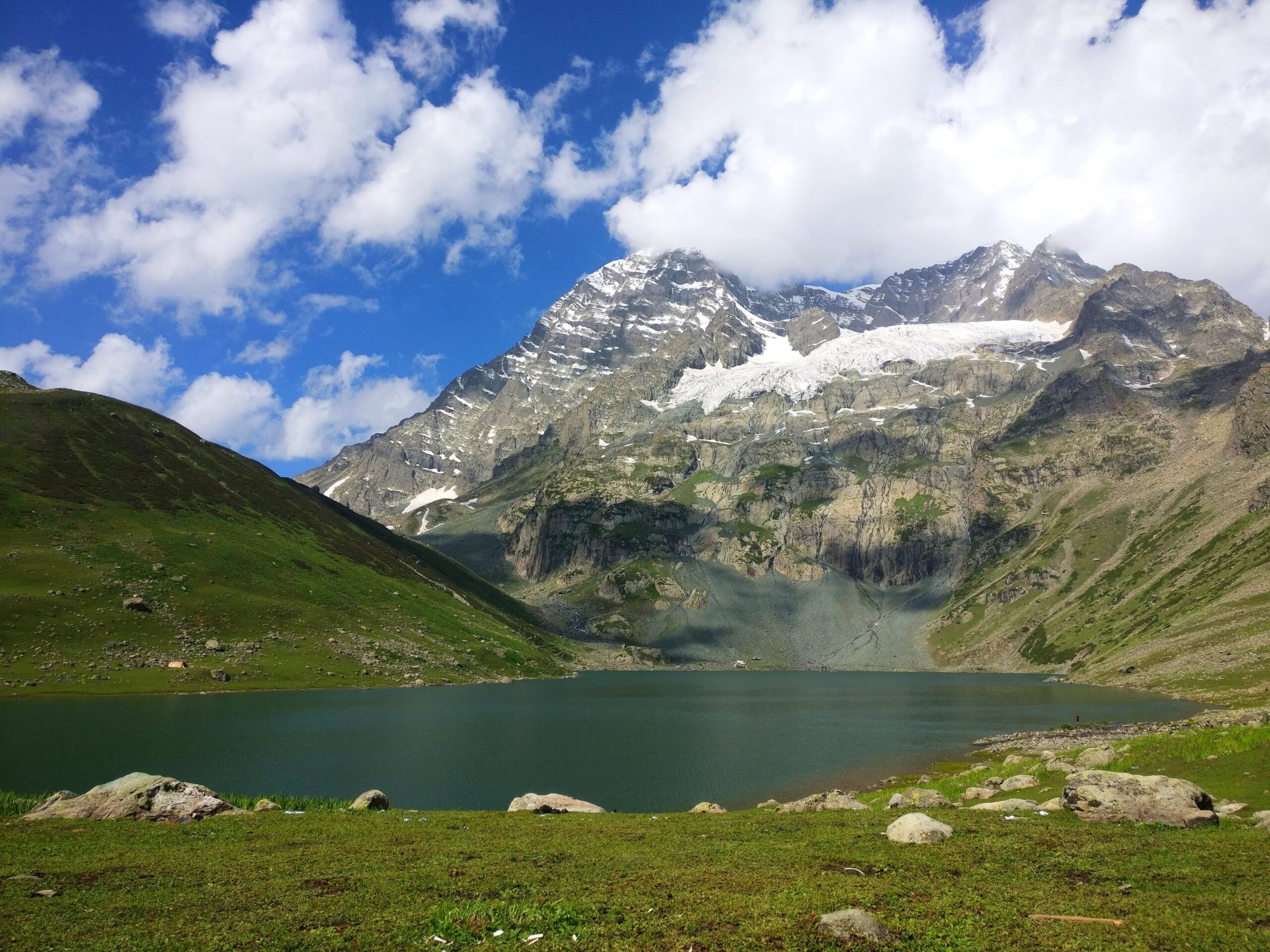
Kashmir Great Lakes Weather in Monsoon: Week by Week
The main trekking season usually runs from early July to mid-September. The weather changes during this short window. Snow, rain, temperature and trail conditions can differ from one week to the next.
Trek period | Day temperature* | Rain pattern | Trail and pass conditions |
First week of July | Around 15–20°C | Light evening showers are possible | Snow may remain near Nichnai and Gadsar Pass. Snow conditions can make a crossing unsafe. |
Second week of July | Around 15–20°C | Scattered showers are possible | Snow starts reducing, but some upper sections may still be difficult. Streams can be strong due to snowmelt. |
Third week of July | Around 15–20°C | Short evening showers are possible | More of the route becomes accessible as snow melts. Wet grass and muddy sections are still possible. |
First week of August | Around 15–20°C | Occasional showers, often later in the day | Most snow has usually melted. Meadows are green, but wet rocks and stream crossings need care. |
Second week of August | Around 15–20°C | Showers can occur during the trek | Passes are generally clearer, but cloud and rain can reduce visibility. |
Third week of August | Around 15–20°C | Rain may still occur, but patterns vary | The trail is usually more open. Keep rain gear ready for exposed sections. |
Last week of August | Around 14–18°C | Rain often starts reducing | Nights get colder. The weather may be clearer, but sudden showers remain possible. |
First two weeks of September | Around 14–18°C | Usually less rain than in July and August | Cold nights and possible snowfall become important concerns, especially near high passes. |
How Rain Affects Each Day of the Kashmir Great Lakes Trek
Rain does not affect every part of the Kashmir Great Lakes route in the same way. Some sections are more exposed to wind and cloud, while others have wet grass, streams or rocky ground. The following table follows a common route from Shitkadi near Sonamarg to Naranag. Exact camps and walking days may differ between operators.
Route section | Weather exposure | What rain can change |
Shitkadi to Nichnai | The trail climbs through forest and open meadows towards Nichnai campsite. | Wet grass, muddy paths and slippery ground can make the climb tiring. |
Nichnai to Vishansar via Nichnai Pass | The route climbs to a high pass before descending towards Vishansar Lake. | Cloud can reduce visibility. Snow patches and wet rocks need careful footing. |
Vishansar and Kishansar area | The trail around the lakes is open and exposed to wind. | Rain and cold wind can make lake-side stops uncomfortable. Keep a warm layer and rain shell ready. |
Vishansar to Gadsar via Gadsar Pass | This is a long and demanding crossing. The climb and descent are exposed at high altitude. | This is one of the most important sections to watch. Rain, strong wind, fog or snow can make the pass unsafe. |
Gadsar to Satsar | The route crosses open meadows and uneven ground. | Wet grass, muddy patches and poor visibility can slow the walk. |
Satsar to Gangabal via Zaj Pass | The route includes rocky and boulder-filled sections before the descent towards Gangabal. | Wet boulders can become slippery. Fog can make it harder to follow the trail. |
Gangabal to Naranag | The route descends through steep and uneven terrain. | Rain can make the long descent slippery and harder on your knees. |
Why Gadsar Pass Needs Extra Care
Gadsar Pass is the highest point on the common Kashmir Great Lakes route, at roughly 4,200 metres. The crossing involves a steep climb followed by a long descent. You should not treat it as a normal meadow walk.
Start early if your trek leader gives the go-ahead. This helps the group cross the exposed section before afternoon weather is more likely to build. But an early start does not make a dangerous crossing safe. If there is poor visibility, lightning, heavy rain or unsafe snow, the trek leader should hold the group or change the plan.
Nichnai and Zaj Pass also need care. At Nichnai, early-season snow and stream flow can affect the crossing. Near Zaj Pass, the rocky and boulder-filled ground can become harder to cross when wet.
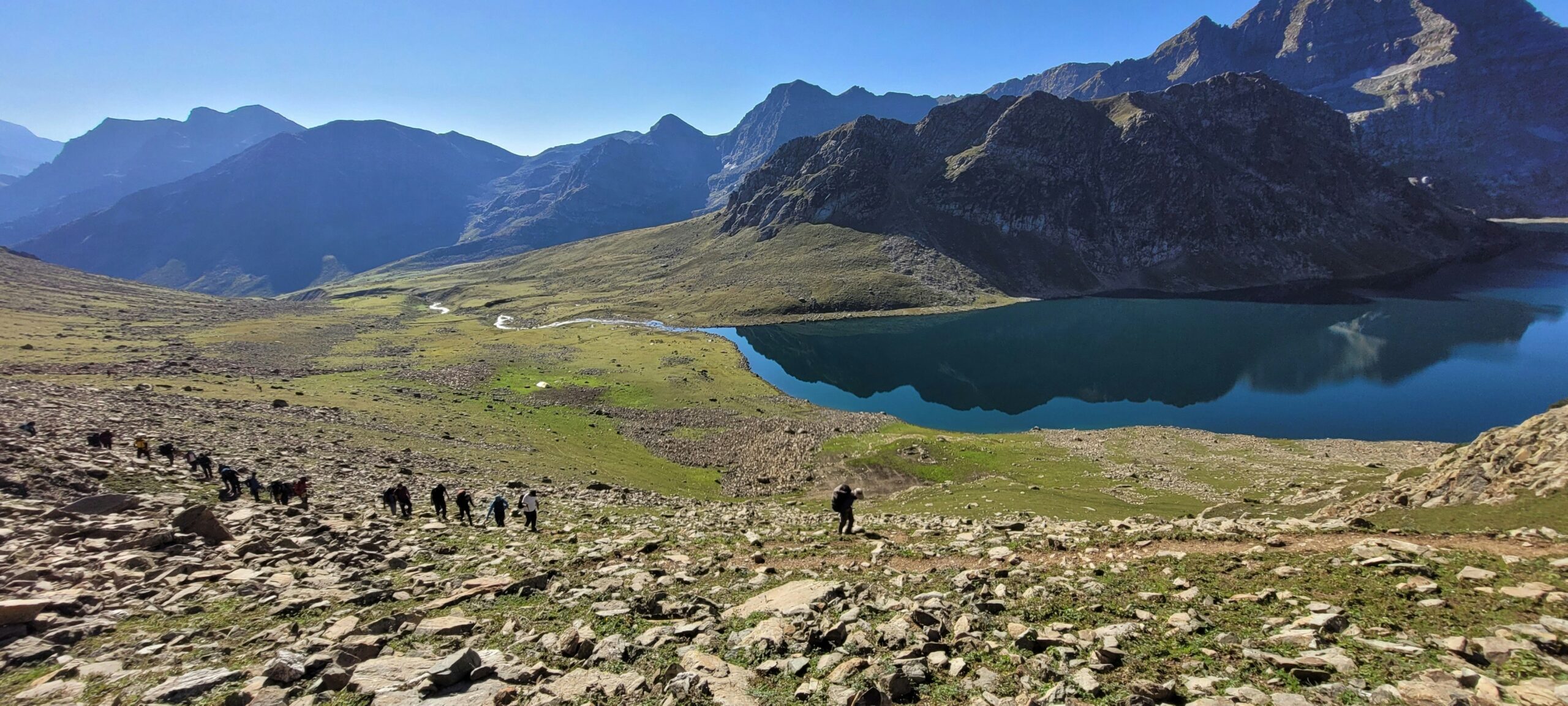
What Rain Gear Should You Carry for Kashmir Great Lakes?
A normal umbrella is not enough for this trek. You need rain protection that lets you walk, protects your backpack and keeps your spare clothes dry.
Gear | What to look for | Why you need it |
Waterproof jacket | A proper waterproof shell with taped seams and a hood | Protects your upper body from rain and cold wind. |
Rain pants | Lightweight waterproof trousers that fit over your trekking pants | Keeps your legs dry while walking through wet grass and rain. |
Backpack rain cover | A cover that fits your full backpack | Stops rain from soaking the outside of your bag. |
Dry bags | Waterproof bags or strong sealed inner liners | Protects clothes, electronics and sleeping items even if the outer cover leaks. |
Waterproof gloves | Light waterproof gloves that allow a good grip | Useful when rain and cold wind make your hands uncomfortable. |
Gaiters | Well-fitting trekking gaiters | Help keep water, mud and small stones out of your shoes. |
Extra socks | At least two spare pairs kept in a dry bag | Gives you a dry pair if your trekking socks get wet. |
Quick-dry clothes | Lightweight synthetic trekking clothes | Dry faster than cotton after a shower. |
How to Keep Your Shoes and Sleeping Clothes Dry
Wet shoes are a common problem on a multi-day trek. You may walk through wet grass, muddy ground and small streams. Your shoes may not dry fully before the next morning. Carry a separate pair of dry camp socks. Keep them inside a sealed dry bag and use them only after reaching camp. Do not wear your wet trekking socks inside your sleeping bag.
At camp, remove the insoles and loosen the laces. Wipe off mud and water with a cloth. Keep your shoes under the tent vestibule or another sheltered place approved by your trek team. Do not place them close to a stove, open flame or direct high heat, as this can damage the material.
Your sleeping clothes must stay dry. Pack one complete set of warm clothes in a sealed bag and do not use it while walking. If your operator supplies a sleeping bag, ask whether it is suitable for the expected night temperatures and whether a liner is included. Do not assume that a sleeping bag will remain dry if you put wet clothes inside it.
Rain and Safety on the Kashmir Great Lakes Trek
Rain itself is not always dangerous. The risk increases when it comes with lightning, strong wind, poor visibility, cold temperatures or fast-flowing water.
Keep these rules in mind:
- Do not cross a swollen stream: Water levels can rise after rain or snowmelt. Never enter a fast stream just because other trekkers are crossing it.
- Stay away from exposed ridges during lightning: Follow your trek leader’s instructions and move away from high, open ground when a storm approaches.
- Do not rush a pass crossing: If fog, rain or snow makes the route unsafe, wait or turn back as directed by the trek leader.
- Keep warm layers dry: Cold rain and wind can lower your body temperature. Change out of wet clothes as soon as you reach shelter.
- Watch for signs of hypothermia: Uncontrolled shivering, confusion, poor coordination and unusual tiredness need urgent attention. Tell your trek leader at once.
- Do not split from your group: Fog can make it difficult to see the trail and other trekkers. Stay with the team.
- Follow the weather decision: Your trek leader may delay the start, wait at camp, change the route or cancel a crossing. Do not pressure the team to continue.
Final Rain Gear Checklist
Before leaving for the Kashmir Great Lakes Trek, check that you have:
- Waterproof jacket with a hood
- Waterproof rain pants or a suitable poncho
- Backpack rain cover
- Waterproof inner bags for clothes and electronics
- Quick-dry trekking clothes
- Waterproof gloves
- Gaiters if advised for the trail conditions
- Extra trekking socks
- A separate dry set of camp and sleeping clothes
- A waterproof pouch for your phone and documents






