History of Sun Temple Kashmir
Konark got the fame and Martand built the foundation first. The sun temple kashmir was constructed in the 8th century CE. King Lalitaditya Muktapida of the Karkota dynasty commissioned it. His reign ran from about 724 to 761 CE. The Konark Sun Temple in Odisha was not built until the 13th century. That is a gap of roughly 500 years. The Modhera Sun Temple in Gujarat came up in 1027 CE. Martand predates that too. When Konark was at its peak, Martand had already been standing for centuries and had already been destroyed.
This matters because it repositions the temple in the wider story of sun worship in India. Martand is not the lesser-known cousin of Konark. It is the ancestor. The tradition of building grand Surya temples in India arguably begins here. At a plateau in Kashmir that most tourists drive past without stopping. Without knowing what they missed.
Best Time to Visit Martand Sun Temple
April to October is the window. Within that, some months are clearly better. April in Kashmir and May are good opening months. The air is cool and the plateau grass is green. The Kashmir Valley below looks its best from the western entrance. Crowds are low. Want the site to yourself with clear skies for photography? Late April to mid-May is hard to beat.
June to August is the peak season for Kashmir tourism. More people visit, though Martand still sees far fewer than Pahalgam or Gulmarg. The plateau gets warm by afternoon. Mornings stay cool. Come before 9am and you will often have the courtyard to yourself. Kashmir in August can get busy valley-wide, but this plateau stays quieter than most.
September and October are the best overall months. Summer crowds have gone. The morning light is lower and sharper. Shadows across the carved columns are longer and more defined. The valley views from the plateau are clearest in October when the haze has lifted. The temperature is good for walking. This is the window most photographers prefer.
November to March is cold and sometimes wet. The plateau is exposed. The road from Anantnag can get icy in January and February. No specific reason to avoid it, but check road conditions first.
Not sure when to plan your Kashmir trip around this? See the complete best time to visit Kashmir guide for month-by-month conditions across the valley.
Things to Do at Martand Sun Temple
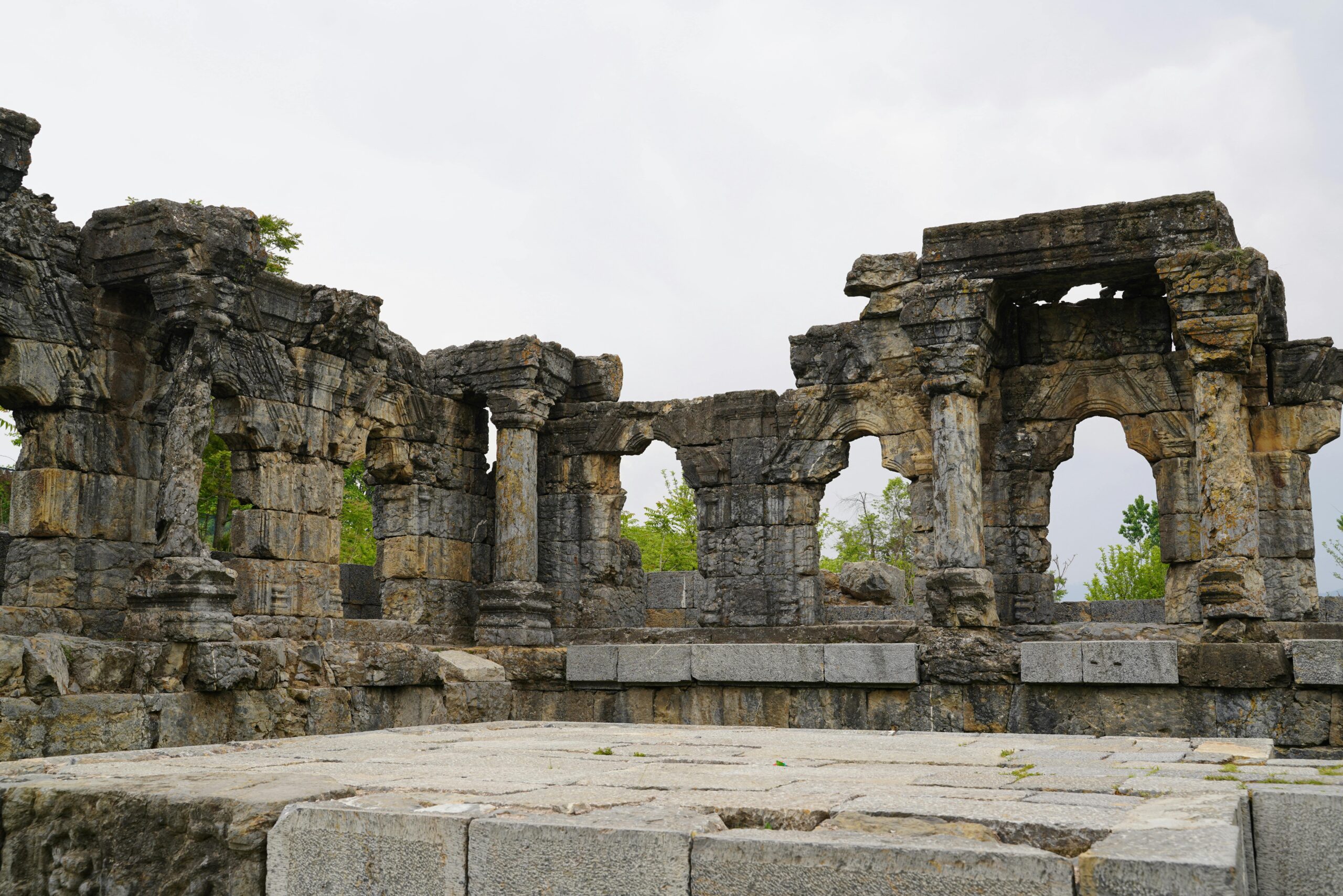
Walking the courtyard is the main thing. Do not rush it. Start at the entrance gate on the western side. The width of this entrance exactly matches the width of the central shrine inside. That alignment was deliberate. Stand at the gate and look through to the shrine. This is the axis the architect intended. Most visitors miss it because they enter from the side or walk in looking at their phones. Don’t.
Take the 84 smaller shrine niches around the perimeter slowly. Many still have carved panels in reasonable condition. Others have been worn smooth by centuries of weather. A few show intact deity figures. Look for the carvings of Ganga and Yamuna flanking the main sanctum entrance. Among the best-preserved carvings on the site.
Walk to the western edge of the plateau for the full valley view. On a clear morning, the Pir Panjal range is visible to the south. Zabarwan hills to the north. Villages below look like a map. Himalayan peaks carry snow into June. This view is why Lalitaditya chose this exact location. A sun temple dedicated to the deity of light should be seen from everywhere in the valley. It was.
Photography works best in the two hours after sunrise. The low light hits the columns at an angle and throws long shadows across the carved surfaces. By mid-morning the light goes flat. Noon is the worst time for photographs and the busiest for visitors. Plan accordingly.
If a local guide approaches near the entrance, consider saying yes. They are not officially appointed by ASI. But the better ones know which carvings are worth finding. And which stones came from the original shrine floor. A short tour runs about 100 to 200 rupees. Ask before you commit.
Martand pairs well with a broader heritage trail. See the full list of monuments of Kashmir worth adding to your route.
Tips Before You Visit
- Carry cash. No ATMs sit near the temple. The nearest town with reliable banking is Anantnag, 8 km away.
- Entry is free. The site opens at sunrise and closes at sunset. No lighting exists inside the compound after dark.
- Carry water and snacks. No food stalls operate inside the compound. A few small shops sit at the entrance road. Do not count on them being open, especially outside peak season.
- Wear walking shoes. The ground inside the courtyard is uneven stone and loose rubble in places. Sandals are not ideal.
- Respect the site. Carved stone blocks lie loose on the ground. ASI signage asks visitors not to touch or climb on them. Restoration work in progress is marked off. Stay clear of those areas.
How to Reach Martand Sun Temple
The temple is near Mattan village, about 60 km from Srinagar and 8 km from Anantnag town. No direct public transport runs to the site. The best option is a private taxi from Srinagar or Anantnag. A return trip taxi from Srinagar costs about 1,500 to 2,500 rupees. Depends on vehicle and season. From Anantnag, shared autos and local taxis cover the 8 km to Mattan for a small fare. By road from Srinagar: take NH44 south toward Anantnag, then follow the Mattan road. The temple plateau is visible from the road once you clear the lower town. By air: Srinagar International Airport is the nearest, about 60 km away. By rail: Anantnag railway station is 8 km from the site and is connected to Jammu.
Combine the visit with nearby sites for a full day. Kokernag botanical springs are 15 km further south. Achabal gardens are 12 km away. Both are worth adding if you have time.
Building a wider itinerary around South Kashmir? The places to visit in Kashmir guide covers the full valley, including how to combine Martand with Pahalgam and the Aru Valley on a multi-day loop.
Conclusion
Martand Sun Temple is not a footnote in Kashmir’s story. It is the argument that Kashmir once sat at the centre of a confident, ambitious civilisation. In 2026, with restoration work underway, the site is better maintained than it has been in decades. The plateau view, the solar alignment, the five-tradition architecture, the year-long demolition that still could not erase it. Go before the restoration changes what the ruins look like. Go early. The valley view from the western entrance at sunrise earns the drive on its own.