Har Ki Dun gets its first snow on higher slopes in late October or November, while snow can cover much of the upper trail in winter. For a trek with a good chance of seeing snow, late October and November are better choices than deep winter. Snow may also remain on higher parts of the route in March and April. But from December to February, you should assume the trek is closed unless the Forest Department confirms that entry is allowed.
Har Ki Dun is a valley in Uttarakhand’s Garhwal Himalayas, not a mountain pass. The trek goes through pine forests, old villages and open meadows. In winter, snow can cover the path and make the walk much harder. If your main goal is to see snow, you need to pick your dates with care.

Har Ki Dun Snowfall: Best Months to See Snow
The best month depends on the kind of snow you want to see. In late autumn, you may see fresh snow on high peaks while much of the lower trail stays clear. In deep winter, snow can cover the trail, but access may be stopped. By spring, some snow patches may remain on higher ground.
Month | Chance of seeing snow | What to know |
October | Possible on high peaks late in the month | Fresh snow is not certain on the main trail |
November | Good chance on high slopes | A useful time to look for early snow, while the trek is still running |
December | Snow may cover the upper trail | Heavy snow can block the route, and access may be closed |
January | Snow may lie deep | Do not plan a trek without clear permission |
February | Snow can remain deep | Ice and blocked paths can make travel unsafe |
March | Snow patches may remain | Check if the route has reopened |
April | Some snow may remain higher up | Lower parts may be clear as spring sets in |
These are broad seasonal patterns, not a promise of snow on your dates. A warm spell can melt snow, while one storm can cover the trail again. Always ask for a recent trail report before travelling.
Snowfall in Har Ki Dun by Month
Late October and November: The First Snow
Late October and November can bring the first snow to the higher peaks. The lower trail may still be clear, so you can enjoy the forest, villages and mountain views.
This period suits trekkers who want a chance to see snow without planning a deep-winter trip. Still, cold nights are common. Carry warm layers and check the latest weather before you leave Sankri.
December: Snow Can Block the Trail
December can bring heavy snow to the upper route. Fresh snow may make the valley look lovely, but it can also hide the path and make river-side sections hard to cross. December until around mid-March due to wildlife movement in Govind Pashu Vihar National Park and Wildlife Sanctuary. This means you should not book a December trek unless local forest staff confirm that entry is allowed.
January and February: Deep Winter
January and February can bring very cold nights and deep snow. Some parts of the trail may be hidden, while ice can form on shaded paths. Walking takes more time and uses more energy in these conditions.
The main concern is not just the weather. The route may be closed to trekkers. Do not treat a trek company’s old listing or an online photo as proof that you can enter. Ask the Forest Department for the current rule before making travel plans.
March and April: Leftover Snow and Spring
Snow may remain on higher ground in March, even as the lower trail begins to thaw. Some guides report snow patches near the upper camps and meadows during this time. The amount changes from year to year.
April often brings more signs of spring along the lower route. If you want to see snow without taking on a deep-winter trek, ask a local operator where snow remains that season. Also check that the full route is open before you book.
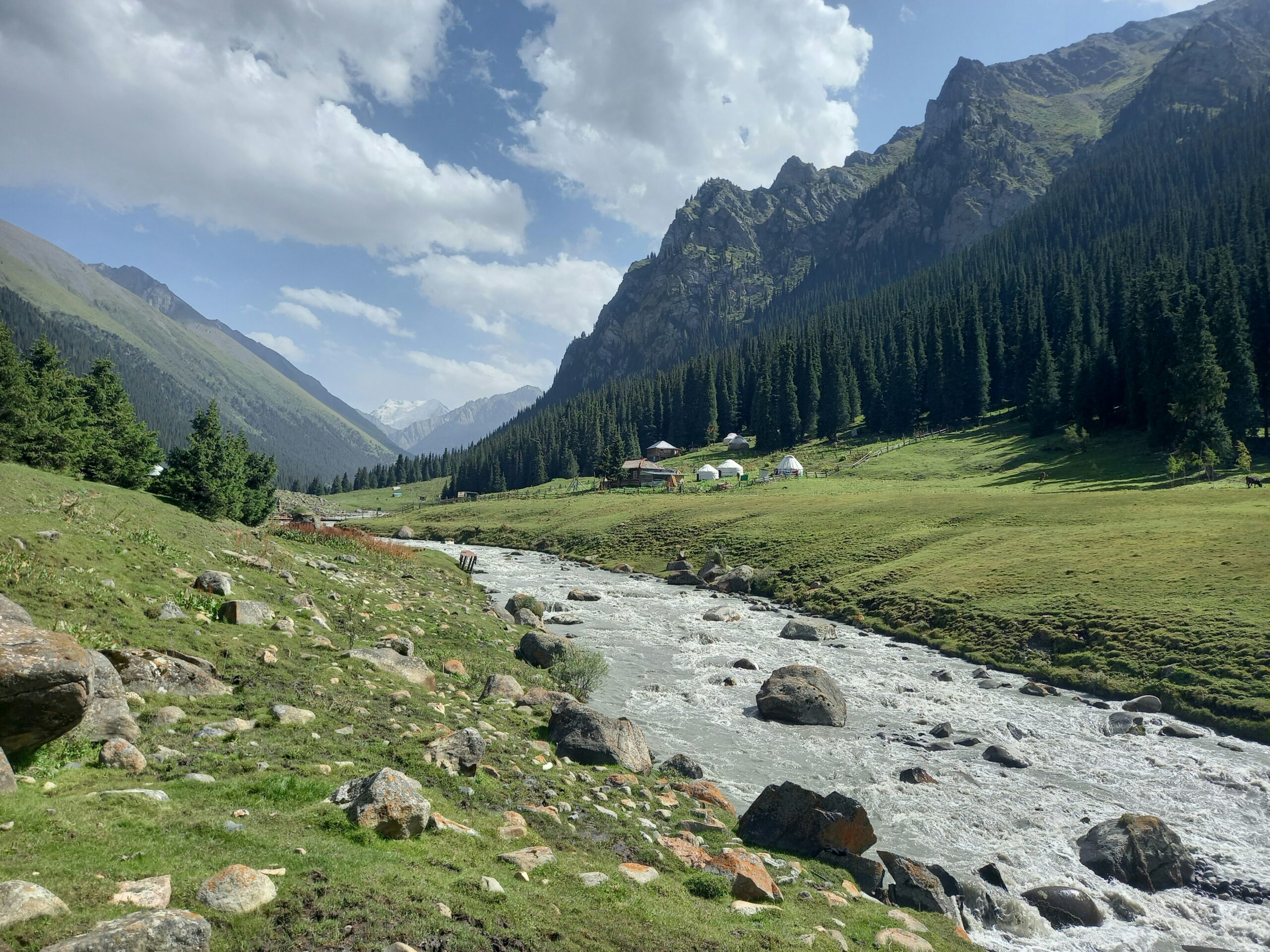
Where Can You See Snow on the Har Ki Dun Route?
Snow cover changes with each storm, so no guide can promise snow at every stop. The route’s height gives a useful idea of where cold and snow may be more likely.
Route point | Approximate height | What snow may mean here |
Sankri | 1,950 m | Snow is less certain than at higher points |
Taluka | 2,100 m | The road and trail may be affected by winter weather |
Seema and Osla | Around 2,600 m | Cold mornings and possible snow during a strong winter spell |
Kalkattiyadhar | Around 3,150 m | Higher ground where snow may remain longer |
Har Ki Dun | Around 3,500 to 3,566 m | Greater chance of snow cover in winter |
Heights are approximate and may vary across trek itineraries. The table shows relative height, not a fixed snowline. A snowline is the height above which snow stays on the ground, and it can rise or fall with the weather.
The route also follows the Supin River and crosses streams on bridges. After snow or heavy rain, these sections can become harder to use. Never cross a fast stream or walk onto hidden ice just to reach a snowy spot.
What Are the Temperatures During Snow Season?
Temperatures vary with height, cloud cover and fresh snow.The daytime temperatures of about 8°C to 10°C and night temperatures from 0°C to -5°C for its autumn and early winter season. These are broad operator estimates, not a daily forecast for every camp.
In deep winter, higher camps can become much colder. Some trek guides report night lows near -10°C or lower, but the exact temperature depends on the site and weather. Do not use one number to plan your clothing.
Check the forecast before leaving home and again near Sankri. A forecast for Uttarkashi town may not match conditions in the high valley. Carry warm base layers, a thick jacket, gloves, a warm cap and waterproof outerwear.






