
Why Darjeeling’s Temples Are Unlike Anywhere Else in India
Darjeeling sits at a rare cultural meeting point, and you feel it the moment you step inside any shrine. Hindu traditions dominate here, shaped by Nepali locals and Bengali visitors, while Buddhism flows in strongly through Tibetan roots. What surprises most people is how these worlds overlap so easily. At Mahakal, you may see a Hindu priest offering prasad while a Buddhist monk chants beside him. I still remember noticing that for the first time and pausing longer than I planned. Why does it feel so calm instead of confusing? Maybe the mountains soften everything, even faith.
The temples in Darjeeling also keep things interesting because no two visits feel the same. One moment you stand inside an old hilltop mandir, and the next you reach a peaceful pagoda or a monastery filled with prayer flags. It never feels repetitive. Still, a few small things make your visit smoother:
- Wear clothes that cover your shoulders and knees
- Remove your shoes before entering temple spaces
- Keep your voice low, especially during prayers
Top 10 Temples in Darjeeling for First-Time Visitors
1. Mahakal Temple — Where Hinduism and Buddhism Share One Altar
Mahakal Temple sits on Observatory Hill, where Darjeeling’s story quietly began. In 1765, Lama Dorje Rinzing built the Dorje-Ling monastery here. The Gorkha invasion in 1788 destroyed it, yet the place refused to lose its pull. By 1782, self-manifested Shiva lingas drew devotees back, and a new shrine rose. That overlap still defines this darjeeling temple today. The name Darjeeling itself comes from Dorje-Ling. Strange how loss shapes identity, right?
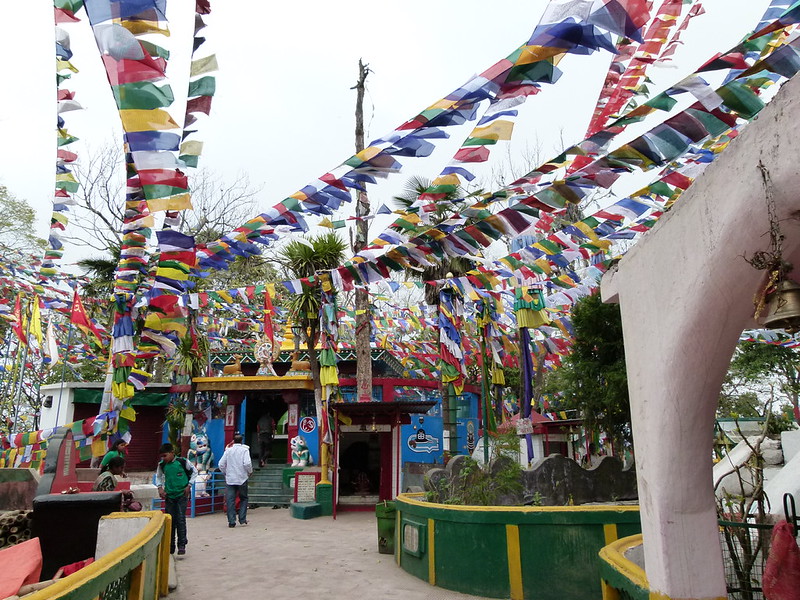
Climb up and the shift feels instant. Prayer flags snap hard in the wind. Bells clash with low Buddhist chants. A monk and a priest stand near the same altar, not separate, not divided. Three gold lingas shine for Brahma, Vishnu, Maheshwar. Durga glows red. Kali watches sharp. Ganesha and Hanuman sit close. A white chorten keeps the lama’s memory alive. Noise and silence somehow exist together.
The walk begins from Mall Road near Chowrasta. Around fifteen minutes uphill, just enough to slow your breath. Dawn feels softer here, dusk feels louder. Monkeys watch closely, so keep food packed. No photos inside the sanctum. Sometimes, that pause matters more.
2. Ghoom Monastery (Yiga Choeling) — Darjeeling’s Oldest Buddhist Shrine
Back in 1850, Lama Sherab Gyatso, a Mongolian monk, built this quiet space that still holds its ground. It belongs to the Gelugpa sect, known for its yellow hats and deep discipline. The focus here is Maitreya, the future Buddha. His 15-foot statue was made using clay brought from Tibet, which adds weight to the place. This darjeeling temple does not feel busy, it feels patient.
Step inside and the statue pulls your eyes without trying. The third eye holds a small stone that catches light in a soft flash. Butter lamps flicker slowly. Old Kangyur texts sit in corners, almost hidden. The roofs curve in an East Asian style, calm and balanced. One thing matters here, always say “Yiga Choeling” or “Old Ghoom” to drivers. Otherwise, confusion happens fast.
It sits about eight kilometres from town near Ghoom station. Easy to reach by taxi. Open from 6 AM to 6 PM. Dress modest, keep your voice low. Photos work outside, but inside, better to ask.

3. Dhirdham Temple — A Piece of Nepal in the Hills of Darjeeling
Dhirdham Temple feels like stepping into Nepal without crossing a border. Built in 1939 by Purna Bahadur Pradhan and designed by Beg Raj Sakya, it mirrors Kathmandu’s Pashupatinath Temple. The layered pagoda roof rises sharp against the sky. Wood carvings pull attention without trying too hard. Among every darjeeling famous temple, this one stands out for its clear Nepali identity.
Inside, the space stays calm and steady. Lord Shiva sits at the centre, simple yet strong. At the entrance, the white Pancha Bakram Tri Netram shows five forms of Shiva, including the third eye. Aartis at 8 AM and 6 PM bring a steady rhythm. Not loud, not rushed, just enough to hold you there.
The temple sits just below the Darjeeling railway station. About ten minutes from the market on foot. Easy to combine with a Darjeeling toy train ride. Entry is free. Quick visit for some, longer pause for others.
4. Japanese Peace Pagoda — A Symbol of Global Harmony
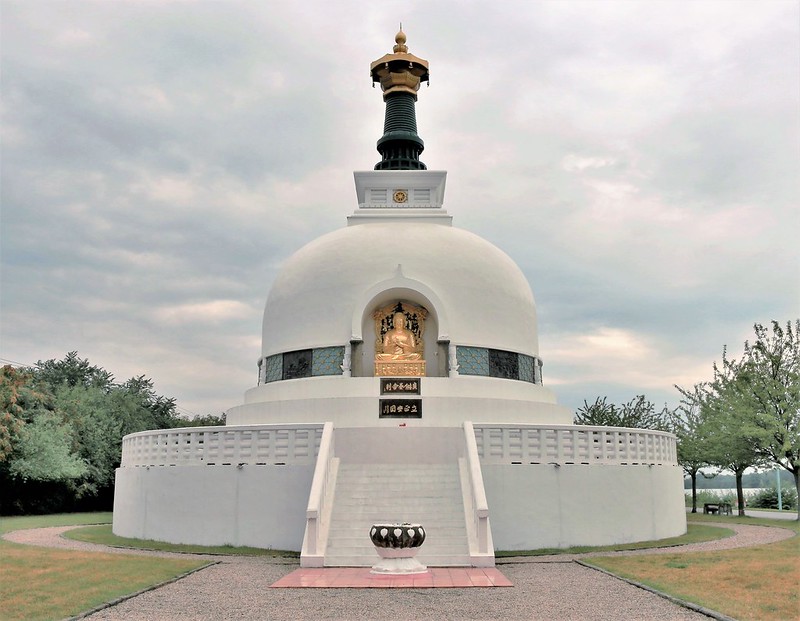
The Japanese Peace Pagoda feels different from the usual temple stops. Built in 1992 by Nichidatsu Fujii, a Japanese monk linked with Mahatma Gandhi, it carries a message shaped after war. It is part of a global chain of peace pagodas. The white dome stands on Jalapahar Hill, surrounded by tall pines. Among the temples in darjeeling, this one feels the most open, almost beyond religion.
Inside, four Buddha statues face different directions, holding a quiet balance. Nearby, the Japanese temple runs prayer sessions with steady drum beats. The rhythm builds slowly, then settles. Visitors can sit in without pressure. Late afternoon changes the mood when light softens over the hills.
Located at West Point, about ten minutes by car from town. Entry is free. Best time is around 4:30 PM when prayers begin. Stay a little longer than planned, it usually happens.
5. Dali Monastery (Druk Sangag Choeling) — Home to 200 Monks
Dali Monastery, or Druk Sangag Choeling, feels more organised than most places around town. Founded by Kyabje Thuksey Rinpoche, it follows the Drukpa Kagyu tradition of Tibetan Buddhism. Over 200 monks live here, and you can sense that rhythm the moment you enter. The building rises in bold reds and golds, about five kilometres from central Darjeeling. It looks fresh, almost too well-kept compared to older sites. That alone makes this darjeeling temple stand out.
At the entrance, large golden prayer wheels line up, almost inviting you to pause. Spin one, and the slow motion pulls you in. Inside, monks chant in rows, steady and deep. A small café nearby serves butter tea, strong taste, not for everyone. A rare manuscript linked to the Tibetan Book of the Dead rests here. Clear days open wide hill views. A small shop sells simple artefacts worth browsing.
If you’re planning to visit multiple monasteries, it helps to have your days mapped out. See our 3-day Darjeeling itinerary for a practical temple trail route.
6. Bhutia Busty Monastery — Ancient Manuscript, Mountain Views
Bhutia Busty Monastery carries a restless past that few places can match. It once stood on Observatory Hill, right where Mahakal Temple sits today. After the Gorkha invasion, it had to move, and that was just the beginning. Earthquakes, damage, rebuilding, the cycle kept repeating. Still, it survived. That alone gives it a quiet strength. Among the temples in darjeeling, this one feels shaped by survival rather than design.
The monastery itself stays calm, almost hidden from usual routes. Murals fill the walls with bold colours, slightly faded but still alive. Incense lingers in the courtyard, soft but constant. Getting here means a slow uphill walk through village paths. Locals often guide the way without being asked. It suits those who enjoy quieter corners. No rush, no crowd, just space to pause.
7. Aloobari Monastery — Darjeeling’s Hidden Gem
Aloobari Monastery feels like the kind of place most people miss, and that is exactly why it works. Just three kilometres from town, yet it rarely appears on busy itineraries. The structure shows signs of age and past earthquake damage, which adds character rather than taking it away. Inside, the upper floors surprise you. Gold icons shine against walls filled with bold, almost psychedelic frescoes. Not polished, but full of life.
The walk from Chowrasta sets the mood before you even reach it. Quiet lanes, old trees, very little movement around. The journey feels as important as the place. No entry fee, no strict system, just a working monastery going about its day. Morning visits feel more real when monks are in prayer. No crowd, no noise, just a slow rhythm that stays with you.
Aloobari pairs well with the offbeat places near Darjeeling if you prefer keeping off the main tourist track for most of your trip.
8. Samten Choling Monastery — Quiet Prayer at Ghoom
Samten Choling Monastery often gets overlooked because of a simple mix-up. Many drivers call multiple places “Ghoom Monastery,” and this one gets lost in that confusion. It sits close to the main Ghoom area, yet far fewer people reach here. That silence works in its favour. The place feels steady, almost untouched by tourist rush.
Inside, it functions as an active monastery where monks live and study daily. Visit during prayer time, and the experience feels closer, more personal. No large groups, no distractions. Just chants, steady and low. The space does not try to impress, and that is what makes it work. Modest dress is expected, and silence comes naturally here. No entry fee. Just walk in, slow down, and stay a little longer than planned.
9. Observatory Hill Shrines — A Cluster of Sacred Spaces in One Walk
Observatory Hill is not just about Mahakal Temple, even though most people stop there and turn back. That darjeeling famous temple pulls the crowd, but the real experience spreads across the whole hill. The final stretch up already hints at it. A small Kali temple appears first, bright red, heavy with fresh flowers and thick incense. Keep walking, and the Mahakal complex opens into smaller shrines packed close together. Durga, Hanuman, Siddhi Sai Baba, Ganesha, Radha, Krishna, each one alive with bells, oil lamps, daily offerings. Nothing feels separate here. Just layers of belief sitting side by side.
Move a little further and the quieter details begin to show. A white Tibetan chorten stands near Mahakal, said to hold relics of Lama Dorje Rinzing. It does not draw attention, yet it anchors the entire space. There is also a small Mahakal cave just outside the main area, used for silent meditation. Walking the full hill loop takes around forty-five minutes to an hour. Not tiring, just enough to slow you down. If you want more than a quick darshan, this full circuit makes the visit feel complete.
10. Nippozan Myohoji Japanese Temple — Drum Chants at Dusk
Nippozan Myohoji Japanese Temple feels like the quieter half of the hill, almost hidden beside the more open Japanese Peace Pagoda. Many guides treat them as one stop, but separating them changes the experience. The entrance is simple, guarded by two golden lion statues that stand still yet watchful. Inside, the space narrows into a prayer hall where rows of mats line the floor. A priest sits ahead, beating a large drum while chanting in a steady rhythm. The sound builds slowly, deep and repetitive, unlike anything else around.
The temple stays compact, which actually makes it easier to experience without distraction. A short staircase leads to the main hall, manageable for most visitors if taken slow. The afternoon prayer, usually around four to four-thirty, feels like the right time to visit. Among temples in darjeeling, this one feels more focused, less scattered. Since it sits just steps away from the Peace Pagoda, both can be done together. Stay for the chants first, then walk across, and let the hill carry that sound a little longer.
Practical Tips for Visiting Darjeeling Temples
Visiting a darjeeling temple — whether Hindu, Buddhist, or somewhere in between — follows a simple set of unwritten rules that most guides never put together in one place. If you know them in advance, your visit feels smoother, more respectful, and far more immersive. You avoid stepping on toes, so to speak, and you also avoid the embarrassed silence that comes when you break a local norm by accident. Most tourists just copy what others do, but a little awareness helps you blend in, not stand out. These are not strict laws, more like the hill people’s quiet expectations.
- Remove footwear before entering any temple or monastery.
- Dress modestly — cover shoulders and knees, no matter how hot or cold it feels.
- Keep voices low inside prayer halls; monasteries are working spaces, not museums.
- Do not photograph inside sanctums unless someone clearly tells you it is allowed.
- At Mahakal Temple, watch for monkeys and keep your bag zipped; avoid showing food openly.
- Carry small denomination cash for donations; most temples do not take cards.
- Morning visits, roughly 7–9 AM, and evening aarti times give the most atmospheric darjeeling temple experience.
- At Ghoom, remind your driver you want Yiga Choeling specifically, not Samten Choling.
After your temple trail, Darjeeling has plenty more to explore. Check out the full list of things to do in Darjeeling to plan the rest of your time here.
Best Time to Visit Darjeeling Temples
The best time to visit Darjeeling for both weather and temple views is March to May. The sky clears up, the air feels light, and rhododendrons burst into colour along the hill paths. From Observatory Hill and the Japanese Peace Pagoda, you often get clean views of Kanchenjunga, if you are lucky. This window combines devotion with beauty perfectly. You can visit the darjeeling famous temple circuit all year, but spring feels like the season where the hills and the gods both wake up slowly and warmly.
Festival seasons add another layer you should not miss. October to November, after the monsoon, the air is crisp and sharp, perfect for walking. Diwali and Dussehra bring extra life to Hindu temples, with lamps, bursts of firecrackers, and crowded yet cheerful aartis. Buddhist monasteries mark seasonal rituals that feel more intense than a regular day. If you want views, you should avoid July and August, when heavy mist and clouds hide the peaks. However, if you really want energy, Shivaratri (February–March) and the month of Sawan (July–August) turn Mahakal Temple into a sea of flowers, chants, and packed devotees.
Already planning your trip around the temple circuit? Our 4-day Darjeeling itinerary covers how to fit sightseeing, monasteries, and places to visit in Darjeeling into a comfortable pace.
FAQs
1. Is there an entry fee for Darjeeling temples?
Most darjeeling temples do not charge anything at the gate, which makes visits feel easy and open. You will usually see a small donation box near the entrance or inside the shrine. People drop a few coins or notes quietly, no pressure, no fixed rule. Some privately managed places may ask a small fee, but it is rare. Keeping loose change helps, especially when you move between multiple temples in one day.
2. Can non-Hindus and non-Buddhists visit these temples?
Yes, everyone is welcome here, and that is something Darjeeling does better than most places. You will see tourists, locals, and devotees sharing the same space without any tension. Just dress modestly, keep your voice low, and follow simple customs like removing shoes. No one checks your background. Respect matters more than belief here, and that shows in how people treat visitors.
3. Are photographs allowed inside Darjeeling temples?
Photos usually work fine in open courtyards and outside areas, where people freely click pictures. Inside the sanctum, things change quickly. Many temples do not allow photography of idols or rituals. Even where it is not strictly banned, it feels better to pause and ask first. A quick check with a priest or caretaker avoids awkward moments and keeps the atmosphere undisturbed.
4. What should women wear when visiting Darjeeling temples?
Simple and covered works best, and it does not need to be complicated. Clothes that cover shoulders and knees are usually enough for most places. A light shawl helps, especially with the hill weather changing quickly. Avoid very tight or revealing outfits, as they draw attention for the wrong reasons. Strong perfumes are also best skipped, since temple spaces stay quiet and sensitive.
5. Is it safe to visit temples in Darjeeling at night?
Most temples close by evening, so late-night visits are not very common here. Areas near Mall Road and Mahakal stay active and feel safe even after sunset. Still, quiet hill paths can get isolated quickly once it gets dark. It is better to stick to well-lit routes and avoid wandering too far alone. A little caution goes a long way in the hills.