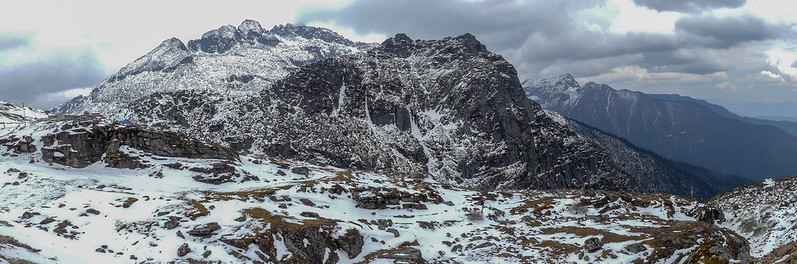
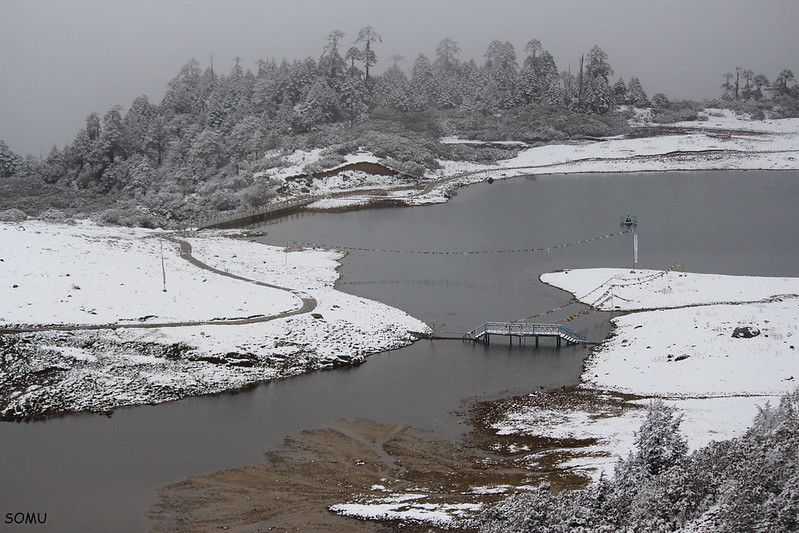
Tawang snowfall starts in November and runs through March. This is considered the best time to visit Tawang for snowfall. That is the window, but not every month in that window gives you the same trip. Late November gives you fresh snow and open roads. January gives you deep snow and a real chance of sitting at Sela Pass for half a day.
If you are planning a winter visit, the month you pick matters more than the season. This guide breaks it down so you know exactly what to expect.

When Does Tawang Snowfall Begin and End?
Tawang snowfall does not behave the way most guides describe it. “November to May” is technically correct. It tells you nothing useful, the season has three distinct phases. Phase 1 runs from November through early December. Snow is light, fresh, and photogenic. Tawang town is dusty. Sela Pass gets a proper coat, roads stay open. This is the window most visitors underestimate. Phase 2 is January and February.
Heavy snowfall blankets the town, the passes, and everything between. Temperatures at night drop to -10°C. The Sela Pass stretch can close after a bad night. This is the full immersive winter, it is also the riskiest for road travel. Phase 3 is March through May. But high-altitude areas like Bumla Pass and parts of Sela stay white well into April. This is residual snow, not fresh snowfall. Know which phase fits what you want and they are three different trips.
Month-by-Month Snowfall in Tawang
December is not the riskiest month to visit but January is. Most people get this backwards. Tawang snowfall season runs from November through March, with peak snowfall in January and February.
Here is what each month actually looks like.
November brings the first snowfall. The town sees light snow, often from mid-month. Sela Pass gets heavier cover. Daytime temperatures sit around 5°C to 10°C and nights drop sharply. Roads are mostly clear. Crowds are thin. This is the tawang snowfall month that most experienced winter visitors quietly prefer.
December is the sweet spot. Early December especially, snow is consistent across Tawang town and the surrounding hills. Sela Pass is snow-covered but usually driveable. Daytime highs reach 8°C on good days. Nights go below zero, the Torgya Festival falls in January. December has a calm, uncrowded quality that January simply does not.
January and February are peak snowfall months. Temperatures at night fall to -10°C or lower in high-altitude areas. Heavy snowfall is frequent and this is the white-out version of Tawang: rooftops buried, monasteries framed in snow, the whole scene. But Sela Pass closures happen most often in these two months. A bad night of snowfall can delay your drive by several hours the next morning.
March sees snowfall tapering off in town. Higher passes still carry snow, daytime temperatures climb back toward 10°C to 15°C. Roads are more reliable. If your goal is snow without deep-winter road risk, late March works especially at Sela Pass and above.
Best Time to Visit Tawang for Snowfall
The best time to visit Tawang for snowfall is not January, not for a first visit. Late November to early December is the right window for most visitors. You get fresh snow, roads are open, hotels have rooms and crowds are thin. You are not gambling on a Sela Pass closure wrecking your schedule.
January and February are for people who want the full immersive winter and can absorb a delay. If your trip has fixed return flights and zero buffer, those months carry real risk. Sounds harsh? It happens. Picture this: a family books a week in Tawang in January with a tight return. One heavy night of snowfall at Sela Pass. A two-day journey becomes three and the snow is stunning.
December hits the balance. You get meaningful snowfall and open roads. Extend by a few days and the Torgya Festival in January is within reach. For a first-timer, this is the honest answer. Go in December, build in a buffer day, and you will get exactly what you came for.
What to Pack for a Winter Trip to Tawang
A heavy jacket is not enough and that is the mistake most first-time winter visitors make. Tawang town sits at about 10,000 ft. Sela Pass, which you cross to get there, sits at 13,714 ft. The temperature difference between the two is significant. Pack for the pass, not the hotel. You spend hours at altitude before reaching town. A single heavy layer will not hold when wind hits that ridge.
The key is layers, a thermal base, a fleece mid-layer, and a windproof shell work better than one thick coat. You can adjust, you cannot adjust a single layer. Your hands and feet matter as much as your torso. Frostbite risk at Sela Pass in January is real for people who step out without gloves.
Here is what to bring:
- Thermal base layer, top and bottom. Non-negotiable.
- Fleece or down mid-layer
- Windproof outer jacket
- Waterproof or snow-resistant trousers
- Wool socks. Two pairs minimum per day.
- Insulated gloves, not fashion gloves
- Balaclava or warm hat that covers ears
- Sunglasses. Snow glare at altitude is strong.
- Lip balm and moisturiser. The air is dry and cold at altitude.
Road Conditions and Getting to Tawang in Winter
Plan a buffer night in Dirang, that is the whole strategy. The road from Guwahati to Tawang covers about 520 km and takes two days with a halt. The critical stretch is Sela Pass. It sits at 13,714 ft. Open year-round in theory, it closes occasionally when snowfall is heavy. The Border Roads Organisation (BRO) typically clears the pass within 24 to 48 hours of a closure. But “typically” is not “guaranteed.” A bad two-day snowfall event can stretch that window.
Visitors who attempt the Dirang-to-Tawang leg on a heavy snowfall day end up stuck. It is that simple. Why does this matter? Because Dirang is your buffer. Stay a night there, check road conditions in the morning, then move. The BRO and local tour operators post updates. The Tawang DC office also issues real-time advisories when conditions are severe.
In 2026, the Tawang DC advised visitors to carry snow chains. Check BRO updates before heading to Sela Pass in winter. Do not skip this step. A day lost in Dirang is a minor inconvenience, a night stuck on the highway is not.
Permits and Planning: What You Need Before You Go
Every visitor to Tawang needs a permit, that is not optional. In 2026, every Indian national visiting Tawang must hold an Inner Line Permit (ILP) before entering Arunachal Pradesh. Apply online via the Arunachal Pradesh ILP portal. Or visit permit offices in Guwahati, Tezpur, or Delhi in person. Processing is usually same-day or next-day online. Do not show up at the border without one, you will be turned back.
Bumla Pass requires an additional Protected Area Permit (PAP). Access must go through a registered tour operator. Solo entry is not permitted. In winter months, Bumla is frequently inaccessible anyway due to heavy snowfall and sub-zero temperatures. Build your itinerary around Sela Pass and Tawang town for a winter visit. Keep Bumla as a possible add-on, not a certainty.
Conclusion
Winter in Tawang is worth it. Late November to early December gives you snow, open roads, and a quieter town. January and February give you the full winter picture. But you need flexibility and a buffer day built in. Sort the permits before you travel, pack for the pass altitude. Plan a night in Dirang on the way up. Do that, and the trip runs well. Most people who struggle with a Tawang winter trip skipped one of those three steps. It is rarely the snow that causes the problem.