Tawang in May is worth it, but which half of May you visit matters more than the month itself. The first two weeks are clear, cool, and easy. The last ten days get wetter and the road to Sela Pass becomes unpredictable. This guide breaks that down so you can plan around it, not into it.
May sits right at the edge of the pre-monsoon window. Rhododendrons are still blooming on the hillsides. The lakes are full from snowmelt, crowds are low and if you time it right, you get some of the best light in the Himalayas all year. Get it wrong, and you spend two days waiting out rain in your hotel room.
What the Weather Is Actually Like in Tawang in May
May splits clean into two different trips. Early May (1st to 15th) is the better half. Days sit between 12°C and 15°C, nights drop to 3°C or 4°C. The sky is mostly clear in the mornings, which is when you want to be outside and moving. Afternoons can bring short bursts of rain, but they pass.
The weather in Tawang in May shifts noticeably from the 16th onward. Temperatures nudge up toward 18°C on warmer days, but humidity builds and cloud cover stays longer. Rain comes more often and lasts longer. By the last week, you are looking at low mist most mornings and wet trails by afternoon.
Period | Daytime High | Night Low | Rain Pattern |
May 1–15 | 12–15°C | 3–5°C | Short afternoon showers, mostly clear mornings |
May 16–31 | 16–20°C | 5–7°C | Longer rain spells, more cloud, wetter trails |
Neither half is a bad time to go. They are just different trips. Early May is for photography, clear-sky drives, and lake visits. Late May is for lush green valleys and fewer people on the trails.
Does Rain in May Ruin the Trip?
Rain in May doesn’t wreck the trip but it redirects it. The question is whether your plan has room to flex, or whether every day is locked to one road. In early May, rain mostly hits between 2pm and 5pm. You do the monastery in the morning and have lunch in town. Then it rains while you are inside drinking butter tea. The problem shows up when you are planning a drive to Sela Pass or PT Tso Lake. Both sit above 12,000 feet. Rain at that altitude does not fall gently. It turns the road surface slick and visibility drops fast. Local drivers know this. They will hold back and wait it out, build that buffer into your plan.
Late May rain is a different kind of problem. It is not always dramatic, sometimes it is just three days of low grey cloud and drizzle that does not stop. Your monastery photos look flat. Madhuri Lake disappears into fog. Sounds like an overstatement? It isn’t. It happens to a chunk of visitors who book late May without checking. The fix is simple: keep one or two “indoor” days loose in your schedule. The Tawang War Memorial, the monastery museum, and the local market in town are all good rainy-day options. They hold up fine when the sky does not.
ILP and Permits: What You Need Before You Go
You need a permit, no exceptions. Arunachal Pradesh is a restricted state, and Tawang sits near the Indo-China border. Every Indian visitor needs an Inner Line Permit (ILP) before they enter the state. You cannot buy it at the checkpost, you cannot wing it on arrival.
The good news is that getting one is straightforward. Apply online at arunachalilp.com before you leave home. In 2026, the ILP costs about Rs. 100–200 and takes 5–8 working days to process. Do not leave this for the last minute. If your travel dates shift, you may need to reapply.
There is a second permit layer for Bum La Pass. It sits at 15,200 feet on the India-China border. That requires a separate army-stamped permit from the District Commissioner’s office in Tawang town. You cannot arrange this online. Most people book it through a local operator who knows which days the army processes requests.
Foreign visitors need a Protected Area Permit (PAP) instead of an ILP. Get this from Indian missions abroad, or from the FRRO offices in Delhi, Mumbai, or Kolkata. One note for foreign visitors: nationals of Bangladesh, China, and Pakistan are not permitted to enter Arunachal Pradesh. Check this before booking.
Permit checklist:
- Indian visitors: ILP from arunachalilp.com (apply 8–10 days before travel to be safe)
- Foreign visitors: PAP from Indian mission or FRRO in Delhi, Mumbai, or Kolkata
- Bum La Pass: separate army permit, arranged in Tawang town (book through local operator)
- Carry photocopies of your ILP at every checkpost on the route
Places to Visit in Tawang in May
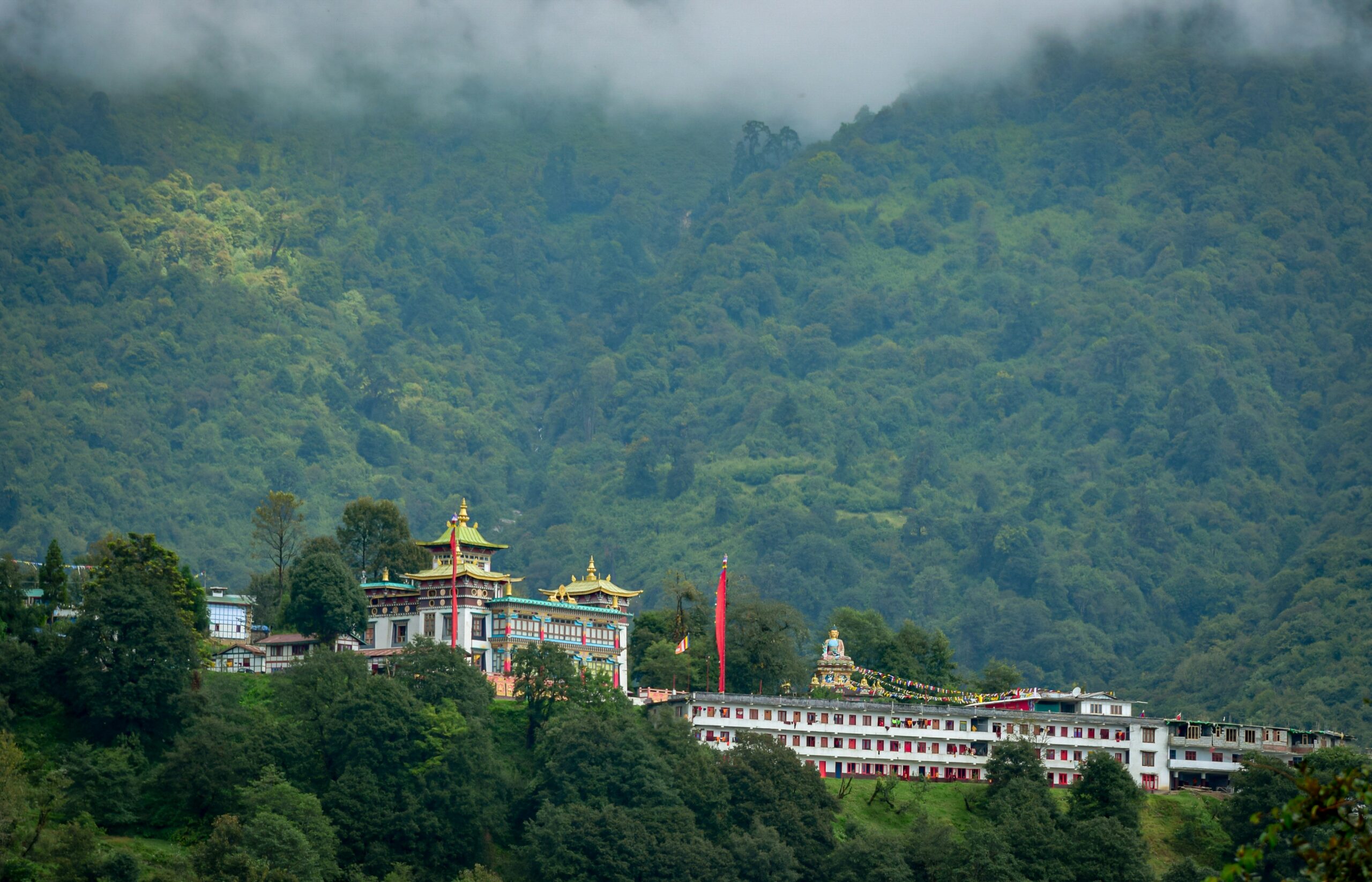
Start with the monastery: The Tawang Monastery sits at 10,000 feet on a ridge above the town. Go on a clear morning, early, before the light flattens. From the upper courtyard, you look down to the Tawang Chu valley. That view is on every travel post about this town. The monastery is the second largest Buddhist monastery in the world, after Lhasa, and it shows. The scale is not what most visitors expect, give it at least two hours.
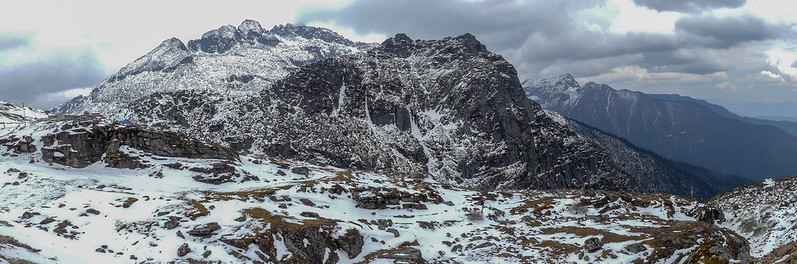
Sela Pass (13,700 ft): Accessible in May but not guaranteed to stay open. After a heavy rain night, the road can close for 3–5 hours while the army clears debris. If Sela Pass is a priority, plan it for your first two days. Weather cooperates better early in the trip.
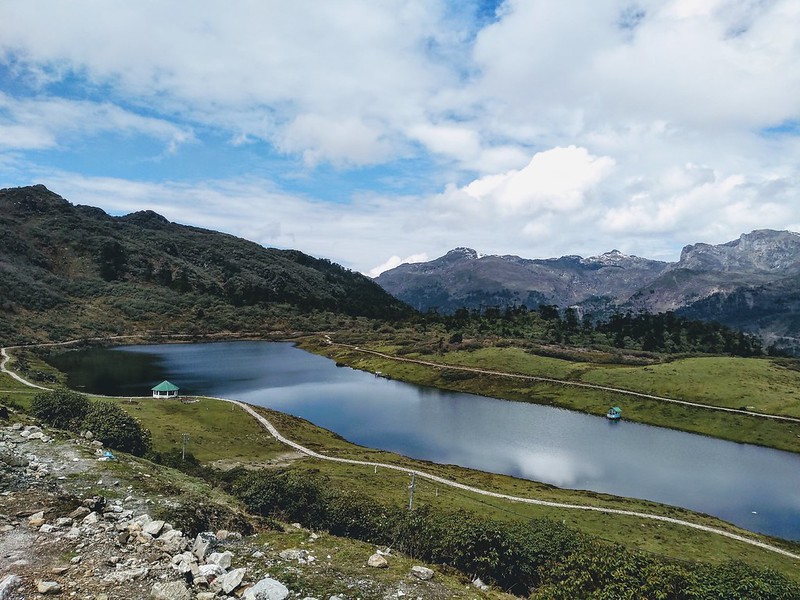
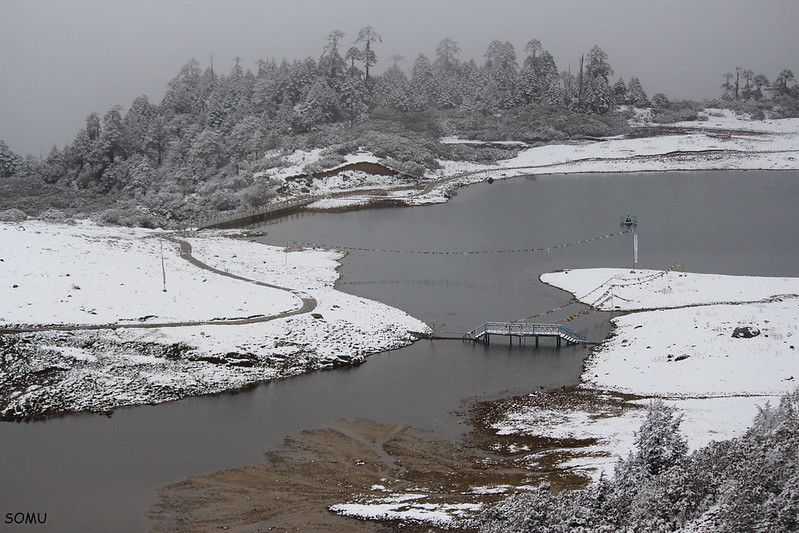
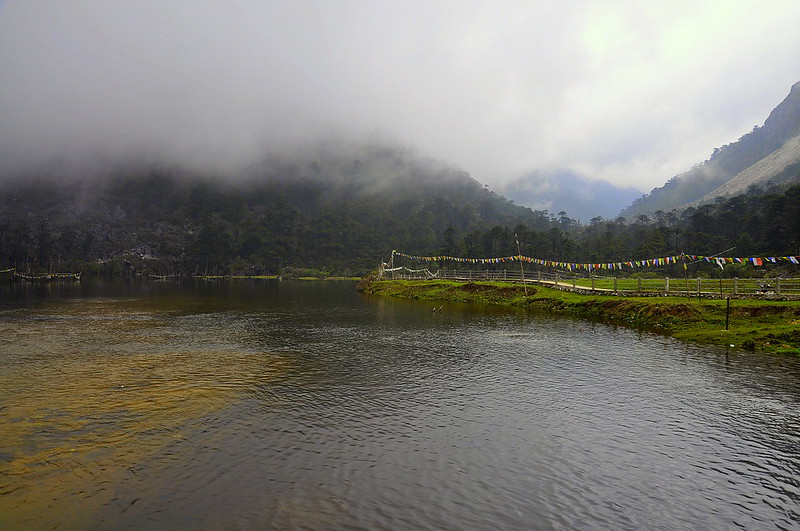
Madhuri Lake (also called Sangetsar Lake): Sits near the road to Bum La Pass at about 12,165 feet. In May, the lake edges are muddy from snowmelt, but the water itself is electric blue. Go on a clear morning. The Ghelisa mountain range behind it reflects off the surface on calm days.
Nuranang Falls: May is the best month to visit this waterfall. Snowmelt from above the tree line swells the falls to their highest point of the year. The hike in from the road is short and the spray is heavy. Bring a waterproof jacket so you do not mind getting soaked.
PT Tso Lake (Pankang Teng Tso): A quieter lake further out on the Bum La road. Less crowded than Madhuri Lake, and just as good. The road can get muddy in late May so ask your driver before you commit to it.
Bum La Pass (15,200 ft): The actual border with China. Standing here is a strange experience. You are at the Line of Actual Control, surrounded by army posts, looking into Tibet. Book the army permit through a local operator in Tawang town. Not all days are open to visitors. Plan this for clear weather only; there is no point going if the pass is fogged in.
What to Pack for Tawang in May
Most people pack for the 15°C days and forget the 4°C nights, that is the mistake. At 10,000 feet with wind, 4°C feels nothing like 4°C at sea level. A fleece alone is not enough after sundown.
You need a thermal base layer, a mid-layer fleece, and a windproof outer shell. That outer layer also doubles as your rain jacket. Buy one that does both rather than packing two. Waterproof hiking shoes or ankle-support trail shoes are the right call, not sneakers. The trails around Nuranang Falls and the lake edges at Madhuri are wet and rocky.
Packing list for May:
- Thermal base layer (top and bottom)
- Fleece mid-layer
- Windproof, waterproof outer jacket
- Waterproof hiking shoes or trekking sandals
- Warm hat and light gloves (for nights and Sela Pass / Bum La)
- Sunscreen SPF 50+ (UV at altitude is intense even on cloudy days)
- Lip balm and moisturiser (the air is dry above 10,000 ft)
- Electrolyte sachets or ORS packets
- Basic first aid: paracetamol, antacid, plasters, altitude sickness tablets if your doctor recommends
- Powerbank (power cuts happen in the hills)
- Offline maps downloaded before you leave (network is patchy on the road)
Altitude and the One Thing Everyone Underestimates
Altitude is the thing every itinerary skips. Most people drive from Guwahati to Tawang in under 24 hours. They arrive at 10,000 feet having spent their whole life at near sea level. Then they wonder why they have a headache, feel tired before dinner, and sleep badly on night one.
This is not unusual. It is an altitude adjustment. Your body needs time to produce more red blood cells at reduced oxygen levels. The headache is the signal. Most visitors push through it, assuming it will pass by morning. Sometimes it does. Sometimes it gets worse and the next two days are unpleasant.
Too cautious? Here is what it actually looks like. You arrive in Tawang at 4pm, excited, wanting to go up to the monastery. You walk up the steps fast. By the top you are breathing harder than the climb warrants. That night, dull headache, broken sleep. Next morning, mild nausea. Your first full day in Tawang is now half a day.
The fix takes one extra night and costs almost nothing. Stop in Dirang (about 4,500 feet) on the way up. Spend the night, give your body 18 hours at that mid-altitude before climbing to Tawang. People who do this arrive feeling good and hit the ground running. People who skip it spend day one adjusting.
How to Reach Tawang and When to Book
There is no flight to Tawang, the road is the trip. The nearest airport is Tezpur’s Salonibari Airport, about 330km away. Most people fly into Guwahati, which is 450km from Tawang. From Guwahati, the road takes 18–22 hours over two days. You cross Sela Pass at 13,700 feet and drop into the Tawang valley from there.
Break it into two days, night one at Dirang or Bomdila. Both towns have good mid-range hotels and are worth a few hours of exploring on their own. Dirang has a small dzong and warm springs nearby. Bomdila has a monastery with better views than most people expect from a stopping point. Do not treat them only as rest stops.
In late May, add a half-day buffer to your return journey. Rain-related debris on the Sela Pass road can slow traffic for 3–5 hours. If you are flying out of Guwahati or Tezpur, a tight return schedule will cause you real stress. Book a night in Bomdila or Dirang on the way back too. It smooths the whole trip.
Taxis and shared jeeps from Guwahati to Tawang run daily. Book in advance during May, especially for the Guwahati to Bomdila leg. A private cab for the full journey costs more but gives you control over stops, pace, and timing.
Conclusion
May works for Tawang, the first half of the month is the stronger option for first-time visitors. You get clear skies, cold nights, blooming hillsides, and open roads. The second half is not bad, but you need a flexible plan and a tolerance for cloud cover.
Sort your ILP at least ten days before you leave. Add a night in Dirang on the way up. Pack warm for the evenings. And give yourself five full days in Tawang, not three. The town and the lakes and the road to Bum La deserve more than a rushed circuit. The people who enjoy Tawang most are the ones who did not rush it.