The History of Chakzam Bridge Tawang: Who Built It and How
The chakzam bridge in tawang was not built by a king or a government. A Tibetan monk named Thangtong Gyalpo built it. Somewhere in the 1420s to 1430s. He was born in the 14th century near Lhasa. He was also an engineer, a poet, and a performer. His purpose was direct. Build iron bridges across the Himalayas. Help pilgrims cross rivers that were otherwise impossible to pass.
The bridge was funded by the communities it would serve, not by the state. Thangtong Gyalpo travelled from village to village, performing music and dance to raise money. People who would use the bridge helped pay for it. That is not a minor detail, it changes what the bridge represents. A crowd-funded crossing. Built through performance and Buddhist teaching. Try finding another bridge with that origin story.
The building process itself was serious. Iron was heated and forged into rectangular sticks, then hammered into chain links. Those links were welded at around 1,400 degrees. Finished chains were anchored to rock on both sides of the river. Woven bamboo was laid across the top to create the walking surface. He is believed to have built between 55 and 108 such bridges across the Himalayas. In a single lifetime, the Tawang bridge survived them all.
The Bridge Today: What to Expect When You Arrive
The bridge is gated, that is where most guides leave you short. The gate is locked, to cross, you need the key from the village headman at Kitpi village. Kitpi is a short walk from where you park. This step is not optional, without it, you stand at a locked gate in a mountain gorge with no way forward. Ask your driver to arrange the key the evening before, or ask at the gate on arrival. Just know it is a step, not a surprise.
Once you are through, you descend steep stone steps to reach the bridge at river level. Short path, real descent, at the bottom, prayer flags cross the approach. A small stupa marks each end of the bridge. The iron chains are visible on the sides and underneath. The bamboo walkway shifts slightly as you cross. The Tawang Chu is loud and fast below you, the crossing takes under a minute.
Why do people stay longer than that? Because standing on it is the part no photo captures properly. The river noise, the sway, the mountains on both sides. The modern bridge next to it is fine and completely forgettable. This one is not, plan for 30 to 45 minutes at the site total. That covers the descent, the crossing, the walk back up.
How to Reach Chakzam Bridge Tawang
Drive out of Tawang town heading toward Mukto village. The bridge sits about 25 km away. Budget one hour to one hour fifteen minutes for the drive. Most of the route is decent tarmac. The last few kilometres turn gravel, this stretch is real and it is not flat. A standard hired taxi handles it fine. But if you booked a lighter vehicle to save money, check with your driver the evening before. Some won’t take certain cars down that section, especially after rain. The road is passable, an unprepared driver is not, confirm the night before. Not the morning, non-negotiable.
The bridge sits right beside the road once you arrive, you will see both bridges together. The modern one and the old one. Park near the road, walk the short path down.
Getting there from Tawang:
- Hire a taxi from Tawang town. Tell them Chakzam Bridge via Mukto.
- Confirm vehicle type for the gravel road the evening before.
- Leave by 7:30 to 8:00 am. Beat the midday border truck traffic.
- Allow 2.5 to 3 hours total. Drive, site visit, return.
Permits You Need to Visit Chakzam Bridge
The permit is not the obstacle it sounds like. The e-ILP system is online and fast. Indian nationals need an Inner Line Permit to enter Arunachal Pradesh. Apply at eilp.arunachal.gov.in. In 2026, the fee is Rs. 300 for up to 3 days and Rs. 500 for up to 14 days. Verify the current rate before applying, as fees can change. Processing is often same-day. The people who get stuck are the ones who apply on departure morning. Apply at least 3 days out. Foreign nationals need a Protected Area Permit instead. This is more restricted, apply through a registered tour operator well before your travel date.
What to carry at checkpoints:
- Printed ILP or PAP copy, plus two spare photocopies
- Original photo ID matching the permit
- Vehicle details, which checkpoints may record
Best Time to Visit Chakzam Bridge
Spring gets the most mentions in travel guides. Post-monsoon is actually better, September and October are the strongest months for this trip. The monsoon runs from July into August. The gravel road on the final stretch can turn rough after overnight rain. Your driver will know on the day. But why risk it? For a 2026 visit, September and October give you dry roads and clear air. The Tawang Chu runs full from the monsoon runoff. That last point matters more than people expect. The river is at its loudest in this window. Standing on the bridge with the water high and fast below you is one thing. Visiting in April when the river runs low and quiet is another.
April to June works well too, Rhododendrons are out and crowds in Tawang are at their peak. The road is dry and reliable, winter visits from November to March are possible but Sela Pass can close with heavy snow. If the pass blocks, the trip is off. Plan around it, worth knowing before you fix dates.
What to Combine: Making a Full Day of the Chakzam Trip
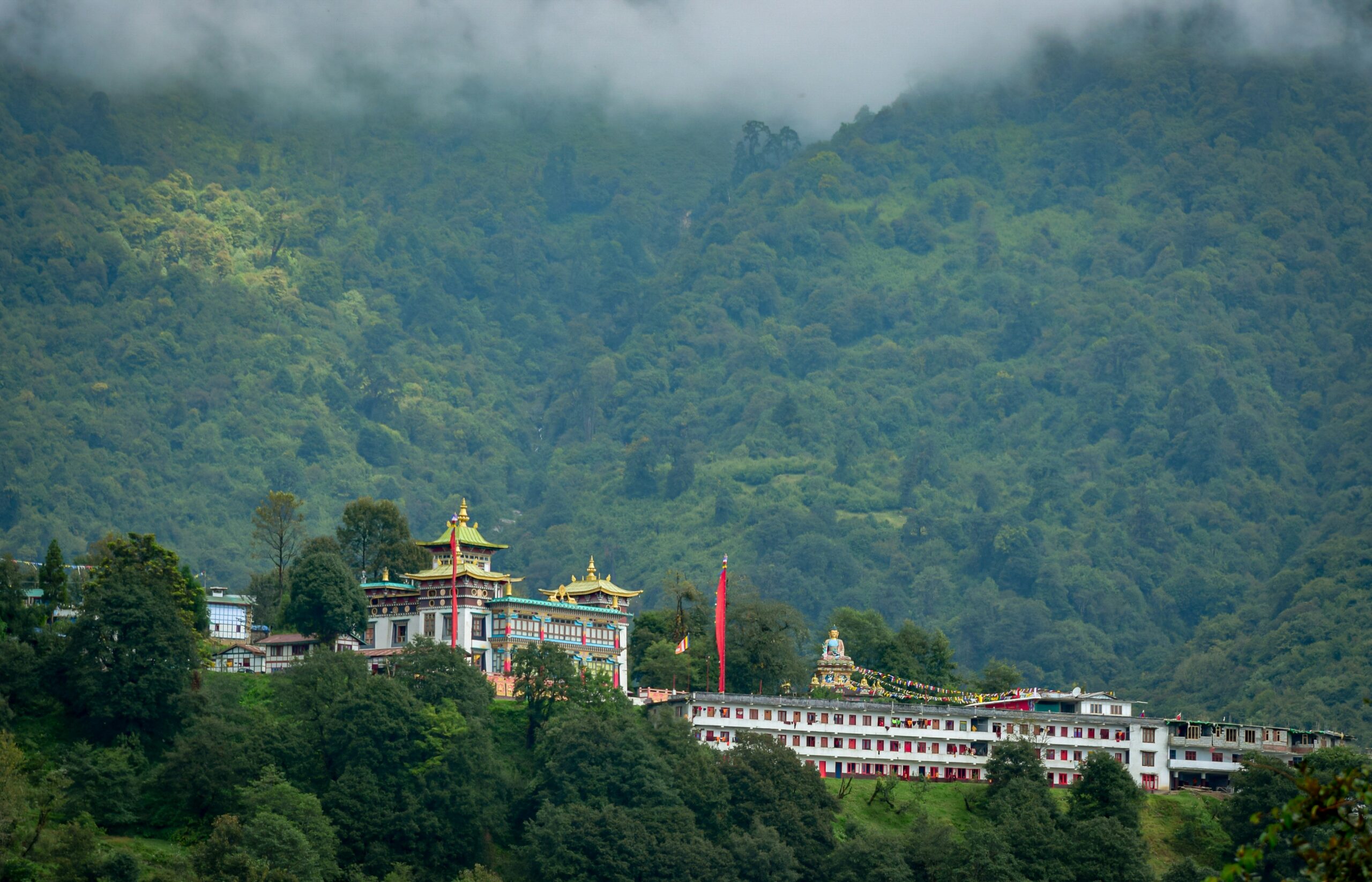
Chakzam alone is a morning trip, a full day here is the smarter call. The bridge takes 30 to 45 minutes at most. Driving back to Tawang right after means a full morning on a gravel road for a 45-minute site. Kitpi village is a 10-minute walk from the bridge, small, quiet, and worth a look. It extends your time at river level without more driving. On the way back to Tawang, Khinmey Monastery sits about 10 km before town. It has a Medicine Buddha statue and a colourful interior. Thirty minutes, no entry fee and easy stop.
The bigger addition, if you have time, is Bekhar village. About 40 km from the bridge. This is the maternal home of the 6th Dalai Lama. His descendants still live in the original house. The family has a meditation room with genuine old artefacts. If you ask respectfully, they often let visitors in. No guide mentions this combination. Sounds like too much for one day? It is not, if you leave Tawang by 7:30 am. You are back in town by 4:00 pm with a real, coherent day behind you.
A useful day sequence:
- 7:30 am: Leave Tawang for Chakzam Bridge
- 9:00 am: Arrive, get key, descend, cross, explore Kitpi village
- 10:30 am: Drive toward Bekhar village
- 12:00 pm: Bekhar village, lunch in the area
- 2:30 pm: Drive back via Khinmey Monastery
- 4:00 pm: Back in Tawang
Practical Tips Before You Go
Six things, specific to this site and this road, not generic mountain advice. Sort the ILP before you reach Tawang. Applying at the border takes longer, apply online, print it, carry two copies. That is the whole process, not hard. Tell your hotel the night before that you are heading to Chakzam. They know the road, if it rained overnight, ask whether the gravel section is okay for your car type. Saves guesswork in the morning.
The bridge is often locked, your driver or hotel can help arrange the key from the Kitpi village headman. Do this the evening before, arriving at a locked gate with no plan wastes the trip. Leave by 7:30 am, midday brings trucks on the same road. Early morning is quieter and the light is better for photos. Wear shoes with grip. The descent to the bridge is steep stone steps. Wet stone and flip flops is a fall waiting to happen.
Carry water and a snack, there are no stalls at the bridge. The nearest food is back at Mukto or in Tawang town.
Conclusion
The detour earns its hour. Chakzam Bridge Tawang is small by any modern measure. It is 60 metres of bamboo and iron chain over a cold river in a mountain gorge. But it went up in the 1420s, funded through performance, chain by forged chain, that age under your feet is the reason people drive the gravel road.