Tawang market is worth a full half-day of your trip. Most people arrive here for the monastery and the mountains, and the market catches them off guard. Monpa weavers sell hand-knotted carpets from tiny stalls. Buddhist prayer wheels sit next to yak cheese and locally grown tea. This isn’t a tourist souvenir strip. It’s a real trading town at 10,000 feet, with goods you won’t find anywhere else in India.
What makes Tawang’s markets different is the mix. The Monpa people have been weaving, carving, and trading in this valley for generations. Tibet sits just north. The influence shows in everything on sale. Know which market to walk into first and what to look for. You’ll leave with things that have actual meaning.
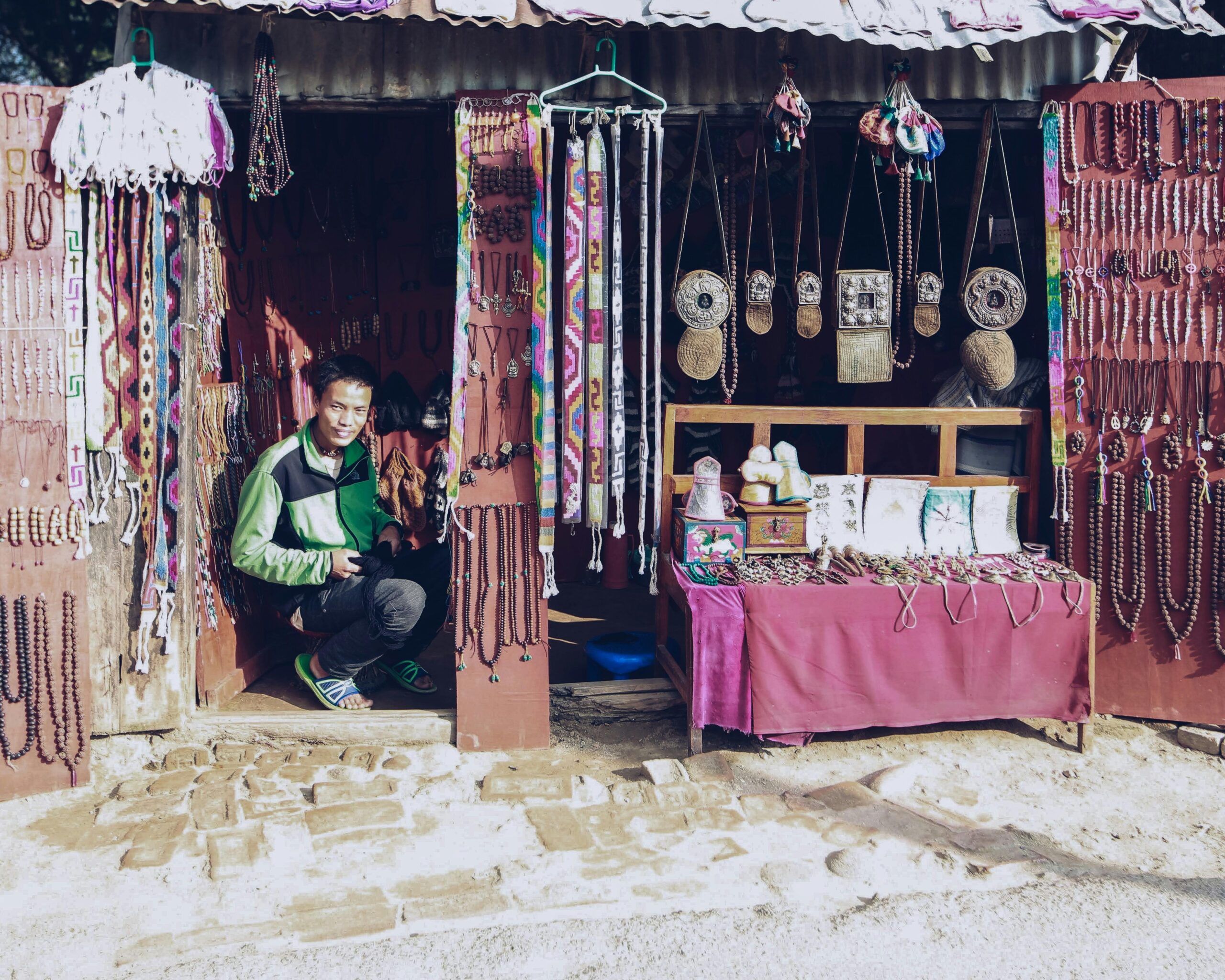
Where to Shop: The Three Tawang Markets
Not all three markets sell the same things, and knowing the difference saves you time. Old Market is the main one. It sits at the heart of town near the taxi stand. You’ll find carpet shops, local clothing, handicrafts, general goods, and a few medical stores scattered between the food stalls. It stays busy all day with both locals and visitors. If you only have time for one market in Tawang, this is the one.
There are three distinct markets in Tawang, and each works differently. Tibetan Settlement Market, also called Vihara Market, is smaller with fewer stalls. But this is where Tibetan traders bring Buddhist-specific goods. Better prayer wheels, ritual incense, statues. Items that come directly from the Tibetan community. If you want something connected to Buddhist practice rather than a replica, this is where to look.
The Government Handicraft Emporium near the DC’s office is the third option. Fixed prices, no bargaining, and no fakes. The Arunachal Pradesh government runs it, and everything sold here is vetted. Carpets come in several sizes and designs. Shawls, bags, and woven items are all certified local. It opens around 9am and closes by 4pm. If you want to buy without second-guessing yourself, start here. The prices are fair even without negotiating.
Note: Old Market is closed on Tuesdays, Nehru Market and New Market, the two smaller nearby options, close on Wednesdays. Plan your shopping day around those closures.
What to Buy in Tawang: The Short List That Actually Matters
Carpets are the reason most visitors spend more than they planned. Monpa weavers produce them in geometric and dragon patterns using locally sourced wool. The designs repeat across generations with small variations from individual weavers. A mid-size carpet runs roughly Rs 2,000 to Rs 5,000 depending on size and quality. Bigger pieces with tighter knotting cost more. This is the standout buy in Tawang. Nothing else comes close.
Thangka paintings are the second real buy, but only if you go to a proper artist’s shop. Cheap versions exist and look similar from three feet away. The difference shows in the pigments and the gold-thread work around figures and borders. A real thangka takes weeks to produce. A mass-made replica takes an afternoon. Ask the seller about the artist. If they can’t tell you, walk on.
Shawls and chadars are the easiest things to bring home. Chadars are the wrap skirts worn by Monpa women. They look decorative but locals wear them daily. Made of wool, they fold flat into a bag. They hold up in cold weather far better than most travel scarves. Traditional bags and carved wooden items, spoons, bowls, and masks, are worth picking up if you have room.
Here are the five items most worth buying in Tawang. Each one earns its place for a different reason.
- Hand-knotted carpets. The best buy in the market. Geometric or dragon patterns, locally made wool. Rs 2,000-5,000 for a mid-size piece.
- Thangka paintings. Buy only from a proper artist’s shop. Check the gold-thread work before you pay.
- Shawls and chadars. Light, practical, and real local goods. They make gifts people actually use.
- Prayer wheels and Buddhist items. Inexpensive and widely available. Tibetan Settlement Market has the best selection.
- Churpi (yak cheese). Not sold in the main markets. Ask your hotel owner. Nearby villages are where to find it.
Authentic vs Imported: How to Spot What’s Actually Made Here
Not everything in Tawang’s markets was made in Tawang. A significant share of goods in street stalls comes through trade routes from China via Dimapur in Nagaland. This includes most trekking gear, cheap prayer wheels, and mass-produced Buddha statues. They’re not bad products, but you shouldn’t pay Monpa craft prices for something that came off a factory line.
Real Monpa carpet work has specific signs. Look at the reverse side, hand-knotted work shows uneven but deliberate knotting that follows the pattern. The wool has a natural texture, not a synthetic sheen. Designs should match regional motifs: dragon, geometric, or floral patterns specific to the Monpa tradition. Machine-made carpets from China have perfectly even backing and a slightly plastic feel to the fibers. Side by side, the difference is clear.
The Government Emporium is the one place where you don’t need to ask. Provenance is guaranteed. For everything else, ask the vendor directly: “Is this made locally?” Most traders in Tawang are straightforward about this. They know which items are local and which came through a distributor. Sound paranoid? It’s not. It’s just the reality of any market town near a busy border trade route. Knowing it before you shop means you buy better.
Bargaining in Tawang: Where It Works and Where It Doesn’t
Bargaining works in most of Tawang’s markets, but not everywhere. The Government Emporium has fixed prices. That’s not a starting point for a deal. It’s just the price and it’s a fair one, so don’t bother trying.
In the Old Market and the Tibetan Settlement Market, bargaining is normal. Vendors expect it. Start at about 60 to 70 percent of the asking price and work toward the middle. Don’t walk away over Rs 50 on a Rs 300 item. The saving isn’t worth the friction in a small community market where the seller likely knows your hotel owner. Keep the tone easy and the whole thing stays fine. Most vendors in Tawang are not aggressive, they won’t chase you or make you feel bad for trying.
Note: Tibetan Settlement Market sellers are often community traders, not professional vendors. The dynamic is softer there. A light negotiation is fine, pushing hard is not.
Practical Tips Before You Shop
Carry cash: That’s the most important thing. Most stalls in Tawang’s markets don’t take cards. UPI works at a few shops like the bigger carpet stores and the Emporium. But you can’t count on it at every stall. ATMs exist in town but run dry on weekends and peak travel days. Withdraw what you need before you arrive or first thing on your shopping morning.
Morning is the better time to shop: Cold wind picks up fast in the afternoons here, even in summer. Most shops open by 9 or 10am. The Emporium runs from 9am to 4pm. Plan to finish by 1pm if you’re shopping the open-air sections. In 2026, cash is still the only reliable payment at most Tawang market stalls. Sort out your ATM run before your shopping day, not halfway through it.
Your ILP (Inner Line Permit) is checked at multiple points getting into Arunachal Pradesh. Keep it accessible. Some shops and homestays in Tawang ask to see it at check-in. It’s not a shopping issue specifically. But it’s the kind of thing that slows you down if you’re caught searching for it. Carry a printed copy and a phone screenshot. Bring a small wallet just for market cash too. Pulling out your main wallet at every stall is unnecessary.
Best Time to Visit Tawang Market
The markets run year-round, but the timing changes what you’ll find. October to early November is the strongest window. The Tawang Festival falls in late October, usually around October 26. It draws extra sellers and a wider range of goods into the market area. Monpa craftspeople bring items made specifically for the festival period. Selection is at its peak. The weather is cold but clear. For the 2026 travel season, the festival window is the best time to shop in Tawang. Combine it with the monastery during festival days and the whole trip gets a lot richer.
Monsoon runs June through September. Roads via Sela Pass can close after heavy rain. Markets stay open but smaller stalls run thin on stock. Some sellers don’t restock mid-season. Not a reason to skip Tawang, but not the right time to make the market your main goal.
December through February is the snow season. The main shops and the Emporium stay open. But many smaller outdoor stalls and some Tibetan Settlement Market vendors close for winter. If you’re coming in those months, focus on the Emporium and the bigger indoor carpet shops in Old Market.
Conclusion
Tawang’s shopping district isn’t the kind of place you visit looking for a deal. You leave carrying a carpet you didn’t plan to buy. A thangka painting wrapped in newspaper, that happens because the goods are real. The carpets took someone weeks to make. The chadars get worn by people in the valley every single day. That’s the gap between shopping here and picking something off a tourist strip.
Start at the Government Emporium to train your eye on what real local goods look like. Spend time at the Tibetan Settlement Market if Buddhist pieces matter to you. Then walk to the Old Market with cash in your pocket and no fixed plan. That sequence works. Most people who skip the Emporium first spend more and come home with less.