The tezpur to tawang drive is about 320 km. On paper, that sounds like half a day. In reality, it is 10 to 12 hours on mountain roads. Roads that narrow without warning, climb past 13,000 feet, and change completely depending on season. Most people who struggle on this route are not underfitted. They are underprepared, they didn’t sort the ILP in advance. They didn’t account for altitude.
They booked the cheap shared cab without knowing what that actually means for 10 hours on a mountain. This guide covers what you need to know before you go.
The Route from Tezpur to Tawang: Distance, Time, and What to Expect
This is not a highway trip disguised as a mountain drive. The first 60 km from Tezpur to Bhalukpong run fast on flat Assam plains. Then you cross the Bhalukpong checkpoint, show your ILP, and the road changes immediately. Dense forest rises on both sides. The Kameng river runs beside you. The curves start, you are in Arunachal Pradesh now, and the road drives accordingly.
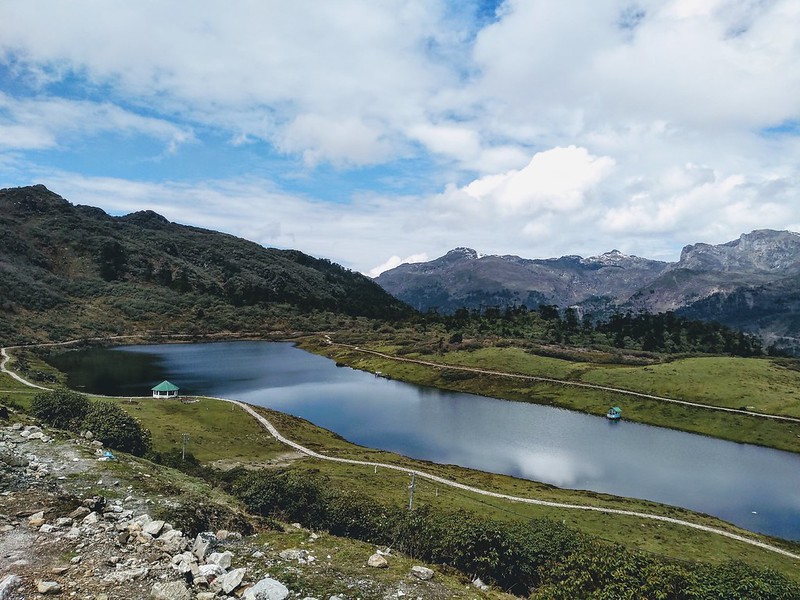
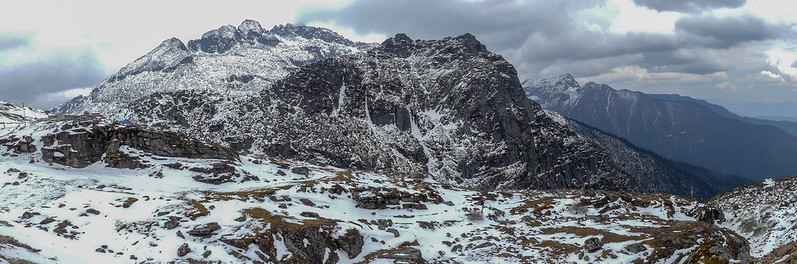
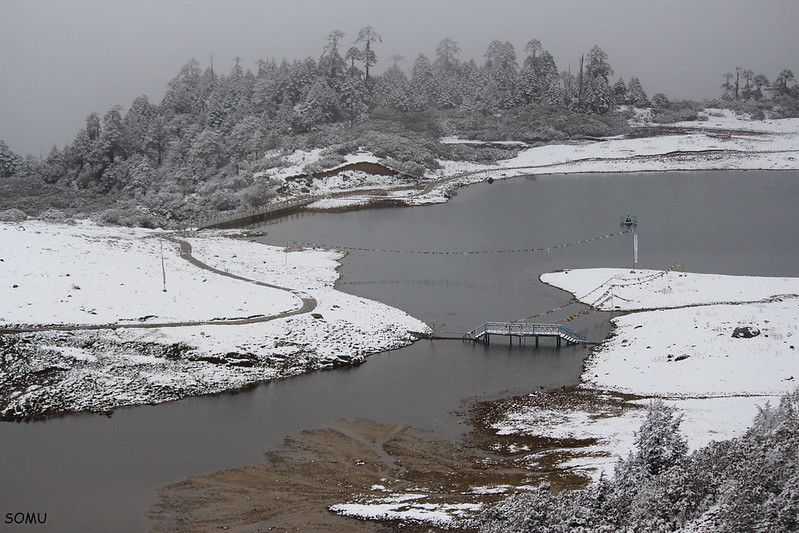
By Bomdila, you are at about 2,530 meters. The air is noticeably thinner, the drive from Dirang to Sela Pass is where first-time drivers slow right down, and rightly so. The climb is steep and the curves are tight. Below Sela, the landscape opens into something that stops people mid-sentence. Snow-covered ridges, a lake in a high basin, prayer flags in the wind. Then the descent toward Jang and the final push to Tawang.
Here are the key stops with distances from Tezpur:
- Bhalukpong (60 km): ILP checkpoint, entry into Arunachal, forest and river begin
- Bomdila (160 km): hill town at 2,530 m, monasteries, good overnight halt option
- Dirang (210 km): valley at 1,497 m, apple orchards, hot springs, recommended sleep stop
- Sela Pass (280 km): 4,170 m, Sela Lake, Sela Tunnel bypass starts here
The tawang to tezpur distance on the return is the same 320 km via NH13. The road does not get easier in reverse.
One Day or Two? How to Decide Before You Book
Most people assume one day is fine because the distance looks short. That assumption fills Tawang with headache-ridden tourists. They spend the first evening lying down in their hotel room. One day works, but only under specific conditions.
You need to leave Tezpur by 5:30 AM at the latest. You need a high-clearance vehicle with a driver who knows the route. You need no major road disruptions. On NH13, that is never guaranteed. And ideally, you or your group has been at altitude before. If all four of those things line up, you will reach Tawang by evening, tired but functional.
If even one of those conditions is off, stop at Dirang. Dirang. It sits at 1,497 meters, which is low enough that most people sleep well there on day one. The extra night costs half a day. In return you get altitude adjustment, a proper meal, and a morning drive over Sela Pass in daylight when the views are sharpest. People who stop at Dirang arrive in Tawang like they planned to be there. People who push through in one go often arrive like they survived.
ILP Permit: What It Is and How to Get It Before You Go
You cannot enter Arunachal Pradesh without an Inner Line Permit. Not with a tax, not with a bus. The Bhalukpong checkpoint will turn you around if your documents are not in order. This is the piece that surprises people who have only travelled within other Indian states.
The ILP is an official permit for Indian citizens to enter protected northeastern states. Getting one is easy. Go to eilp.arunachal.gov.in. Upload your Aadhaar or Voter ID, add a passport-size photo, and fill in your hotel name in Tawang as a local reference. Pay ₹100 to ₹200 depending on duration. The permit comes through in under an hour if your documents are correct. Apply at least three to four days before your trip. Do not leave it until the morning of travel.
Documents you will need:
- Government-issued photo ID (Aadhaar, Voter ID, or Passport)
- Passport-size photo (white background, under 50 KB for upload)
- Hotel name and address in Tawang for local reference
- ILP fee: ₹100 for up to 3 days, ₹200 for up to 14 days
Print a copy. Army checkpoints along the route will ask for it. A screenshot on your phone has caused problems at remote posts where there is no signal to verify.
Transport Options and Tezpur to Tawang Taxi Fare in 2026
Shared Sumos are cheap, they are also one of the harder ways to spend 10 hours. A seat in a shared Sumo from Tezpur to Tawang costs about ₹1,200 to ₹1,800. The vehicle leaves at 6 AM. It carries 8 to 10 people. The driver does not stop at Nuranang Falls, he does not pause at Sela Lake for photos. He does not pull over at Jaswant Garh so you can read the wall about the soldier who held off the Chinese army alone for 72 hours. You arrive at Tawang and that’s the trade.
A private taxi gives you the stops. In 2026, a private Sedan from Tezpur runs about ₹6,300 to ₹8,000 one-way. A Toyota Innova or similar SUV is ₹10,000 to ₹15,000. The SUV is worth it on this route. The roads between Bomdila and Tawang are steep and uneven in places. A Sedan can make the drive but gives you less ground clearance, less engine power at altitude, and a much rougher last three hours. Sound excessive? The difference shows up at 4,000 meters.
Here is the quick comparison:
Transport Type | Approx Cost | Best For | Key Limitation |
Shared Sumo | ₹1,200–1,800 per seat | Budget travel, solo | No stops, 8–10 passengers, 6 AM departure |
APST Bus | ₹400–600 per seat | Lowest budget option | Slowest, least frequent, limited stops |
Private Sedan | ₹6,300–8,000 | Couples, small groups | Lower clearance, less power at altitude |
Private SUV (Innova) | ₹10,000–15,000 | Families, groups of 4–6 | Higher cost, worth it for comfort and safety |
The Sela Tunnel: What Changed on This Route in 2024
The tunnel changed the route, not completely, but in one key way that matters for when you travel. Before it opened, Sela Pass sat at 4,200 meters and a heavy snowfall could close the road with almost no notice during winter months. People got stranded, trips got cancelled. The old pass was striking and unreliable.
The Sela Tunnel runs at 3,000 meters, about 400 meters below the worst of the snowfall zone. It cuts about 10 km off the distance and saves roughly an hour of driving time on a clear day. More importantly, it means the road to Tawang is now open in conditions that used to shut it. Since the tunnel opened in 2024, the route has had far fewer weather-related closures in the October to February window.
That said, do not read this as permission to drive recklessly in winter. The old Sela Pass road still exists and some vehicles still use it. Black ice forms near the high sections in December and January. If you are driving between November and February, confirm with your driver which route he plans to take and ask about current road conditions the day before you leave. The tunnel is the safer option in cold weather, make sure your driver uses it.
Altitude on This Route: What to Expect and What to Do If You Feel It
Gain 4,000 meters in a single drive and your body will notice. Tezpur sits at 48 meters above sea level. Sela Pass peaks at 4,170 meters, that is a climb that mountain trekkers spend days acclimatising to before attempting on foot. You are doing it in a car, in one shot, and many people have never been above 2,000 meters before this trip.
Altitude sickness does not only hit people who are unfit or elderly. It hits random people with no warning pattern. The symptoms start as a dull headache and a feeling of being slightly off. Add nausea, light-headedness, and tiredness that feels heavier than normal travel fatigue. These can show up at Dirang (1,497 meters) in sensitive people, and are common at Sela Pass for anyone who has not been at altitude recently. The fix is not to push through. Why do people ignore early symptoms? Usually because altitude tiredness looks exactly like regular drive fatigue until it doesn’t. Descend slightly if you can, stop the vehicle, breathe normally, drink water, and rest for 20 to 30 minutes. If symptoms do not ease, go back down to Dirang and sleep there. Tawang is at 3,050 meters and most people adjust overnight once they arrive.
Watch for these and act early:
- Dull headache that worsens when you bend forward
- Nausea or loss of appetite at altitude
- Unusual tiredness beyond normal road-fatigue
- Shortness of breath when walking short distances
- Light-headedness when standing up from a seated position
Key Stops Between Tezpur and Tawang Worth the Extra 20 Minutes
All the guides list the same stops with the same adjectives. Stunning, breathtaking, unmissable. That is not useful when you are 8 hours into a drive and trying to decide whether to pull over and here is the honest version.
Nuranang Falls is worth 20 minutes. It sits 12 km past Sela Pass on the left side of the road near Jang. When the falls are running strong, they are loud and genuinely dramatic. If you are driving in monsoon or post-monsoon and the water is high, do not skip it. If you are driving in February when flow is low, it is a smaller reward for the detour.
Jaswant Garh is a five-minute stop with a story that justifies every minute. This is the memorial for Jaswant Singh Rawat, a soldier of the 4th Garhwal Rifles who held off advancing Chinese forces alone for 72 hours during the 1962 war. The story is on the wall at the memorial. It takes four minutes and gives context to the whole border landscape you have been driving through.
Sela Lake at the top of the pass is non-negotiable. Even in fog, the setting is striking. Prayer flags, the high basin, the silence at 4,170 meters. Stop for ten minutes regardless of how tight your schedule is abd this is the point of the drive.
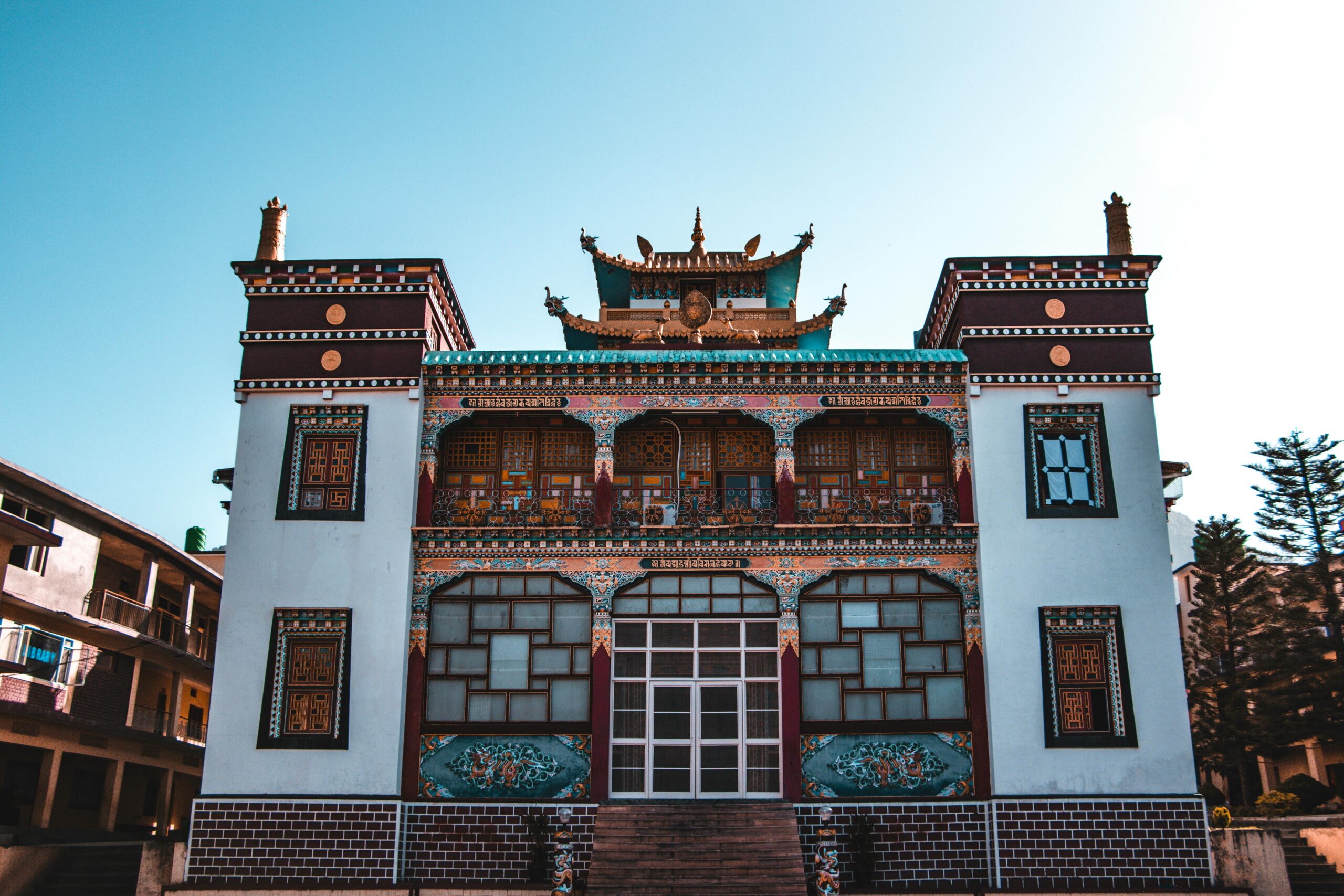
Bomdila Monastery is worth stopping for if it is your first Buddhist monastery on the trip. If you have been to Tawang before and seen the big monastery there, Bomdila can be a pass.
Best Time to Travel Tezpur to Tawang
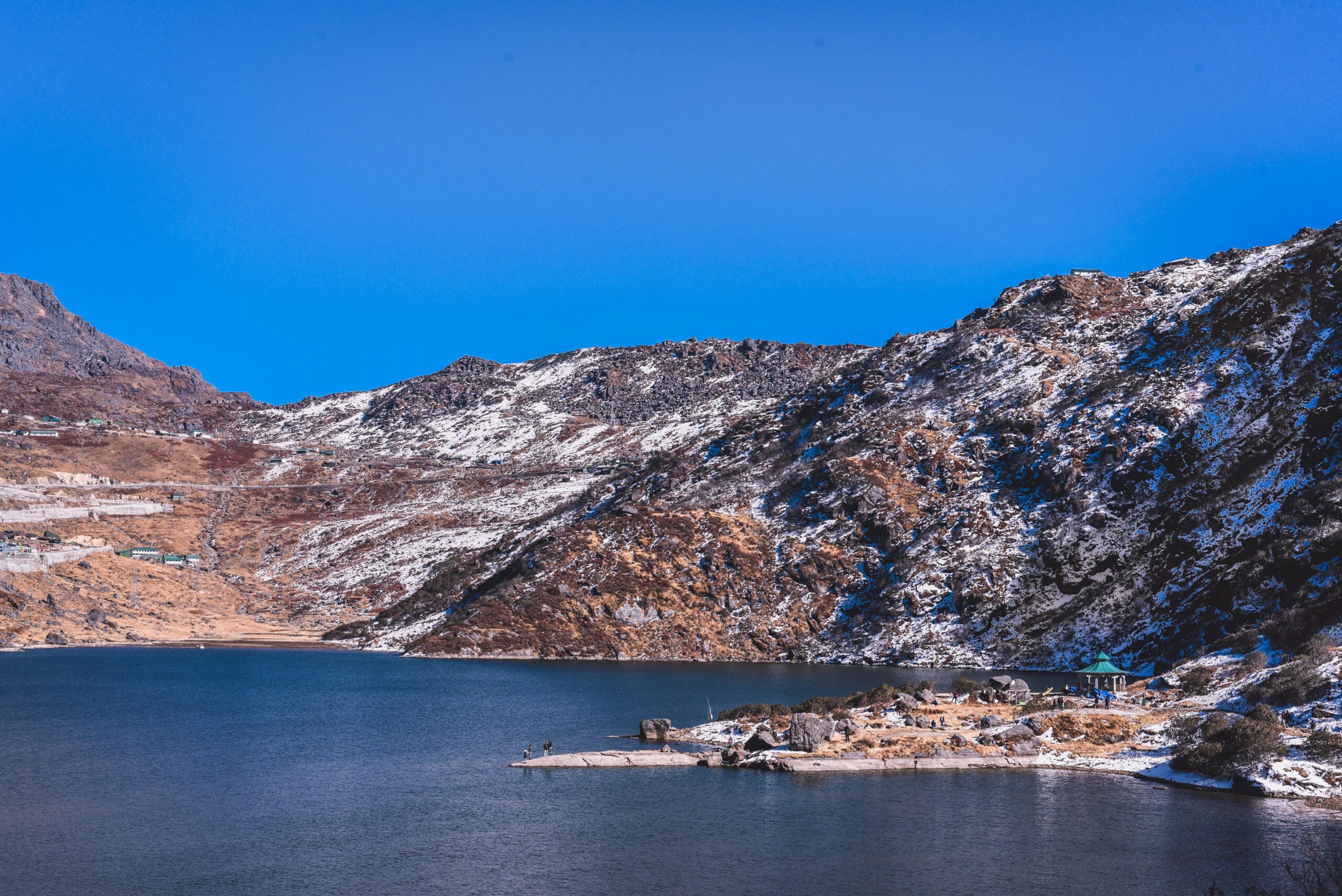
October and November and that is the answer for most people reading this. The monsoon has cleared, the roads are in their best post-season condition, the passes are not yet iced, and the sky over Tawang is the kind of sharp blue that makes every photo look like it was edited. This is when the drive is at its best. The region is open, the roads are clear, and Tawang is at full capacity.
March to May is the second window. The rhododendrons are out in the foothills, Sela Pass is clear of heavy snow, and temperatures in Tawang are cold but not punishing. The trade-off is that visibility can be lower in spring due to morning mist on the passes. Start early and you will be past Sela before it builds.
Monsoon, July to September, is the window most people regret. The road itself may be fine on any given day. But one landslide on NH13, which happens often in this season, can add four to six hours you did not budget for. If your schedule has zero buffer, monsoon is a real gamble. One night stuck between slides is not a travel story everyone enjoys.
December to February is cold, with Tawang dropping to minus 10 at night. The Sela Tunnel helps with pass access, but the town itself is quiet, some hotels close, and the Bum La Pass is often off-limits due to weather. Winter travel works for people who want the snow and know what they are signing up for. Everyone else should stick to the first two windows.
Conclusion
Get the ILP sorted before you book the taxi. Leave by 5:30 AM if you plan to do it in one day. Take a night at Dirang if anyone in your group is altitude-naive or if your trip falls in the summer months. Use an SUV, confirm the Sela Tunnel route with your driver in winter.
The Tezpur to Tawang road trip is not hard but just specific. The people who arrive at Tawang in good shape are the ones who sorted the logistics before they left. The view from the monastery on your first morning there is worth the preparation. Do the groundwork, the mountains take it from there.