The Japanese Temple Darjeeling also known as peace pagoda is a peaceful Buddhist shrine where prayer, silence, and simple faith meet. Many visitors step in and slow down at once. We hear soft chants drift across the hill air. The place feels calm, like a deep breath after a long walk through the busy Darjeeling bazaar.
The temple belongs to the Nipponzan Myohoji Buddhist order, a group that spreads peace through prayer and non-violence. Their monks chant the sacred phrase “Namu Myoho Renge Kyo” every day. When I first heard it, the rhythm felt steady and soothing. And yes, even a restless mind begins to settle in that calm meditation environment.
You will also notice the neat wooden design of the building. The Japanese Temple Darjeeling shows classic traditional Japanese architecture with sloping roofs and clean lines. White walls shine against the green hills around the town. We often pause here for quiet thought before walking to the nearby Peace Pagoda.
History of Japanese Temple Darjeeling
The Darjeeling Peace Pagoda began in 1972, built to spread a simple idea: peace for all people. The project was led by the Japanese Buddhist monk Nichidatsu Fujii, founder of the Nipponzan Myohoji order. He believed prayer, unity, and quiet reflection could change the world. When we stand near the white dome today, it feels calm and hopeful.
Construction of the pagoda started in the early 1970s on Jalapahar Hill. Local workers and monks worked together with steady patience. I still remember a guide telling us how villagers watched the structure rise slowly against the misty Darjeeling sky. The aim was clear. Create a sacred place where anyone could pray for world peace.
This Peace Pagoda Darjeeling is also part of a global mission. Nichidatsu Fujii helped build many peace pagodas across Asia, Europe, and the United States. Each pagoda shares one message: harmony between people, faiths, and nations. When we visit such places, we pause, breathe, and remember that peace always starts within us.
Beautiful Facts About Peace Pagoda & Japanese Temple
The Peace Pagoda Darjeeling stands out for its calm design, rich culture, and quiet charm. When we visit, we notice small details that many travellers miss at first glance. The white dome shines in soft hill sunlight, while prayer chants echo through the air. I still recall my first walk around the pagoda path. The silence felt deep, almost like the hills themselves were meditating with us.
Here are a few beautiful facts that make this place truly special.
- One of the few Peace Pagodas in India
Only a small number of Peace Pagodas exist across the country. This makes the Darjeeling pagoda a rare spiritual landmark. - Buddhist prayer ceremony with drums
Monks often hold prayer rituals with rhythmic drum beats. The sound travels across the hill and feels deeply calming. - Panoramic Himalayan views
From the pagoda grounds, we see sweeping views of the Himalayan range. On clear mornings, even Kanchenjunga appears bright and grand. - Statues of Buddha on pagoda walls
Four golden Buddha statues decorate the pagoda’s outer walls. Each statue shows an important moment from Buddha’s life. - Peaceful meditation environment
The quiet path around the pagoda invites slow walks and silent thought. Many visitors sit here for simple breathing and prayer. - Japanese architectural influence
The nearby temple shows classic Japanese Buddhist design. Curved roofs, wooden details, and prayer halls reflect that heritage.
Architecture and Spiritual Atmosphere
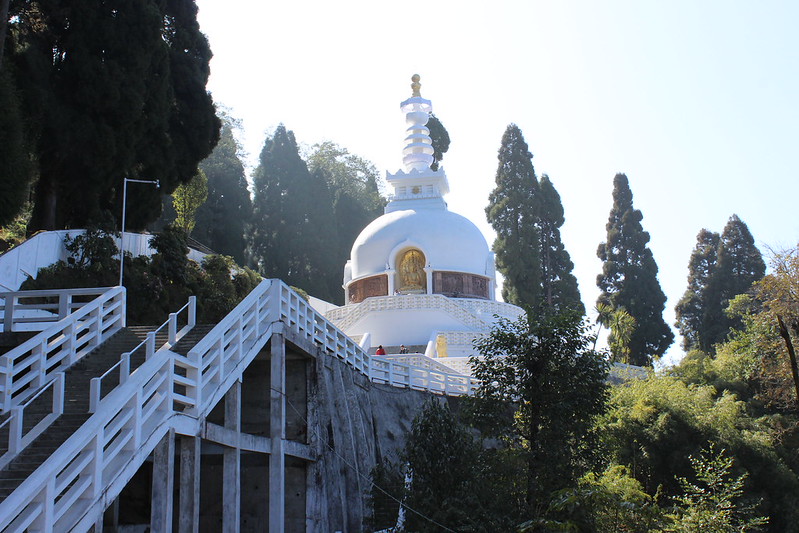
The Peace Pagoda Darjeeling feels calm and sacred the moment we step near its white dome. The structure looks simple, yet it carries deep meaning. A smooth circular path wraps around the bright pagoda. Many visitors walk this path slowly while enjoying the quiet hill air. I remember pausing there one morning and noticing how the dome glowed softly under the misty sky.
The pagoda’s white dome stands tall and pure against the green hills. Four golden Buddha statues sit on the outer walls. Each statue shows a key moment from Buddha’s life. Visitors often stop here to look closely and reflect for a while. The clean design keeps the focus on peace and prayer.
The spiritual mood grows stronger during chanting ceremonies. Monks beat large drums while reciting Buddhist prayers in deep, steady voices. The rhythm echoes across the hillside and feels deeply calming. We often stand silently during these moments, letting the sound and stillness settle in our minds. That quiet feeling stays with us long after we leave.
Timings and Entry Fee of Japanese Temple Darjeeling
The Peace Pagoda Darjeeling and the nearby Japanese Temple welcome visitors daily with simple rules and easy timings. We usually plan our visit in the morning when the hills feel fresh and quiet. Early hours also give us a better chance to hear the prayer chants. Many travellers miss this part because they arrive late in the afternoon. Knowing the basic visitor details helps us enjoy the place without rushing.
- Opening hours
The temple and pagoda usually open from 4:30 AM to 7:00 PM. Morning visits feel calm and offer clearer Himalayan views. - Entry fee
Entry to the site is completely free for all visitors. Donations are welcome but never required. - Prayer ceremony timings
Buddhist prayer ceremonies often take place around 4:30 AM and 4:30 PM. Visitors may sit quietly and join the peaceful chanting. - Photography rules
Photography is allowed in most outdoor areas. Inside the temple hall, we should ask permission and avoid flash.
Best Time to Visit Peace Pagoda Darjeeling
The best time to visit the Peace Pagoda Darjeeling is from March to May and October to November, when the weather stays clear and the mountain views look stunning. During spring, the hills around Darjeeling turn bright with blooming rhododendrons. The air feels fresh, and the pagoda looks beautiful against the green slopes. We often find this season perfect for slow walks around the prayer path.
Summer months from May to June remain pleasant compared to the plains. Light clouds drift over the hills, giving the pagoda a dreamy look. Autumn, especially October and November, offers the clearest Himalayan views. On some mornings, we can even spot Kanchenjunga shining far away.
Early mornings always feel special here. The air stays quiet, monks chant softly, and fewer tourists arrive. When we visit at that hour, the calm mood of the pagoda truly sinks in.
Travel Tips for Visiting the Japanese Temple in Darjeeling
A few simple tips can make our visit to the Peace Pagoda Darjeeling and the nearby Japanese Temple far more peaceful and enjoyable. The place looks calm, yet small planning helps us soak in the real spiritual mood. I learned this during my first visit when I arrived late and missed the prayer chants. Since then, we always plan our visit early and move slowly around the pagoda path. With the right approach, the experience feels deeper and more memorable.
- Attend the morning prayer ceremony
Early morning prayers create a calm and sacred atmosphere. The sound of drums and chants feels soothing. - Wear comfortable walking shoes
The pagoda path involves gentle walking around the hill. Good shoes make the stroll relaxed and easy. - Maintain silence inside the temple
The temple hall is meant for prayer and meditation. Quiet behaviour shows respect for monks and visitors. - Carry a camera for mountain views
Clear days reveal wide Himalayan views from the pagoda area. Many visitors capture stunning photos here. - Combine the visit with nearby attractions
Several Darjeeling landmarks sit close to the temple area. We often pair this visit with other nearby viewpoints. For a well-structured plan, a 3-day Darjeeling itinerary helps you include the pagoda alongside the town’s other highlights without feeling rushed.
Nearby Attractions to Visit After Peace Pagoda Darjeeling
After visiting the Peace Pagoda Darjeeling, we can easily explore several famous places located nearby. Darjeeling is a compact hill town, so many attractions sit within a short drive. I often suggest travellers keep half a day free after the pagoda visit. The reason is simple. Once you are already in this part of town, it makes sense to explore more instead of rushing back.
Many of these spots also reveal the culture and history of the hill station. And honestly, the journey between them offers lovely views of pine forests and tea gardens. For a fuller picture of what the region holds, the guide on places to visit in and around Darjeeling covers several nearby destinations worth adding to your day.
- Padmaja Naidu Himalayan Zoological Park
This high-altitude zoo protects rare Himalayan animals like the snow leopard and red panda. - Himalayan Mountaineering Institute
The institute celebrates India’s mountaineering history and honours the legacy of Tenzing Norgay. - Darjeeling Mall Road
Mall Road is the lively heart of town where visitors enjoy cafés, local shops, and mountain views. After a quiet morning at the pagoda, the top restaurants in Darjeeling along Mall Road make for a perfect and unhurried lunch stop.
How to Reach Japanese Temple Darjeeling
Reaching the Japanese Temple in Darjeeling is simple because it sits close to the town centre on Jalapahar Hill. Most travellers start their journey from Darjeeling town. The road climbs gently through quiet pine forests and hill homes. I still remember the slow taxi ride up the hill. The cool air and misty views made the journey feel peaceful even before we reached the temple.
If you are coming from outside Darjeeling, the route usually begins at Siliguri. Visitors travel to the hill town by road or the famous toy train. Once we reach Darjeeling, the temple lies only a short drive away.
Here are the common travel options:
- By air
The nearest airport is Bagdogra Airport, about 70 kilometres from Darjeeling. Taxis from the airport reach the temple area in about three hours. - By train
New Jalpaiguri Railway Station is the nearest major railhead. From there, taxis or shared jeeps take us to Darjeeling. - By road from Darjeeling town
Local taxis reach the temple in about fifteen minutes. Some visitors also enjoy walking the uphill road for scenic views.
Why Peace Pagoda and Japanese Temple Are Worth Visiting
The Peace Pagoda Darjeeling is worth visiting for its calm spiritual mood, rich Buddhist culture, and wide Himalayan views. The moment we step near the white dome, the busy noise of town slowly fades away. Prayer chants drift through the cool hill air and create a deep sense of peace. I remember standing there one quiet morning and feeling the calm settle almost instantly.
The site offers more than just a photo stop for travellers. Visitors walk around the pagoda path, observe golden Buddha statues, and listen to gentle drum chants from the temple. On clear days, the hills open up to stunning mountain views.
And when we pause for a few minutes in silence, the place feels like a natural meditation space. In simple words, it refreshes both the mind and the heart. Couples who find the pagoda’s calm atmosphere particularly moving may also want to explore the broader list of Darjeeling honeymoon places that blend natural beauty with quiet, romantic settings across the hills.
Those planning a longer trip can also look at a 4-day Darjeeling itinerary or a 5-day Darjeeling itinerary to fit the pagoda alongside more of what this hill town has to offer.
FAQs
1. What is the history of Japanese Temple Darjeeling?
The Japanese Temple in Darjeeling began in the 1972 under monk Nichidatsu Fujii. It promotes peace through prayer and Buddhist teachings. When we visit, the quiet chants remind us why it exists.
2. Are Peace Pagoda and Japanese Temple the same?
No, the Peace Pagoda and Japanese Temple are different but located together. The temple is a prayer hall, while the pagoda is a peace monument. Visitors usually explore both together.
3. What is the mantra of Japanese Temple Darjeeling?
The main mantra chanted at the Japanese Temple is “Namu Myoho Renge Kyo.” Monks repeat it during prayer with drums. When we hear it, the rhythm feels calm and deeply meditative.
4. Where is the Japanese temple located?
The Japanese Temple stands on Jalapahar Hill in Darjeeling, West Bengal. It sits close to the Peace Pagoda. From here, we often enjoy wide views of hills and distant mountains.